
 Worksheets
Adaptations, Reproduction and Factors that Influence Growth
Total questions: 32
Worksheet time: 16mins

How does an animal get an adaptation?
It just appears randomly
It is a mutation
It could have started as a beneficial mutation and then was passed down over generations
The animal needed to change to survive where it lives so it chose to change and develop an adaptation
Which type of reproduction allows for variation and therefore adaptations to appear?
Asexual reproduction
Sexual reproduction
Mitosis
Cell division
Reproducing asexually will produce offspring ...
genetically different from each other
genetically identical to the parent


Which of the following is a structural adaptation for the underlined animal?
A butterfly has bright colors to warn predators that it is poisonous.
A hognose snake rolls over, slows its breathing, and hangs its tongue out to play dead.
A herd of buffalo encircle their young to protect them from a pack of wolves.
A dung beetle rolls a piece of dung across the desert.
An example of a structural adaptation is...
a turtle hiding inside its shell
The spikes on a porcupine fish
a rabbit burrowing underground
a viper biting when threatened
All of the following are structural adaptations except:
Sharp Teeth
Ability to produce venom
Feathers
Porcupine quills
What earth worm adaptation is an example of a physiological adaptation
Stream line body
Digging deeper when its cold
Producing Mucus to stay dry
Having 5 hearts
Some birds fly south for the winter. What type of adaptation is this?
structural
physiological
behavioral
this is not an adaptation
dolphins have individual call tones used to identify themselves. what type of adaptation is this?
Structural
Behavioral
physiological
this is not an adaptation
Some plants have seeds with lite fluffy heads, or helicopter like blades on them. What purpose does this adaptation serve the plant?
water dispersal: water moves the seeds away from the parent plant
Wind dispersal: wind carries the seeds away from the parent plant
It protects the seed from being eaten
It stores food and water for the seed.

___________________ is a type of asexual reproduction in which a piece of a parent organism breaks off to form an new organism (ex. starfish).
fission
budding
fragmentation
regeneration

When a single-celled organism splits into 2 new organisms it is called _________________.
fragmentation
fission
budding
sporulation
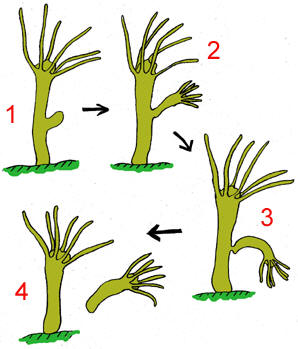
When an offspring grows off from the body of a parent organism it is called __________________.
budding
fission
fragmentation
sporulation
Some advantages of sexual reproduction include: (select all that apply)
genetic variation
improves chances of adapting to the environment
helps species survive catastrophes
it doesn't take as much energy as asexual reproduction
What are some disadvantages to sexual reproduction? (select all that apply)
it takes a lot of energy to find a mate
you don't need another mate
it requires a male and a female
more genetic errors can occur
What are some advantages of asexual reproduction are: (select all that apply)
it only requires one organism
it takes less energy than sexual reproduction
offspring are already well-adapted for the environment
there is a lot of genetic variety
How many parents are required for sexual reproduction?
0
1
2
3


