
 Worksheets
APUSH Unit 7
Total questions: 170
Worksheet time: 8hrs 59mins
What cities were affected by the Great Migration?
California, Texas, Idaho, New Mexico
Washington, Oregon, Texas, Utah
Chicago, Detroit, Pittsburgh, New York
LA, Coachella, Seattle, Portland
Who were the four main members of the League of Nations?
Britain, Mexico, Japan, Korea
France, Italy, U.S, Mexico
Germany, Poland, Wakanda, Mexico
Britain, France, Italy, Japan
Which one was not a part of Wilson’s Fourteen Points?
Freedom of Trade
Open Diplomacy
Ending of Slavery
Arms Reduction
Who won the presidential election of 1928?
Herbert Hoover
Donald Trump
Franklin Roosevelt
Abraham Lincoln
What was the most famous product of the Harlem Renaissance?
Rock
Jazz
Poetry
Shuffling
Xenophobia meant what?
Fear of war
Fear of guns
Fear of alcohol
Fear of foreigners
The two atomic bombs dropped in Japan were in what cities?
Hiroshima & Nagasaki
Tokyo & Hiroshima
Yokohama & Osaka
Rio & Tokyo
President Roosevelt’s Four Freedoms included which one of these?
Freedom to eat
Freedom to live
Freedom from fear
Freedom to fight
”The Jungle” directly contributed to the passage of the
Glass-Steagall Act
Agricultural Adjustment Act
Wagner Act
Meat Inspection Act
The prohibition movement was a ban on
Immigrants
Weapons
Alcohol
Slavery
The Bonus Army was a group of
Women
Slaves
Japanese
Unemployed WWI veterans
Which of the following groups faced the most difficult economic conditions during the 1920’s?
Farmers
Blacks
Women
All of the above
Nativism wanted to stop
Discrimination
Slavery
Immigration
The moving of Indians
Who were the Code Talkers?
Japanese Soldiers
German Soldiers
Mexican-American Soldiers
Native American Soldiers
The Neutrality Act was created in what year?
1932
1935
1912
1923
Executive Order 9066 affected which of the following groups?
Japanese Americans
Mexican Americans
African Americans
Americans
Who sent the Zimmerman telegraph to whom?
Britain to Mexico
Germany to Mexico
Australia to Panama
Germany to Colombia
What was the name given to FDR’s intimate radio broadcasts?
Chewing the fat
Good for thought
At the White House
Fireside Chats
What government act created the Federal Deposit Insurance Corporation?
The Platte Act
The Glass-Steagall Act
The Hoover Act
The Fed Act
In what ways did the United States expand after the 1890’s?
mechanization, transportation, mass production
conquering and expanding
slavery
none of the above
What was part of the full blown modern consumer culture emerging in the 1920’s?
radio, car, Hollywood
television and comic books
phones and computers
All of the above
What effects did California go through the most after the war?
Hippies
Immigration
Slavery
Destruction
What were the Zoot Suit Riots?
A mob
A fancy suit
Riots against the ban of alcohol
Conflicts with American servicemen against Mexican American youth.
Emilio Aguinaldo fought for independence in which country that America imperialized?
Hawaii
Philippines
Cuba
Puerto Rico

This type of foreign policy encourages stronger nations to extend their influence over weaker ones.
Imperialism
Isolationism
Globalism
Communism
Identify reasons for American Imperialism
Economic Interests
Military Interests
Cultural Superiority
Self Interests
Muckraker Upton Sinclair wrote a book called The Jungle that...
exposed the unclean/unsanitary processes of the meat-packing industry.
told readers what the Amazon Jungle was really like,
gave people a glimpse into what animals are like in the wild.
• Pushed for many new programs called “The New Deal”
• President during World War II
The list above refers to which person?
What event changed the role of the US and led to us declaring war and sending troops into battle?
attack on Pearl Harbor
Lend-Lease Act
Operation Torch
Which WWII leader became President after FDR passed, wanted to save American lives in the Pacific, and decided to drop the atomic bombs?
Franklin D. Roosevelt
Winston Churchill
Harry S. Truman
Joseph Stalin

Who were the Tuskegee Airmen
African-American military pilots
Navy seals
Brave foot soldiers
Silent and Sneaky snipers

The Great Migration refers to
The movement of African Americans from the south to the north
The movement of African Americans from the north to the south
The spread of African culture after slavery ended
The advocacy of political union of all the indigenous inhabitants of Africa
Who was Langston Hughes?
famous African American author and poet
famous African American musician
famous African American artist
How did the Harlem Renaissance influence the world? Click all that apply
it only had an impact on the immediate area of New York
it spread from the area of Harlem to other parts of the nation
it not only influenced African Americans, but other cultures as well
The U.S. gained which of the following as a result of the Spanish-American War?
Dominican Republic
Hawaii
Philippines
Panama
The Spanish-American War set a precedent for American intervention in ___ affairs.
Mexican
Spanish
European
Cuban
Which of the following was NOT a reason why the U.S. fought the Spanish in the Spanish-American War?
American support for Cuban independence from Spain
Yellow journalists published graphic portrayals of Spanish treatment of Cubans
The sinking of the Lusitania
Desire to protect American business interests in Cuba
Which American president is most associated with the Panama Canal?
William Howard Taft
William McKinley
Woodrow Wilson
Theodore Roosevelt
The U.S. helped Panama gained independence from _____.
Mexico
Colombia
Venezuela
Portugal
The Roosevelt Corollary reinforced and reinvigorated ___.
Washington's Farewell Address
the Monroe Doctrine
the Treaty of Versailles
the Open Door Policy
The Roosevelt Corollary expanded the United States “police” presence in ______.
Europe
Asia
Latin America
Africa
American fruit corporations contributed to the annexation of _____ by deposing the native monarchy there.
Hawaii
Cuba
Panama
Texas
Which of the following territories did American gain from the Spanish-American War AND it remains under American dominion TODAY:
Puerto Rico
Philippines
Alaska
Easter Island
The American ____ urged all foreigners in China to obey Chinese law and observe fair competition, thus combating the European domination of China under the Spheres of Influence system.
Roosevelt Corallary
Sherman Anti-Trust Act
Open Door Policy
Mandate System
ALL of the following were motivations for Imperialism EXCEPT:
Economic opportunities (natural resources)
Racial theories (white supremacy)
Competition with European empires
The perception that the western frontier was "closed"
A belief in peoples' right to self-determination

All of the following contributed to the US involvement and entry into WWI EXCEPT:
moral outrage at the violation of Belgium's neutrality
economic investment in the Allied nations by US merchants and bankers
loss of American lives in the sinking of ships by German submarines
the effectiveness of the British propaganda in depicting the Germans as Huns
outrage over Austria-Hungary attacking Serbia without provocation
All of the following are true regarding the League of Nations EXCEPT:
It was designed to promote international cooperation
It would maintain peace by settling disputes peacefully and by reducing armaments
Russia and the US would be the dominant members of the Security Council
If a member nation broke an agreement the League could break diplomatic relations
Economic sanctions could be used to force compliance with League policies
All of the following were part of Wilson's 14 Points EXCEPT:
Freedom of the seas would be guaranteed
All nations would be required to defend each other from aggression
Armaments and military arsenals of nations would be reduced
Economic barriers like protective tariffs would be removed
World peace-keeping organization, League of Nations, would be formed
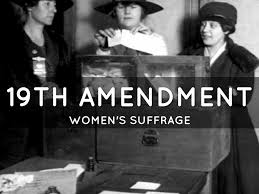
World War I was directly responsible for which of the following reforms passed as a constitutional amendment in 1920?
women's suffrage
direct election of US senators
graduated income tax
repeal of prohibition
two term limit on presidents
Henry Cabot Lodge (MA) was particularly concerned about Article X of the Covenant of the League of Nations that appeared to create what problem for the sovereign powers of the US?
limited the right of nations to place restrictions on immigration over their borders
required nations to submit all disputes to international arbitration
allowed American citizens accuse of "war crimes" to be tried in international courts
placed the authority to raise or lower tariffs in the hands of the World Court
seemed to delegate congressional war powers to an international agency
Which would NOT be good evidence of the increased social tensions in postwar America?
Committee on Public Information
major labor strikes
race riots
Palmer Raids
The SCOTUS case Schenck v. US (1919) limited which rights during wartime?
Freedom of Speech
Freedom of Worship
Freedom of Work
Freedom of Movement
Which was NOT a reason for the Great Migration?
deteriorating race relations marked by segregation and racial violence
equal opportunity guarantees in the northern states
destruction of cotton crops by boll weevil
limited economic opportunities
Which of the following was NOT a reason for the relative economic prosperity in the 1920s?
increased consumer buying aided by easy credit
increased savings by most Americans
availability of oil for fuel and innovations for its use
the development of the assembly line
pent up demand from the war which had to be satisfied by material goods
The most important change that the census of 1920 showed in America was that:
the frontier was closed
urban dwellers now outnumbered rural ones
most people had electricity
population had doubled in a decade
a majority of the people owned automobiles
Business leaders who wanted to promote a higher level of consumption of their products and get rid of the old ideas of thrift developed:
advertising
installment buying
scientific management
consumer savings
retail selling
After the Scopes "Monkey Trial" in Dayton, Tennessee:
Fundamentalist religion remained the undisputed dominant force in American spiritual life
John Scopes was sentenced to serve time in jail
Christians found it increasingly difficult to reconcile the revelations of religion with modern science
The gap between theology and biology began to close
The conflict between evolution and creationism was finally settled in America
Which of the following became a symbol for corruption of the Harding administration?
Muscle Shoals
Sacco-Vanzetti
Teapot Dome
McNary-Haugen
Greenwich Village
What did the Kellogg-Briand Pact that was signed by 35 nations including the US do?
provided for arms limitation
put the signatures on the gold standard
made it illegal to travel on a ship going into a war zone
kept countries from the further colonization of Africa
outlawed offensive war
This politician, Attorney General under Wilson, took advantage of the Red Scare of 1919-20 to arrest thousands of radicals and either jail them or ship them to Russia. Who was he?
William Jennings Bryan
A. Mitchell Palmer
Frederick Taylor
John T. Scopes
Al Capone
Symbolic of the popular fears of immigrants, communism, change, and diversity, this group became very powerful during the 20s with a reputed 5 million members and hatred for anyone who was foreign, Catholic or Jewish, liberal or different. What was the group?
American Legion
NAACP
Ku Klux Klan
Mafia
American First Committee
The Immigration Act of 1924 was written to specifically favor the arrival of which of the following groups to US shores?
Asians
Africans
Southern Europeans
Northern Europeans
South Americans
Who was the charismatic political leader of the United Negro Improvement Association who eventually ended up being deported back to his Jamaican homeland for mail-fraud against his own people?
Marcus Garvey
Langston Hughes
Andrew Mellon
Louis Armstrong
Dr. W.E.B. DuBois
Herbert Hoover chose which motto as his personal campaign slogan during the 1928 presidential election to stress his dedication to the bootstrap theory and self-reliance?
"The Buck Stops Here"
"The New Nationalism"
" The New Deal"
"Rugged Individualism"
"The New Frontier"
The most urgent task facing President FDR when he first took office in 1933 was:
keeping the nation out of war
shoring up the American banking system
tariff reform
protecting the territorial possessions of the US
working out an agreement on the foreign debt crisis
All of the following were associated with the Works Progress Administration (WPA) EXCEPT:
employment for artists and musicians
assured deficit financing for the New Deal
supported the ideas of the economist John Maynard Keynes
"make work" to keep people employed
based on the principles of laissez faire capitalism
Francis Perkins is notable because she became the first woman to:
serve on the Supreme Court
to be elected to serve in Congress
become the first cabinet member as Secretary of Labor
be elected governor of a state
fly non-stop around the world in an airplane
Which of the following was NOT an underlying cause of the Great Depression?
Uneven distribution of wealth
Overproduction
Overspeculation
Frozen Money Supply
Dust Bowl
The Michigan Catholic priest known for his pro-fascist, anti-New Deal radio broadcasts to 40 million national fans was which of the following?
Huey Long
Gerald Smith
Francis Townsend
Charles Coughlin
H.L. Mencken
Who was the senator from Louisiana who promoted himself and his "Share our Wealth" program with such rabble-rousing tactics that Roosevelt called him one of the two most dangerous men in America?
Huey Long
Gerald Smith
Francis Townsend
Charles Coughlin
H.L. Mencken
All of the following descriptions of the National Recovery Administration (NRA) are true EXCEPT:
declared unconstitutional in the case Schechter v. US (1935)
"yellow-dog" contracts were forbidden
certain restrictions placed on child labor
did not go so far as to require managers to negotiate with unions
individual industries worked out "fair competition" codes to govern minimum wages, maximum hours of labor allowed
New Deal legislation embraced all of the following reforms EXCEPT:
unemployment insurance
civil rights improvements
minimum wage standards
conservation of natural resources
child labor laws
FDR was the first president to make use of which of the following communication techniques?
press conference
radio
television
personal address before Congress
newspaper editorial column
Throughout most of the 1930s, the American people responded to the aggressive actions of Germany, Italy, and Japan by:
retreating further into isolationism
assisting their victims with military aid
giving only economic help to the targets of aggression
demanding an oil embargo on all warring nations
sending personal packages of munitions to the allied nations
All of the following were ways in which Americans helped the war effort on the home front EXCEPT:
bought war bonds to help finance the war
conserved materials needed for the war
organized community scrap drives
protested the rationing program by the Office of Price Administration
volunteered to serve in the armed forces
The final straw, when Britain and France declared war on Germany, was after the German invasion of what nation in 1939?
Denmark
Poland
Belgium
Finland
Sweden
When FDR proclaimed the existence of a foreign war, the Neutrality Acts of 1935, 36, 37 provided for all of the following provisions EXCEPT
No American could travel to any nation at war
No American could sail on the vessel of any nation at war
No American could loan money to any nation at war
No American could sell munitions to any nation at war
No American vessel could transport munitions to any nation at war
In July 1941 wat nation unexpectedly became an ally against Nazi Germany?
Britain
France
Soviet Union
Austria
Japan
Which was NOT one of the universal freedoms for all humans declared by FDR?
from want
from fear
of religion
of speech
of protest
Which is NOT a place where Axis aggression violated FDR's Four Freedoms?
Australia
Austria
Rhineland
Czechoslovakia
China
Which of the following is NOT a member of the Allies in WWII?
France
USSR
Italy
USA
Canada
Which of the following is LEAST relevant to the War in the Pacific?
Manhattan Project
Island Hopping
Kamikaze
Pearl Harbor
Fascism
All of the following are true about the Holocaust EXCEPT:
NAZI death camps were established throughout Europe under the supervision of the SS
The Allied powers including the US had no knowledge of what was going on in the concentration camps
Germany killed approximately 6 million Jews and maybe as many as 6 million others in camps
Dacau, Auschwitz, Buchenwald, Belsen-Bergen, and Treblinka were the main death camps
To Hitler's way of thinking this would be a "Final Solution" to what he saw as the Jewish problem throughout Europe
All of the following are true statements regarding the Munich Conference EXCEPT:
It was attended by all of the main principals - Germany, Italy, USSR, France, Czechoslovakia, and Great Britain
The end result was that Hitler was given the Sudetenland which would lead to the dismemberment of Czechoslavakia
Poland and Hungary also participated in the taking by getting Teschen(Poland) and parts of Ruthenia (Hungary) from Czechoslavakia
The British Prime Minister Neville Chamberlain proclaimed that he had achieved "peace in our time" by his actions
The policy adopted by the western democracies is known as appeasement
The Fourteen Points was intended to
turn the Allies into world powers
redistribute Germany's colonies to Allied nations
prevent future international tensions from turning to war
punish Germany for World War I
Pride in one's country; it was a cause of WWI.
Militarism
Alliances
Nationalism
Imperialism

Strengthening a country's military; cause of World War I.
Nationalism
Militarism
Alliances
Imperialism
German U-boats attacking without warning; Lusitania & the Sussex
unrestricted submarine warfare
propaganda
Schlieffen Plan
Bolshevik Revolution
Why did the U.S. Senate oppose the League of Nations after World War I?
Rejection by President Woodrow Wilson of internationalism
Fear of becoming involved in another European war
High financial cost of membership
Concern over communist control of international organization
Americans bought Liberty Bonds before entering WWI to help
U.S. manufacturers build warships and airplanes
families make up for wages lost when their men went to war
U.S. soldiers who were fighting in France
the Allied war effort in the form of billions of dollars in loans
The Espionage and Sedition Acts affected freedom of speech because they
allowed the government to silence ideas that challenged its authority.
forced the repeal of the First Amendment.
punished anyone not supporting the Central Powers
forced restaurant owners to offer "liberty sandwiches" rather than "hamburgers."

The "spark" that was an immediate cause of World War I was
The sinking of the Lusitania
The assassination of Archduke Franz Ferdinand
Increased nationalism
The Zimmerman Telegram

How did the military innovation shown in this photograph affect the course of World War I?
It helped transport large numbers of troops to the battlefield
It helped break the stalemate of trench warfare
It made communications with officers on the front lines possible
It made the use of land mines obsolete
According to the Schenck v. U.S. decision, when can the gov't limit free speech?
never
when it presents a clear & present danger to the public
when it's against the president
when it is racist or hate speech
He led the Bolshevik Revolution that led to the Treaty of Brest-Litovsk
Nicolas II
Vladimir Lenin
Joseph Stalin
Nikita Khruschev
Which Central Power was blamed for World War I & forced to pay reparations to the Allies?
Germany
the Ottoman Empire
Austria-Hungary
Soviet Union (Russia)
Which of the following is NOT a new country created after the Treaty of Versailles?
Yugoslavia
Denmark
Czechoslovakia
Poland
Which WWI Sergeant become one of the most decorated American soldiers?
Alvin York
John J. Pershing
Henry Cabot Lodge
Vernon Baker
Mediated labor disputes & prevented strikes during WWI; "Work or fight"
National War Labor Board
War Industries Board
Allied Labor Board
Committee on Public Information
Which of the following were main causes of the Great Depression?
the Stock Market Crash of 1929
Overconsumption and underproduction
Speculation and overspending
High tariffs that blocked global trade
Responsible banking practices
What were the 3 Rs of the New Deal?
Relent, Release, Recoil
Relief, Resume, Resolve
Reform, Relieve, Remove
Relief, Recovery, Reform
What statement best describes the reasons for FDR's "court packing scheme"?
The Supreme Court was regularly siding with New Deal programs
Federal judges were taking bribes to rule in favor of New Deal programs
Several Supreme Court decisions had ruled New Deal programs unconstitutional

According to the chart, when did unemployment reach its peak during the Great Depression?
1929-1930
1931-1932
1933-1934
1935-1936
Which of the following was part of the opposition to the New Deal?
Keynesian economics
American liberalism
American Liberty League
New Deal Democratic Party Coalition

According to the map, which states were most severely affected by the conditions of the Dust Bowl? (select all correct answers)
South Dakota
Oklahoma
Texas
Wyoming
Colorado
Which Progressive Era amendment was repealed with the passage of the 21st amendment?
16th amendment
17th amendment
18th amendment
19th amendment


Which of the following was NOT a reason for the relative economic prosperity in the 1920s?
increased consumer buying aided by easy credit
increased savings by most Americans
availability of oil for fuel and innovations for its use
the development of the assembly line
pent up demand from the war which had to be satisfied by material goods
All of the following were forces that helped to bring about Prohibition EXCEPT
Dry states wanted a national law because their citizens could go to wet states to subvert their laws
businesses felt that productivity could be increased if "blue Monday's" could be eliminated
the temperance movement had a close alliance with the women's movement and the success of one helped the success of the other
The Evangelical Protestant churches were strong supporters of it
in order to prove their patriotism most ethnic groups wanted it
Business leaders who wanted to promote a higher level of consumption of their products and get rid of the old ideas of thrift developed:
advertising
installment buying
scientific management
consumer savings
retail selling
According to the chart, when did unemployment reach its peak during the Great Depression?
1929-1930
1931-1932
1933-1934
1935-1936
What action best describes the US effort to isolate itself from European affairs after World War 1?
Joining the Allied war effort vs. Germany
lowering tariff rates
attempting to improve relations with Asia
refusing to join the League of Nations
The official position of the United States when World War II began was:
siding with Great Britain and France
remaining Neutral
becoming allies with Germany
declaring war on the Soviet Union
This man became the leader of the Soviet Union during World War 2?
Winston Churchill
Ernest Hemingway
Joseph Stalin
Neville Chamberlin
The agreement where the US agreed to allow nations whose defense was vital to ours to use our war equipment was:
Cash and Carry
Lend Lease
Destroyer Base Deal
Munich Pact
In what year did World War II begin?
1923
1936
1939
1941
Which statement is correct regarding ways that US citizens helped to contribute to the Allied war effort on the home front?
growing Victory Gardens
conducting scrap drives
rationing the purchase of certain products
all of the statements are correct
During World War II, posters of Rosie the Riveter were used to:
promote women's suffrage
recruit women into wartime industries
encourage women to serve in the armed forces
support higher education for women
it allowed the Russians to receive financial aid and build their army.
it punished Germany by making them pay reparations and led the Germans to seek revenge


