wayground logo

Free Printable Worksheets

Font size

S
M
L
XL
Worksheets

Civil War

Total questions: 100

Worksheet time: 2hrs 42mins

Name
Class
Date
1.
How did John Brown's raid at Harper's Ferry affect the nation?
a)
John Brown became a hero.
b)
It made the nation come together.
c)
It further divided the North and the South
d)
It had no affect on the country. 
2.
Who Was John Brown?
a)
An avid abolitionist
b)
President of the United States of America
c)
A rich slave owner
d)
A southern democrat
3.
The Missouri Compromise Line determined the status of slavery in future states.  North of the line slavery was ___________ or banned, South of the line slavery was _________.
a)
permitted, prohibited
b)
prohibited, permitted or allowed
c)
sometimes prohibited, never allowed
d)
cheap, expensive
4.
The south was for slavery because
a)
they wanted to be difficult
b)
they liked slaves
c)
slavery was profitable 
d)
this is wrong. 
5.
This 1857 ruling declared slaves are property and not citizens therefore they had to rights.
a)
Dred Scott v Sandford
b)
McCulloch v Maryland
c)
Emancipation Proclamation
d)
Worcester v Georgia
6.
The North first entered the war to 
a)
prevent slavery
b)
to crush the Union
c)
to steal money from banks
d)
to keep the Union together
7.
The primary issue of the war changed. What was the underlying issue that became profound?  
a)
Money
b)
Popular Sovereignty
c)
Slavery
d)
Self-defense
8.
What is the name for people who wanted to put an end to slavery?
a)
Underground Railroaders 
b)
Suffragists
c)
Bushwackers
d)
Abolitionists
9.
Which side won the Civil War?
a)
Union
b)
Confederacy
10.
What was the time period that followed the Civil War called?
a)
The Golden Age
b)
The Roaring Twenties
c)
The Industrial Revolution
d)
Reconstruction
11.
Which amendment officially ended slavery in the United States?
a)
12th
b)
13th
c)
14th 
d)
15th
12.
Where did most Southerners live by the mid-1850s?
a)
large cities
b)
farms and small towns
c)
plantations
d)
large towns
13.
What was the North's point of view on slavery by the 1850s?
a)
They thought slavery was profitable.
b)
They believed slavery had its place.
c)
They saw slavery as a luxury.
d)
They wanted to outlaw slavery.
14.
Because of high tariffs, or taxes on imported goods, where did Southern states prefer to buy manufactured goods?
a)
Mexico
b)
Britian
c)
Australia
d)
Germany
15.
How did Lincoln and Douglas' views on slavery differ? 
a)
Lincoln opposed slavery but Douglas believe slavery had its place.
b)
Neither one cared about slavery.
c)
They both opposed slavery.
d)
Douglas opposed slavery but Lincoln believed slavery had its place. 
16.
The 14th Amendment of the United States Constitution...
a)
Gave African Americans citizenship
b)
Gave African Americans the right to vote
c)
Freed the slaves
d)
Gave landowners the right to sharecrop
17.
The 15th Amendment of the United States Constitution...
a)
Gave African Americans the right to own businesses
b)
Freed the Slaves
c)
Gave African American men the right to vote
d)
Forced African Americans back into slavery
18.
What did Congress think about President Andrew Johnson's Reconstruction Plan?
a)
They agreed with his plan.
b)
They helped President Johnson form his plan.
c)
They thought his plan was too easy on the South.
d)
They thought his plan was too hard on the South.
19.
How did the Confederates believe they would end up winning the Civil War?
a)
The Confederates thought the North would run out of money
b)
The Confederates thought the North would get tired and give up. 
c)
The Confederates didn't think they would win.
d)
The Confederates thought Britain would help them.
20.
The Union General that forced General Lee to surrender at Appomattox.
a)
Fort Sumter
b)
Abraham Lincoln
c)
Robert E. Lee
d)
Ulysses S. Grant
21.
A book written by Harriet Beecher Stowe that described the cruelty of slavery.
a)
Gone with the Wind
b)
Across the Lines
c)
Uncle Tom's Cabin
d)
Gettysburg
22.
General Sherman's troops marched toward Atlanta to capture it because of Atlanta's railroad center and supplies.
a)
The Atlanta Campaign
b)
Sherman's March to the Sea
c)
John Brown's Raid on Harper Ferry
d)
Fort Sumter
23.
One of General Lee's most important generals who would stand like a "Stonewall" during battles and was accidentally killed by his own men.
a)
Jefferson Davis
b)
Thomas "Stonewall" Jackson
c)
Robert E. Lee
d)
Ulysses S. Grant
24.
War between people of the same country
a)
secede
b)
state's rights
c)
civil war
d)
slavery
25.
To break away from a group
a)
state's rights
b)
slavery
c)
Gettysburg
d)
secede
26.
The place where Confederate General Robert E. Lee surrendered his army to General Ulysses S. Grant.
a)
Fort Sumter
b)
Sherman's March to Sea
c)
Appomattox Court House
d)
Uncle Tom's Cabin
27.
Southern General from Virginia who led the South's largest army and lost a major battle at Gettysburg, Pennsylvania.
a)
Jefferson Davis
b)
Robert E. Lee
c)
Abraham Lincoln
d)
Ulysses S. Grant
28.
An abolitionist who tried to start a slave rebellion by attacking an armory at Harpers Ferry, VA.
a)
Fort Sumter
b)
Sherman's March to Sea
c)
state's rights
d)
John Brown's raid on Harpers Ferry
29.
Each state should be able to decide their issues for themselves and the Federal Government should not interfere.
a)
slavery
b)
state's rights
c)
secede
d)
Gettysburg
30.
President of the U.S. during the Civil War who issued the Emancipation Proclamation which freed slaves in the states that seceded.
a)
George Washington
b)
Thomas Jefferson
c)
Ulysses S. Grant
d)
Abraham Lincoln
31.
3 day battle that the South lost and is considered the turning point in the war
a)
Gettysburg
b)
Fort Sumter
c)
The Atlanta Campaign
d)
Uncle Tom's Cabin
32.
The 1st and only President of the Confederacy during the Civil War.
a)
Abraham Lincoln
b)
Robert E. Lee
c)
Ulysses S. Grant
d)
Jefferson Davis
33.
The place where Confederate cannons opened fire thus starting the Civil War
a)
Sherman's March to Sea
b)
Gettysburg
c)
Atlanta Campaign
d)
Fort Sumter
34.
General Sherman led his troops through Georgia toward Savannah and destroyed  things that Southerners needed for war.
a)
Sherman's March to the Sea
b)
Fort Sumter
c)
Gettysburg
d)
John Brown's Raid on Harpers Ferry
35.
The Battle of Vicksburg was important in the Civil War because it --
a)
allowed the Confederate army to seize Washington D.C.
b)
broke the Union blockade along the Gulf of Mexico
c)
enabled the Confederate army to seek French assistance
d)
gave the Union army control of the Mississippi River
36.
At the beginning of the Civil War, President Abraham Lincoln maintained that the war was being fought to 
a)
uphold national honor
b)
prevent foreign involvement
c)
free all slave 
d)
preserve the Union
37.
Abraham Lincoln's Emancipation Proclamation declared --
a)
United State's freedom from Great Britain
b)
an end to the Civil War
c)
freedom for slaves in rebellious southern states
d)
the beginning of Reconstruction
38.
Why was the Battle of Gettysburg significant to the Civil War?
a)
It led to the Emancipation Proclamation
b)
It brought an end to the Civil War
c)
It resulted in the passing of the 15th Amendment
d)
It was a turning point because General Lee was forced to fight a defensive war
39.
"A house divided against itself cannot stand. I believe this government cannot endure permanently half slave and half free." -- Abraham Lincoln 1858
According to this quotation, Abraham Lincoln believed that
a)
slavery was immoral and should be abolished immediately
b)
sectional differences threatened to destroy the Union
c)
the Souther states should be allowed to secede
d)
to save the nation, the North should compromise with the South on slavery
40.
 The constitutional issue that was impacted by the Civil War was the
a)
expansion of the president's war powers
b)
extension of the right to vote to all adults
c)
supremacy of federal authority over the states
d)
civil liberties of citizens during wartime
41.
What was the most important advantage the North had during the Civil War?
a)
unified popular support for the war effort
b)
superior military leadership
c)
economic aid from Great Britain and France
d)
greater human and economic resources
42.
What advantage did the South have the North during the Civil War?
a)
greater manufacturing
b)
more effective navy
c)
better government
d)
more capable military leaders
43.
What document is considered a primary source from the Civil War?
a)
a biography of the life of a war general
b)
a letter from the wife of a soldier during the war
c)
an encyclopedia article about women in the war
d)
a documentary on medical treatments used during the war
44.
In the Gettysburg Address, Lincoln presented the Civil War as a struggle for the --
a)
North's domination over the South
b)
preservation of the Union and democracy
c)
South's fight to become an independent nation
d)
preservation of the rights of American as individuals
45.
Which newspaper headline might have appeared during the Civil War (1861-1865)?
a)
"John Brown captured in raid on Harpers Ferry"
b)
Supreme Court issues Dred Scott Decision"
c)
"Lincoln ends slavery in rebellion states."
d)
"Former slaves given the right to vote."
46.
Which event was the immediate cause of the secession of several Southern states from the Union in 1860?
a)
The Dred Scott decision by the U.S. Supreme Court
b)
The election of President Abraham LIncoln
c)
The enactment of the Missouri Compromise
d)
The raid on the arsenal at Harpers Ferry by John Brown
47.
In declaring its intention to secede from the Union in 1860, South Carolina was affirming its position on
a)
civil rights
b)
states' rights
c)
individual rights
d)
unalienable rights
48.
Ulysses S. Grant was to the Union as ___________ was to the Confederacy
a)
Jefferson Davis
b)
Stonewall Jackson
c)
Robert E. Lee
d)
Abraham Lincoln
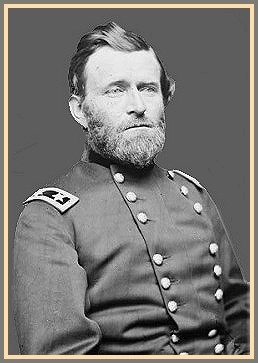
49.
Who was this important general?
a)
Ulysses S. Grant
b)
George Washington
c)
Robert E. Lee
d)
Thomas Jefferson
50.
A person fighting against slavery was known as _________.
a)
a plantation owner
b)
a protester
c)
an abolitionist
51.
Who was Nat Turner?
a)
A slave who led a slave revolt against plantation owners.
b)
An abolitionist who helped with a slave revolt.
c)
A slave who fought for the North to end slavery.
52.
Why was John Brown so important to the fight against slavery?
a)
He led a slave revolt on plantation owners in VA.
b)
He fought for the South to maintain slavery.
c)
He fought for the North to receive his freedom after the war.
d)
He led a revolt at Harper's Ferry in an attempt to start a slave rebellion.
53.
Who was elected president in 1860, in turn causing some southern states to seced?
a)
Robert E. Lee
b)
Thomas Jefferson
c)
Abraham Lincoln
54.
Who was Harriet Tubman?
a)
A former slave owner who continued to fight for slavery.
b)
An escaped slave who helped other slaves to freedom.
55.
What were the reasons for the start of the civil war?
a)
economy, slavery, new states
b)
economy, jobs, income
c)
slavery, new states
d)
economy, new states
56.
Why did West Virginia become a state?
a)
To help Virginia lower its population
b)
Disagreements between eastern counties that needed slavery and western ones who wanted it abolished
c)
Development in the industrial economy and the western territories wanting to expand
d)
Arguments between northern and southern VA counties over slavery
57.
Which group did not take sides in the Civil War?
a)
American Indians
b)
Whites
c)
African Americans
d)
English
58.
Who won the war?
a)
Confederacy
b)
Union
c)
England
d)
France
59.
Showing loyalty to a state or section rather than the whole country is known as
a)
states' rights
b)
secede
c)
sharecropper
d)
sectionalism
60.
Which section of the US felt more strongly in favor of states’ rights?
a)
North
b)
South
c)
Border states
61.

Where would you MOST LIKELY find an abolitionist?

a)

North

b)

South

c)

Border states

62.
The Southern economy was based MOSTLY on:
a)
Paid workers
b)
Industry
c)
Agriculture
d)
Goods & Services
63.

The Northern economy was based MOSTLY on:

a)

Unpaid workers

b)

Industry

c)

Agriculture

d)

Goods & Services

64.

An abolitionist wants to

a)

spread slavery

b)

fight for the South (Confederacy)

c)

withdraw from the Union

d)

end slavery

65.

Who was elected President in 1860 that led to the secession of 11 southern states?

a)

Abraham Lincoln

b)

Ulysses S. Grant

c)

Jefferson Davis

d)

Robert E. Lee

66.

Which statement BEST explains President Abraham Lincoln's original reason for fighting the Civil War?

a)

President Lincoln wanted to end all slavery everywhere in the US

b)

President Lincoln wanted to preserve the Union

c)

President Lincoln wanted to punish the South for their rebellion

67.
What was the South's MAIN argument in support of slavery?
a)
They were an agricultural (farming) based economy that relied on free workers
b)
They had the right to limit the power of the federal government (states' rights)
c)
A workplace made up slave labor would work harder
68.

What was the MOST SIGNIFICANT outcome of the Dred Scott Court Case?

a)

Slaves were determined to have "no rights which any white man was bound to respect"

b)

The North scored a major victory in abolishing slavery

c)

Congress could not outlaw slavery anywhere in the US

69.
What was the MOST SIGNIFICANT outcome of the 1860 Presidential election?
a)
Abraham Lincoln was elected
b)
Abraham Lincoln lost the election
c)
Slavery was immediately abolished (ended)
d)
The Southern states started to secede( withdraw/leave)
70.
To withdraw from something, such as a nation
a)
states' rights
b)
secede
c)
abolitionist
d)
amendment
71.

When was the Civil War?

a)

1861-176

b)

1861-1865

c)

1870-1876

d)

2015-2019

72.

Which was a cause of the Civil War? (Check all that apply).

a)

Tariffs (taxes)

b)

States' rights

c)

Sectionalism

d)

Slavery

e)

Economy

73.

After Abraham Lincoln won the election, which states seceded (left)?

a)

Indian Territories

b)

Western Territories

c)

Southern States

d)

Northern States

74.

What were the advantages the South had in the war? (Check all that apply).

a)

Military leadership (better generals)

b)

Larger army

c)

Fighting in familiar territory

d)

More money

75.

What's important about Fort Sumter?

a)

This is where Lee surrender and it ended the Civil War.

b)

The Confederates open fired on the fort, which began the Civil War.

c)

Lincoln gave the Gettysburg Address here.

76.

The Emancipation Proclamation truly freed slaves in ALL parts of the United States.

a)

True

b)

False

c)

I don't know

77.

Why is important to know about the Appomattox Courthouse's location for the Civil War?

a)

This is where Lee surrender and it ended the Civil War.

b)

The Confederates open fired on the fort, which began the Civil War.

c)

Lincoln gave the Gettysburg Address here.

78.

Based on the pictograph, predict which side would win the war because it had more resources.

a)

Union (North)

b)

Confederates (South)

c)

Western Territories

79.

People who worked to end slavery were called _____.

a)

abolitionists

b)

southerners

c)

cartridges

d)

blockades

80.

Southerners were upset when Lincoln was elected president because:

a)

they believed he might one day end slavery.

b)

they wanted a president who would end slavery.

c)

he wanted northern states to secede from the Union.

d)

he had a plan to raise taxes.

81.

Why was the Battle of Gettysburg important to the Civil War?

a)

It led to the Emancipation Proclamation

b)

It brought an end to the Civil War

c)

It resulted in the passing of the 15th Amendment

d)

It was a turning point because the North started winning more and more battles

82.

More factories, more railroads, more soldiers, and a better navy were all ______________.

a)

Confederate advantages

b)

Union advantages

c)

reasons for a Confederate victory

d)

causes of the Battle of Gettysburg

83.
Better officers, defending their own homes, and not having to go on the attack were
a)
Union advantages
b)
reasons the Union won the battle of Antietam
c)
Confederate advantages
d)
reasons that the Confederacy won at Ft. Pillow
84.

This event caused a lot of fear in the South about the future of slavery.

a)

the election of Jefferson Davis

b)

High tariffs

c)

the election of Abraham Lincoln

d)

the death of Stonewall Jackson

85.
What was the major goal of the Confederacy at the onset of the Civil War?
a)
To overthrow the government and set up a monarchy
b)
To become independent
c)
To spread slavery to the North
d)
To eliminate slavery in the border states
86.

This would have freed the slaves in Confederate states if the Union won the war.

a)

The Compromise of 1850

b)

The Gettysburg Address

c)

The Battle of Antietam

d)

The Emancipation Proclamation

87.
The Union General that forced General Lee to surrender at Appomattox.
a)
Fort Sumter
b)
Abraham Lincoln
c)
Robert E. Lee
d)
Ulysses S. Grant
88.
War between people of the same country
a)
secede
b)
state's rights
c)
civil war
d)
slavery
89.
To break away from a group
a)
state's rights
b)
slavery
c)
Gettysburg
d)
secede
90.
Southern General from Virginia who led the South's largest army and lost a major battle at Gettysburg, Pennsylvania.
a)
Jefferson Davis
b)
Robert E. Lee
c)
Abraham Lincoln
d)
Ulysses S. Grant
91.
President of the U.S. during the Civil War who issued the Emancipation Proclamation which freed slaves in the states that seceded.
a)
George Washington
b)
Thomas Jefferson
c)
Ulysses S. Grant
d)
Abraham Lincoln
92.
Showing loyalty to a state or section rather than the whole country is known as
a)
states' rights
b)
secede
c)
sharecropper
d)
sectionalism
93.
Which section of the US felt more strongly in favor of states’ rights?
a)
North
b)
South
c)
Border states
94.
What was the South's MAIN argument in support of slavery?
a)
They were an agricultural (farming) based economy that relied on free workers
b)
They had the right to limit the power of the federal government (states' rights)
c)
A workplace made up slave labor would work harder
95.

What was the MOST SIGNIFICANT outcome of the Dred Scott Court Case?

a)

Slaves were determined to have "no rights which any white man was bound to respect"

b)

The North scored a major victory in abolishing slavery

c)

Congress could not outlaw slavery anywhere in the US

96.
What was the MOST SIGNIFICANT outcome of the 1860 Presidential election?
a)
Abraham Lincoln was elected
b)
Abraham Lincoln lost the election
c)
Slavery was immediately abolished (ended)
d)
The Southern states started to secede( withdraw/leave)
97.
To withdraw from something, such as a nation
a)
states' rights
b)
secede
c)
abolitionist
d)
amendment
98.

When was the Civil War?

a)

1861-176

b)

1861-1865

c)

1870-1876

d)

2015-2019

99.

After Abraham Lincoln won the election, which states seceded (left)?

a)

Indian Territories

b)

Western Territories

c)

Southern States

d)

Northern States

100.

What's important about Fort Sumter?

a)

This is where Lee surrender and it ended the Civil War.

b)

The Confederates open fired on the fort, which began the Civil War.

c)

Lincoln gave the Gettysburg Address here.