wayground logo

Free Printable Worksheets

Font size

S
M
L
XL
Worksheets

sound- mostly conceptual

Total questions: 50

Worksheet time: 4hrs 10mins

Name
Class
Date
1.
Sound is a form of energy produced by ______________.
a)
vibrations
b)
distances
c)
prisms
d)
Ms. Crews
2.
______________ is the amount of energy in a sound wave.
a)
Amplitude
b)
Echo
c)
Volume
d)
Vibration
3.
Your ear changes the vibration of sound waves into signals. The signals are then interpreted by your brain.
a)
True
b)
False
4.
Sound waves travel the FASTEST through _____________.
a)
gases
b)
liquids
c)
solids
5.

A place where no sound exists is...

a)

in the air.

b)

under water.

c)

space.

d)

all of the above

6.

Why do we see lightning before we hear the thunder?

a)

Our eyes trick us.

b)

Light travels faster than sound.

c)

they're two separate things.

7.

A sound with a high frequency has a _____ pitch. A sound with a ____ frequency has a low pitch.

a)

high, low

b)

low, high

c)

medium, high

d)

high, medium

8.
Sound moves in a _________.
a)
Transverse wave
b)
Longitudinal wave
9.
Area of a longitudinal wave where particles are CLOSE together.
a)
Compression
b)
Rarefaction
10.
Area of a longitudinal wave where particles are APART. 
a)
Compression
b)
Rarefaction
11.

Soft surfaces _______ sound waves.

a)

Reflect

b)

Absorb

c)

love

d)

support spherical

12.

Brandi plays the piano. When she presses the middle of her piano, a sound with a frquency of 261.6 Hz is produced. The lowest note her piano has a frequency of is 27.5 Hz and the highest not has a frequency of 4,186 Hz. Which of these frequencies will travel with the fastest speed?

a)

261.6 Hz

b)

27.5 Hz

c)

4186 Hz

d)

They will all travel the same speed

13.

What is the name given to a space in which there is no matter or in which the pressure is so low that any particles in the space do not affect any processes being carried on there?

a)

Medium

b)

Solid

c)

Liquid

d)

Vacuum

14.

Which correctly describes sound waves travelling in gases?

a)

Longitudinal or compression

b)

Transverse

c)

Pressure

d)

Mechanical

15.

Sound travels fastest through solids because .......

a)

the particles in a solid are rolling around each other but still bonded together.

b)

the particles in a solid are further apart and not bonded at all

c)

the particles in a solid are packed and bonded very tightly.

16.

Why does sound can travel faster through mediums with higher elastic properties (like steel) than it can through solids like rubber?

a)

A rigid material is characterised by atoms and/or molecules with weaker forces of attraction for each other.

b)

A rigid material is characterised by atoms and/or molecules with stronger forces of attraction for each other.

17.
Bending of waves around an object (such as through a doorway)
a)
sound
b)
diffract
c)
pitch
d)
volume
18.
The number of wavelengths that pass a point each second
a)
frequency
b)
wavelength
c)
pitch
d)
amplitude
19.
How high or low a sound is; depends on the frequency (greater frequency= higher pitch)
a)
pitch
b)
frequency
c)
sound
d)
medium
20.
As the fire truck approached Mary, the pitch of the siren got higher. Once the fire truck passed and moved away, the siren's pitch got lower. This change in pitch is because of a change in the sound wave's
a)
concussion. 
b)
amplitude. 
c)
reflection.
d)
frequency. 
21.
Which of the following would you hear as a low pitched sound? 
a)
sound wave with a frequency of 50 Hz
b)
sound wave with frequency of 10,000 Hz
c)
sound wave with an intensity of 10 dB
d)
sound wave with an intensity of 100 dB
22.

What is the Doppler Effect

a)

Where the wavelength of a wave is shifted due to the source moving

b)

When a wave is shifted when a body pushes the wave

c)

Where the apparent wavelength of a wave is shifted due to the source moving

23.
If a wave is traveling at 260 m/s and has a wavelength of 0.8 m/s, what is its frequency?
a)
208 Hz
b)
325 Hz
c)
430 Hz
d)
160 Hz
24.

The amplitude of a sound wave is related to the

a)

pitch of the sound.

b)

volume of the sound.

c)

length of the sound wave.

25.

The number of times a wave repeats in one second.

a)

Sound

b)

Wave height

c)

Amplitude

d)

Frequency

26.

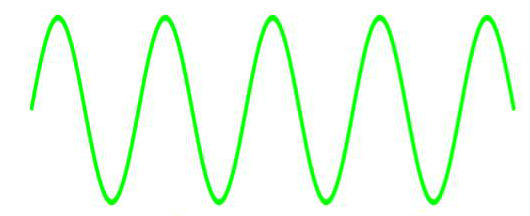
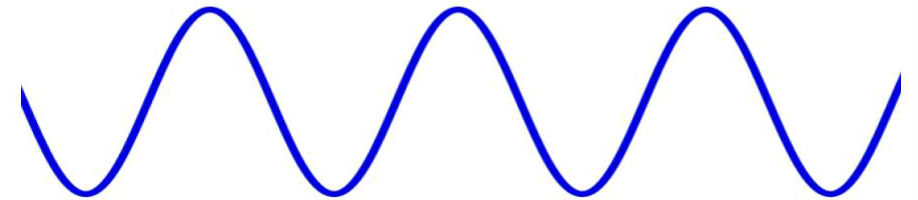
The distance shown by the green line is the

a)

amplitude

b)

pitch

c)

frequency

d)

wavelength

27.

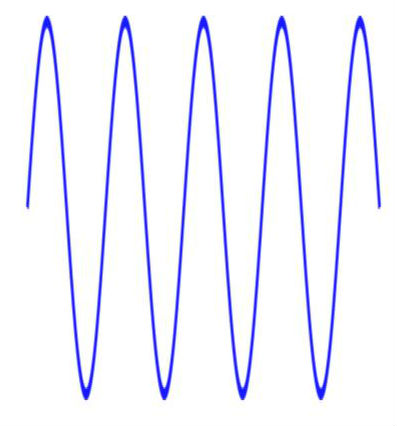
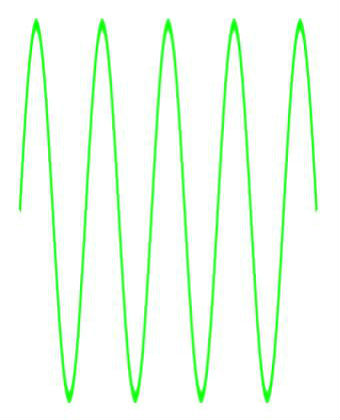
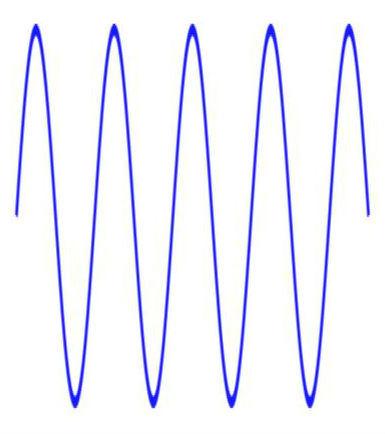
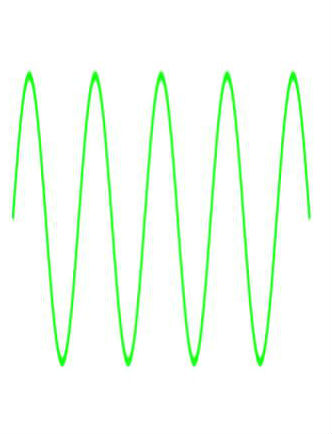
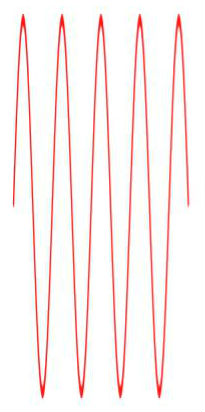
Which sound wave shows the sound with the highest pitch?
a)
b)
c)
28.

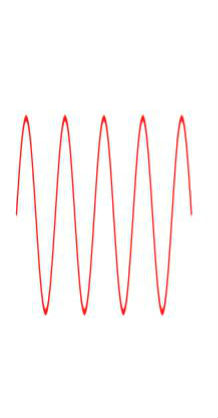
Which sound wave shows the loudest sound?
a)
b)
c)
29.

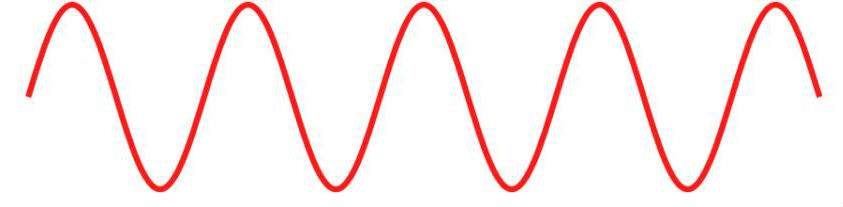
Which color sound wave has the highest pitch and highest volume?
a)
b)
c)
d)
30.
This fluid-filled snail-shaped sack in the inner ear contains hair cells attached to nerves which transmit sound information to the brain. 
a)
Cochlea
b)
Hammer
c)
Anvil
d)
Stirrup
31.
Your __________ vibrate when you talk
a)
stomach
b)
lips
c)
ears
d)
vocal cords
32.
An image made by an ultrasound machine, often used for seeing internal organs in humans is called a(n):
a)
infrasound
b)
Ultrasound
c)
doppler effect
d)
decibel
33.
Sound can be measured in ________.  It is recommended that humans not be exposed to volumes over 85 _______ for long periods of time. 
a)
decimals
b)
frequency
c)
hertz
d)
decibels
34.
The use of reflected sound waves to find objects is called:
a)
echolocation
b)
sound waves 
c)
radar
d)
echo
35.

Unit for measuring Sound Intensity

a)

A. Joules

b)

B. Lambda (λ)

c)

C. Watts / Metre2 or Decibel

d)

D. Hertz

36.

the explosive sound heard when a shock wave from an object faster than the speed of sound reaches a person's ears

a)

radar

b)

sonar

c)

sonic boom

d)

sound quality

e)

sound wave

37.

an acoustic wave that consists of pulses of sound waves that are transmitted into water, usually at ultrasonic frequencies in the range of 20-100 kHz.

a)

radar

b)

sonar

c)

sonic boom

d)

sound quality

e)

sound wave

38.
What best describes the doppler effect?
a)
An apparent change in frequency of a wave due to the relative motion between a wave source and an observer
b)
When sound changes pitch
c)
When light changes color
d)
An apparent change in the amplitude of a wave due to the relative motion between a wave source and an observer.
39.
A tuning fork starts to vibrate when a certain note is played on the piano, This is an example of _______.
a)
resonance
b)
refraction
c)
diffraction
d)
reflection
40.
An interaction that occurs when 2 waves meet is known as what?
a)
Diffraction
b)
Standing wave
c)
Interference
d)
Resonance
41.
When 2 waves meet and there amplitude increases it is known as what?
a)
Constructive Interference
b)
Amplitude Addition
c)
Positive Interference
d)
Destructive Interference
42.
Interference that causes a wave that appears to be standing still is known as what?
a)
Standing wave
b)
Resonance
c)
Destructive Interference
d)
Constructive Interference
43.
True or False: Every object has at least one natural frequency.
a)
True
b)
False
44.
What is the superposition of waves?
a)
when a single wave splits into two different waves at a point
b)
when two waves combine at the same place at the same time
45.
Standing waves are formed --
a)
by the superposition of two or more waves moving in opposite directions.
b)
by the superposition of two or more waves moving in the same direction.
c)
by the superposition of two or more waves moving in perpendicular directions.
d)
by the superposition of two or more waves moving in any arbitrary directions.
46.
A 0.588-m string is tightly clamped at both ends. If the lowest standing wave frequency of the string is  326 Hz, how fast do waves travel on this string?
a)
383 m/s
b)
475 m/s
c)
582 m/s
d)
724 m/s
47.

The length of a wave is measured in meters. What is the symbol used for it?

a)

A

b)

f

c)

c

d)

λ

48.
Noise cancelling headphones work by means of...
a)
constructive interference
b)
destructive interference
c)
non-interference
d)
spatial interference
49.
Waves spread out as they travel.  What keyword defines this?
a)
Longitudinal
b)
Propagation
c)
Transverse
d)
Diffraction
50.

A wave is traveling at a speed of 500 m/s. If the wave is as long as a soccer field, 100 m, what is the frequency of the wave?

a)

500,000 Hz

b)

5 Hz

c)

0.2 Hz

d)

1/5 Hz