
 Worksheets
HIS 2002 Test 2 Review
Total questions: 60
Worksheet time: 49mins
The Progressive goal to implement women's suffrage was accomplished by -
A national referendum
an executive order
A supreme Court decision
a constitutional amendment
The Knights of Labor and the American Federation of Labor developed in response to the —
increased need to protect worker interests
decreased power of political machines
increased demand for skilled workers
decreased profitability of the agricultural sector
Which of the following occurred as a result of the Sherman Antitrust Act?
Workers secured a greater share of company profits.
The influence of labor unions on factory owners was reduced.
The federal government could dissolve business monopolies.
Businesses were required to pay fees to open overseas locations.
Which of these was a major goal of Jane Addams’s Settlement House movement in Chicago?
The founding of women’s colleges
The introduction of prison reform
The assimilation of immigrants
The establishment of public libraries
The Temperance Movement, Women’s Suffrage Movement, and outlawing child labor were reform movements that took place during this era-
Gilded Age
Imperialism
Progressive Era
Roaring 20's
Which agency did the federal government establish to protect consumer’s safety as a response to Upton Sinclair’s The Jungle?
Pure Food and Drug Administration
NAACP
National Park Service
Environmental Protection Agency

What amendment did the members of the Temperance movement work to achieve?
16th
17th
18th
19th
Which idea of Theodore Roosevelt’s Square Deal led to the creation of National Parks?
Meat Inspection Act
Preservation
Conservation
Intimidation
Between 1860 and 1910, the U.S. population tripled in size.
This is most likely due to...
The Baby Boom
Immigration
The Homestead Act
Better Healthcare
Teddy Roosevelt was known as a "trust-buster." What does that mean?
He worked to break up small businesses
He worked with big monopolies to make them stronger
He worked to break up large monopolies
He let the companies operate without any government interference
Below is a list of reasons for the United States entering World War I. What would be the third reason?
- German attempts to have Mexico invade the United States
- Acts of sabotage
- ??????????
Sunken American battleships
Destroyed American skyscrapers
Exploded nuclear weapons
Unrestricted submarine warfare

The assassination of this man led to World War I in Europe.
Tsar Nicholas II
Queen Victoria
Archduke Franz Ferdinand
Kaiser Wilhelm II

Which of these countries were part of the Allied Powers in World War I? (3 correct)
Germany
Great Britain
Russia
Austria-Hungary
Serbia

Which of the following countries were part of the Central Powers during World War I? (3 correct)
Germany
Great Britain
Austria-Hungary
France
Bulgaria

Before and after World War I, the United States practiced ____________________________, meaning the US didn't get involved in other countries fights.
Isolationism
Imperialism
Globalization
Conservationism
Why were tensions heightened among countries in Europe after 1900?
Socialists had seized power
Some nations refused to trade with each other.
Nations began mobilizing for war
People were joining the Black Hand.
The break up of which empires was a lasting legacy of WW1?
British Empire
Ottoman Empire
German Empire
Austria-Hungarian Empire

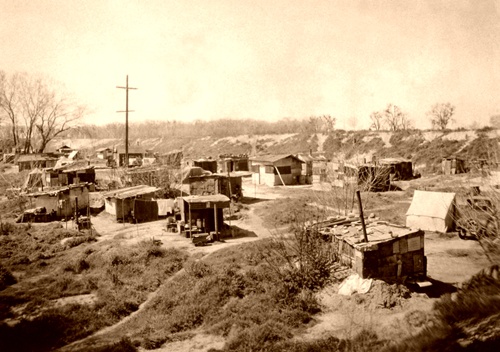
Which of the following were main causes of the Great Depression?
the Stock Market Crash of 1929
Overconsumption and underproduction
Speculation and overspending
High tariffs that blocked global trade
Responsible banking practices
What were the 3 Rs of the New Deal?
Relent, Release, Recoil
Relief, Resume, Resolve
Reform, Relieve, Remove
Relief, Recovery, Reform
Which of the following best describes Hoover's initial approach to handling the Great Depression
voluntarism and rugged individualism
direct relief through government assistance
limited government assistance of banking systems
bailout of failing businesses


Which pull factor contributed to the Great Migration?
The availability of land grants for homesteaders
Economic opportunities in industrialized cities
Better soil conditions in previously uncultivated areas
The lower cost of living in urban areas
The establishment of speakeasies in the 1920's was an unintended consequence of which federal government action?
The taxation of imported luxury goods
The deportation of suspected communist sympathizers
The prohibition of the sale of alcoholic beverages
The implementation of immigration restrictions
During the 1920's, Clarence Darrow and William Jennings Bryan were most closely identified with the --
increased use of credit by U.S. consumers
development of new forms of popular entertainment
decline of public support for Progressive reforms
conflict between Modernism and Fundamentalism
WWII military alliance of Britain, France, Soviet Union, China, the U.S., and 45 other countries
Allied Powers
Axis Powers
Central Powers
Triple Alliance
The German government set up after WWI under Hindenburg that was overthrown by the Nazis
The Reichstag
Nazi Party
Weimer Republic
Third Reich
Day of the invasion of Western Europe by Allied forces-June 6, 1944 (Allied forces landed at Normandy, France; freed Paris; slowly advanced to Germany)
D-Day
V-Day
VE-Day
VJ-Day
People of Japanese ancestry living in the U.S. were forced to relocate and imprisoned in camps. Sixty-two percent of the internees were U.S. citizens.
Concentration Camps
Russo-Japanese War
Pearl Harbor
Japanese-American Internment
Code name for the secret US project set up in 1942 to develop an atomic bomb.
Fat Man
Enola Gay
Manhattan Project
Little Boy
What were the names of the 2 cities in Japan that were attacked by atomic bombs.
Tokyo
Hiroshima
Nagasaki
Osaka
Naval battle, fought almost entirely with aircraft, in which the United States destroyed Japan’s first-line carrier strength and most of its best trained naval pilots
Battle of Midway
Battle of Iwo Jima
Battle of Gettysburg
Battle of the Bulge
What is the United Nations?
A court that sentenced war criminals after WW2
The groups that started WW2
An international organization thatwas created after WWII to stop future wars between countries and protect human rights
None of the above

