wayground logo

Free Printable Worksheets

Font size

S
M
L
XL
Worksheets

Solar System and Properties of Matter

Total questions: 117

Worksheet time: 2hrs 34mins

Name
Class
Date
1.
Anything that occupies space and has mass is known as
a)
liquid
b)
air
c)
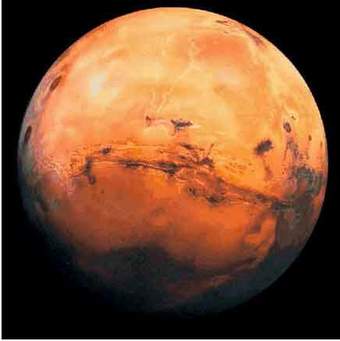
matter
d)
solid
2.
Melting is the change in state of a
a)
solid to a gas.
b)
 liquid to a gas.
c)
solid to a liquid.
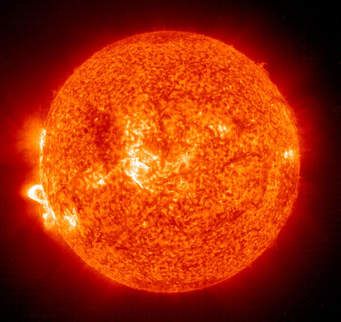
d)
 liquid to a solid.
3.
Has no definite shape or volume, but take the shape and volume of their containers, filling the space available. The particles easily move far apart from each other and spread out through the available space.
a)
solid
b)
liquid
c)
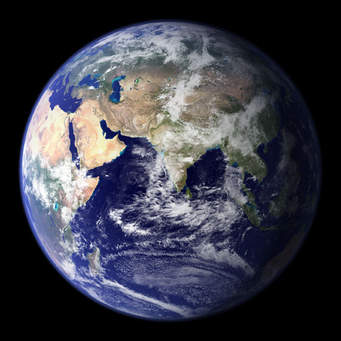
gas
d)
mass
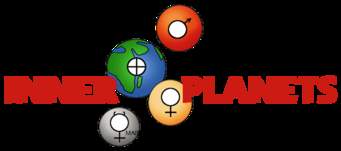
4.
Has a definite shape and volume. Particles are very close to one another (dense).They vibrate, but do not move about. 
a)
solid
b)
liquid
c)
gas
d)
mass
5.
Anything that has mass and takes up space.
a)
volume
b)
matter
c)
solid
d)
temperature
6.
A change in which the form or shape of a substance changes but the chemical makeup of the substance remains the same.
a)
chemical change
b)
reaction
c)
physical change
d)
solution
7.
A combination of two or more different substances in which the substances keep their identities. 
a)
reaction
b)
mixture
c)
solution
d)
atom
8.

_____ have molecules that are packed together and hardly move.

a)

solids

b)

liquids

c)

gases

d)

plasma

9.

Which tool would you use to measure the volume of a liquid?

a)

balance

b)

thermometer

c)

ruler

d)

graduated cylinder

10.

Which tool should you use to measure the mass of pencil?

a)

thermometer

b)

balance

c)

graduated cylinder

d)

ruler

11.
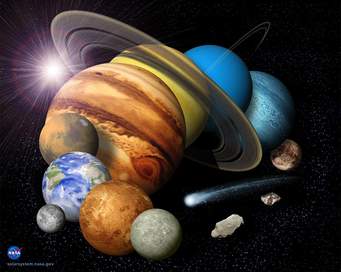
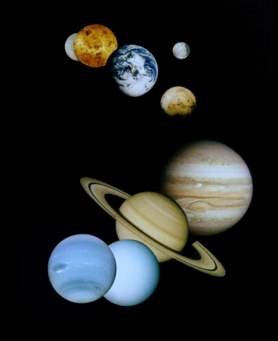
How Many Planets orbit the sun in our solar system?
a)
4 planets orbit the sun.
b)
9 planets orbit the sun.
c)
8 planets orbit the sun.
d)
Over 20 planets orbit the sun.
12.
What planet is the largest planet in our solar system?
a)
Earth
b)
Jupiter
c)
Uranus
d)
Saturn
13.
What does orbit mean?
a)
The path a planet takes around the sun.
b)
The spinning of the planet.
c)
When a rocket blasts into space.
d)
To fly into outer space.
14.
What do the planets orbit around?
a)
They orbit around the Earth.
b)
They orbit around each other.
c)
They orbit around the sun.
d)
They orbit around the sun,
15.
What is the name of the Dwarf Planet in our solar system?
a)
Pluto
b)
Earth's Moon
c)
Mercury
16.
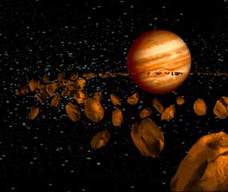
What best describes the Asteroid Belt?
a)
A group of large rocks that are in outer space.
b)
The 8 planets that are in our solar system.
c)
A line of clouds in outer space.
17.
What are the 4 rocky planets in the Solar System?
a)
Jupiter, Saturn, Uranus, Neptune
b)
Mercury, Venus, Earth, Mars
c)
Pluto, Mars, Jupiter, Earth
18.
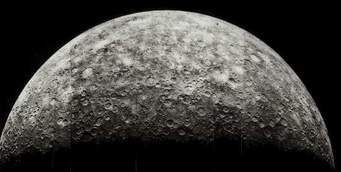
Which Planet is closest to the Sun?
a)
Venus
b)
Earth
c)
Saturn
d)
Mercury
19.
What is the only planet that has life on it?
a)
Earth
b)
Mars
c)
Venus
d)
Pluto
20.
What is the hottest planet in our Solar System?
a)
Venus
b)
Mercury
c)
Earth
d)
Mars
21.
What planet has the nickname the Red Planet?
a)
Earth
b)
Saturn
c)
Mars
d)
Mercury
22.

This is the first planet in the solar system.

a)

MERCURY

b)

EARTH

c)

MARS

d)

VENUS

23.

The name of our galaxy is...

a)

The Farm

b)

Galaxy War

c)

The Universe

d)

Milky Way

24.

Which planet is the first (1st) from the Sun?

a)
b)
c)
d)
25.

Which planet is the second (2nd) from the Sun?

a)
b)
c)
d)
26.

Which planet is the third (3rd) from the Sun?

a)
b)
c)
d)
27.

Which planet is the fifth (5th) from the Sun?

a)
b)
c)
d)
28.

Which planet is the sixth (6th) from the Sun?

a)
b)
c)
d)
29.

Which planet is the seventh (7th) from the Sun?

a)
b)
c)
d)
30.

Which planet is the eighth (8th) from the Sun?

a)
b)
c)
d)
31.

Which planet is the fourth (4th) from the Sun?

a)
b)
c)
d)
32.

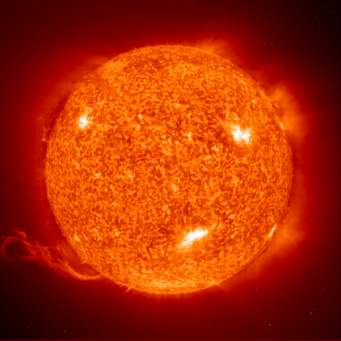
What is the center of our Solar System?

a)
b)
c)
d)
33.

What separates the inner planets from the outer planets?

a)
b)
c)
d)
34.

When Earth spins, it turns around an imaginary line called a(n)

a)

rotation

b)

axis

c)

orbit

d)

ellipse

35.

Which planet is an inner planet?

a)

Uranus

b)

Venus

c)

Saturn

d)

Neptune

36.

Which list shows the correct order of planets from the sun?

a)

Mercury, Venus, Earth, Mars

b)

Earth, Mars, Venus, Jupiter

c)

Mars, Venus, Earth, Saturn

d)

Uranus, Jupiter, Neptune, Saturn

37.

What do Jupiter, Saturn, Uranus, and Neptune have in common?

a)

They all have rocky surfaces.

b)

They all appear to be similar to Earth.

c)

They all are gaseous planets.

d)

They all appear to be made of rock and ice.

38.
What planet is covered with red sand?
a)
Venus
b)
Mars
c)
Neptune
d)
Saturn
39.
What planet is the hottest planet in our solar system?
a)
Jupiter
b)
Mercury
c)
Mars
d)
Venus
40.
What planet has a giant red spot that is a giant storm?
a)
Saturn
b)
Mercury
c)
Jupiter
d)
Neptune
41.
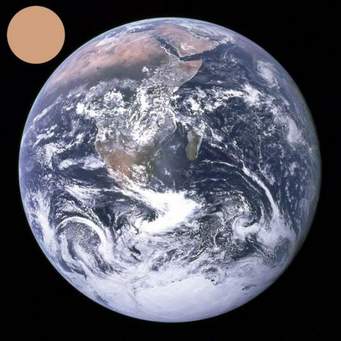
What planet is this?
a)
Saturn
b)
Venus
c)
Neptune
d)
Earth
42.
All of the outer planets--
a)
have many moons
b)
are small
c)
have a short orbit around the Sun
d)
are rocky
43.
What is located between the inner and outer planets.
a)
Sun
b)
Asteroid belt
c)
Uranus
d)
Moons
44.
Mercury, Venus, Earth, and Mars are called.....?
a)
Jovian Planets
b)
Awesome Sauce Planets
c)
Gas Giants
d)
Inner Planets
45.
What do we call Jupiter, Saturn, Uranus and Neptune?
a)
Outer Planets
b)
Terrestrial Planets
c)
Inner Planets
d)
Oort Cloud
46.
What is the only planet known to contain life?
a)
Mars
b)
Earth
c)
Neptune
d)
Uranus
47.

________ is a change in the size, state or shape of matter.

a)

Physical Change

b)

Property Change

c)

Volume Change

48.

_______ is a measure of the amount of matter in an object.

a)

Volume

b)

Mass

c)

Physical Change

49.

(a)   is a tool used to measure mass.

50.

Volume is the amount of ____________ that matter takes up.

a)

balance

b)

mass

c)

matter

51.

What is used to measure the volume of a liquid?

a)

Balance

b)

Graduated Cylinder

c)

Temperature

52.
Wood burned in a fireplace
a)
Chemical Change
b)
Physical Change
53.
Cake batter baked in an oven
a)
Chemical Change
b)
Physical Change
54.
Glass bottle that is shattered
a)
Chemical Change
b)
Physical Change
55.
Shredding a piece of paper
a)
Chemical Change
b)
Physical Change
56.
What happens in ALL chemical changes?
a)
Change in state of matter
b)
A new substance is formed
c)
Bubbles are produced
d)
An explosion
57.
A change where one or more new substances are created.
a)
Physical Change 
b)
Chemical Change 
58.

Which are clues that a chemical change has taken place?

a)

Change in temperature

b)

The color changes

c)

The odor or smell changes

d)

Formation of a precipatate

e)

You see bubbles form

59.
Which best describes a chemical change in paper?
a)
filing paper
b)
mailing paper
c)
burning paper
d)
cutting paper in half
60.
Which is an example of a chemical change?
a)
baking a cake
b)
freezing water
c)
crushing a can
d)
breaking an egg
61.
Which of the following is NOT an example of a physical change?
a)
crumpled paper
b)
pencil sharpening
c)
shrunken clothing
d)
sour milk
62.

All plants that produce flowers and seeds are ________________ plants.

a)

flowering

b)

non-flowering

63.

The seeds that flowering plants produce may have one or two food leaves called _______________________.

a)

flowers

b)

cotyledons

c)

stems

d)

floral

64.

Look at the floral part of the sunflower. Is it monocot or dicot?

a)

Monocot

b)

Dicot

65.

Look at this leaf. Does it belong to monocots or dicots?

a)

Monocots

b)

Dicots

66.

Look at this leaf. Is it monocot or dicot.

a)

Monocot

b)

Dicot

67.

These roots are fibrous. Do they belong to monocots or dicots?

a)

Monocots

b)

Dicots

68.

This is a tap root. Is the tap root monocot or dicot?

a)

Monocot

b)

Dicot

69.

Name one plant that is monocot and one that is dicot.

4 lines
70.

What is a food chain?

a)

The flow of energy from one thing to another

b)

The way animals eat each other

c)

The way the sun makes everything

d)

How the plants grow

71.
What is a producer? 
a)
Organism that creates their own food.
b)
Organism that eat other organisms for energy
c)
Organism that eat other dead organisms
72.
What is a consumer? 
a)
Organism that creates their own food.
b)
Organism that eat other organisms for energy
c)
Organism that eat other dead organisms
73.
An animal that eats other animals is a....
a)
carnivore
b)
omnivore
c)
herbivore
d)
decomposer
74.
What animal is on the top of the food chain? 
*Remember Humans are on the top of all food chains because we do not get hunted. 
a)
Grass
b)
Grasshopper
c)
Mouse
d)
Owl
75.
What do Herbivores eat? 
a)
Plants ONLY 
b)
Animals ONLY
c)
Plants AND Animals
76.

What do plants need to make their own food?

a)

Sun, Water, and Animals

b)

Sun, Coke, and Soil

c)

Sun, Water, and Soil

d)

Nothing at all

77.

An example of a predator:

a)

shark

b)

mouse

c)

rabbit

78.
Where does the energy start in this food chain?
a)
Plant
b)
Sun
c)
Deer
d)
Wolf
79.

What is a decomposer?

a)
b)
c)
d)
80.
What are animals called in a food chain?
a)
Producers
b)
Consumers
c)
Decomposers
d)
Plants
81.
What are plants called in a food chain?
a)
Producers
b)
Consumers
c)
Decomposers
d)
Scavengers
82.
Which of these organisms would receive energy from the snake?
a)
Plant
b)
Rabbit
c)
Mouse
d)
Hawk
83.
Which type of consumer eats meat and plants?
a)
Herbivores
b)
Carnivores
c)
Omnivores
d)
Plants
84.

Where do all life forms get their energy?

a)

Food

b)

Water

c)

Plants

d)

The Sun

85.
What is a producer? 
a)
Organism that creates their own food.
b)
Organism that eat other organisms for energy
c)
Organism that eat other dead organisms
86.
An animal that eats only plants is an...
a)
carnivore
b)
omnivore
c)
herbivore
d)
decomposer
87.
Where an animal lives is called the animal's ______
a)
wildlife
b)
habitat
c)
environment 
d)
carnivore 
88.

which one is a Producer?

a)
b)
c)
d)
89.
The rabbit in this food web would be considered a:
a)
Decomposer
b)
Producer
c)
Secondary Consumer
d)
Primary Consumer
90.

A push or pull of an object is called __________________.

a)

force

b)

gravity

c)

energy

d)

friction

91.

The ability to do work is called ___________________.

a)

force

b)

gravity

c)

energy

d)

friction

92.

Which of these would take the most force to lift?

a)

one book

b)

a cotton ball

c)

a pencil

d)

a box of bricks

93.

Which force is shown in the picture?

a)

push

b)

pull

c)

gravity

d)

friction

94.

Which force is shown in the picture?

a)

push

b)

pull

c)

gravity

d)

friction

95.

Name the word that is a force that moves an object away from you.

a)

push

b)

pull

96.
A _____ moves an object closer to you.
a)
push
b)
pull
c)
friction
d)
cat
97.
A _____ is a pull or a push.
a)
force
b)
friction
c)
gravity
d)
speed
98.
The process that breaks down rocks and other materials on Earth's surface is called
a)
Weathering
b)
Erosion
99.
How does freezing water cause the weathering of rocks?  The freezing water—
a)
keeps the rocks in place.
b)
makes the rocks last longer.
c)
expands cracks and breaks rocks.
d)
causes rocks to fall in landslides.
100.

What is the process that picks up and moves weathered rocks?

a)

Erosion

b)

Weathering

101.
What causes the greatest erosion effect on our beaches?
a)
Waves
b)
Gravity
c)
Glaciers
d)
Wind
102.

The process by which water, ice, wind, or gravity moves weathered rock and soil from one place to another.

a)

Weathering

b)

Erosion

103.
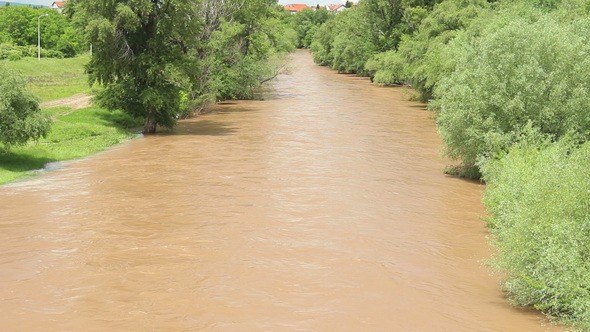
Muddy water being carried away by a fast-moving river is an example of
a)
Weathering
b)
Erosion
c)
A mess
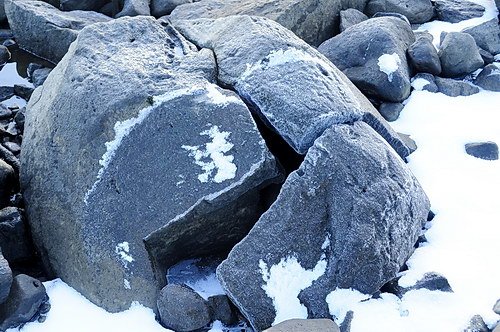
d)
A nice place to swim
104.
Weathering and erosion are the same thing.
a)
True
b)
False
105.
The process of slowly breaking rocks into smaller pieces is called
a)
weathering
b)
erosion
106.

All of the living and nonliving components that interact in an environment.

a)

population

b)

ecosystem

c)

community

d)

organism

107.

Plants need _____ to make food.

a)

light

b)

protection

c)

to stay warm

108.

What organisms eat plants and animals to gain energy?

a)

Producers

b)

Consumers

c)

Decomposers

d)

The sun

109.

Which of these is not a producer?

a)

Tree

b)

Flower

c)

Grass

d)

Bird

110.

Who can make their own food through a process known as photosynthesis after receiving energy from the sun?

a)

Producers

b)

Consumers

c)

Decomposers

d)

The sun

111.

What is this?

a)

Food Web

b)

Food Chain

112.

These organisms cannot make their own food; they must eat something for energy

a)

decomposer

b)

consumer

c)

producer

113.

Choose the decomposer.

a)

grass

b)

elephant

c)

bacteria

d)

bird

114.

Choose the consumer.

a)

mushroom

b)

horse

c)

tree

d)

grass

115.

Where does the food chain START?

a)

with consumers that eat grass

b)

with the sun giving energy to producers

c)

with the sun giving energy to consumers

d)

with consumers eating other consumers

116.

Which of these living things is a producer?

a)

horse

b)

cow

c)

fly

d)

grass

117.

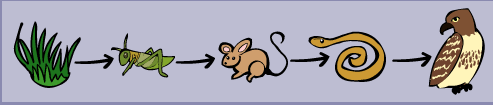
Explain the flow of energy in this food chain (who passes energy to who).

a)

The hawk gives energy to the snake. The snake gives energy to the mouse. The mouse gives energy to the grasshopper who gives energy to the grass.

b)

The mouse gives energy to the hawk. The snake gives energy to the grasshopper. The grass gives energy to the snake.

c)

The grass gives energy to the grasshopper. The grasshopper gives energy to the mouse. The mouse gives energy to the snake who gives energy to the hawk.