wayground logo

Free Printable Worksheets

Font size

S
M
L
XL
Worksheets

Human Body Part 2

Total questions: 32

Worksheet time: 23mins
Name
Class
Date
1.
a process that allows the body to get oxygen to burn food for energy and gets rid of carbon dioxide
a)
respiration
b)
emphysema
c)
inhaling
d)
nasal passage
2.
a dome shaped sheet of muscle, the _________, separates the chest from the abdomen
a)
diaphragm
b)
epiglottis
c)
alveoli
d)
bronchial tubes
3.
After air moves through the pharynx it continues downward. The _____, or windpipe, directs the air into 2 separate branches or tubes.
a)
mucus
b)
trachea
c)
larynx
d)
epiglottis
4.
the ____ look like a wasp's nest and is where the exchange of oxygen and carbon dioxide takes places.
a)
alveoli
b)
bronchial tubes
c)
lung
d)
diaphragm
5.
known as the voice box
a)
windpipe
b)
larynx
c)
pharynx
d)
epiglottis
6.
the gas known as _______ is needed to stay alive and properly.
a)
oxygen
b)
carbon dioxide
c)
nitrogen
d)
helium
7.
What is breathed out from our mouth and nose?
a)
carbon dioxide
b)
oxygen
c)
nitrogen
d)
helium
8.

What is the main function of the respiratory system?

a)

to provide oxygen and remove carbon dioxide from the body

b)

o break down food and absorb nutrients

c)

to remove oxygen from the body and deliver carbon dioxide
9.
When you breathe, your lungs take in ___ and remove ___. 
a)
air/oxygen
b)
oxygen/carbon dioxide 
c)
carbon dioxide/waste 
d)
waste/air 
10.
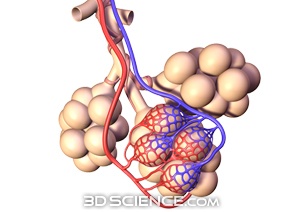
Within the lungs, the exchange of oxygen and carbon dioxide occurs between the ___ and the capillaries. 
a)
trachea 
b)
bronchi 
c)
alveoli
d)
diaphragm
11.

The circulatory system works with the ___________ system to provide our body with oxygen and get rid of CO2 (carbon dioxide).

a)

respiratory

b)

digestive

c)

muscular

d)

skeletal

12.
The circulatory system works with the __________ system to obtain energy from nutrients that we eat. 
a)
respiratory 
b)
digestive
c)
skeletal
d)
nervous
13.

Type of circulation that refers to blood flow from the heart to the lungs and back to the heart again?

a)

Systemic circulation

b)

Renal circulation

c)

Portal circulation

d)

Pulmonary circulation

14.

Type of circulation that refers to the blood flowing through the entire body?

a)

Systemic circulation

b)

Renal circulation

c)

Portal circulation

d)

Pulmonary circulation

15.

The type of blood vessel that normally carries de-oxygenated blood back to the heart from body cells?

a)

arteries

b)

capillaries

c)

veins

16.

The type of blood vessel that normally carries oxygenated blood from the heart to the body cells?

a)

arteries

b)

capillaries

c)

veins

17.

The type of blood vessel where exchange of gases, nutrients, and wastes occurs?

a)

arteries

b)

capillaries

c)

veins

18.

Name part N.

a)

Right atrium

b)

left atrium

c)

right ventricle

d)

left ventricle

19.

What is the main organ of the circulatory system?

a)

small intestine

b)

bone

c)

lungs

d)

heart

20.
The circulatory system works with the ___________ system to provide our body with oxygen.
a)
respiratory
b)
digestive
c)
muscular
d)
skeletal
21.
The main function of the circulatory system is 
a)
To give the body structure and support
b)
Excrete waste
c)
transport blood, nutrients, and gases throughout the body
d)
to transport messages from the body to the brain
22.
The circulatory system works with the __________ system to obtain energy from nutrients that we eat. 
a)
respiratory 
b)
digestive
c)
skeletal
d)
nervous
23.
White blood cells
a)
allow for gases to exchange
b)
give blood its color
c)
fight infection and disease
d)
help clot blood
24.

What is the function of the nervous system?

a)

to control and coordinate body functions and systems.

b)

to protect the body from harm.

c)

to identify pain and begin healing.

d)

to break down food.

25.

Select all of the organs of the nervous system:

a)

Brain

b)

Heart

c)

Spinal Cord

d)

Nerves

e)

Stomach

26.

Which of the following is the nervous system?

a)
b)
c)
d)
27.

Which system controls all other body systems?

a)

Muscular

b)

Excretory

c)

Nervous

d)

Digestive

28.

The basic unit of structure and function in the nervous system is a nerve cell. Nerve cells are also called-

a)

Osteocytes

b)

Dendrites

c)

Neurons

d)

Spinal Cords

29.

What is the function of a nerve?

a)

To transport needed food around the body

b)

To control body movement for reflexes.

c)

To carry messages (impulses) to and form the Central Nervous System

d)

All of the above

30.

The Central Nervous system includes what two organs?

a)

Brain and Nerves

b)

Brain and Spinal Cord

c)

Spinal cord and Nerves

d)

Nerves and Neurons

31.

The Central Nervous system includes what two organs?

a)

Brain and Nerves

b)

Brain and Spinal Cord

c)

Spinal cord and Nerves

d)

Nerves and Neurons

32.

The column of tissue connecting the brain to nerves is...

a)

spinal cord

b)

central nervous system

c)

peripheral nervous system

d)

All of the above