
Font size
 Worksheets
STAAR Physical Science Review 1 (2021)
Total questions: 61
Worksheet time: 5hrs 5mins

The forces shown here are
pulling forces
pushing forces

The forces acting on the object are _________________ forces and are ___________________
unbalanced, pulls
unbalanced, pushes
balanced, pulls
balanced, pushes

The forces acting on the object are _________________ forces and are ___________________
unbalanced, pulls
unbalanced, pushes
balanced, pulls
balanced, pushes
Which of the following represent Balanced Forces (Mark all that apply)


Which of the following represent Unbalanced Forces? (Mark all that apply)


Which of the pics below represents a balanced force?


In picture A the forces are Balanced. In picture B the forces are Unbalanced.
True
False

The forces of the skaters are _________________ forces
pushing
pulling

When the two skaters push each other they will move ______________________
forwards
backwards

What will happen to the motion of the toy truck? (ADD forces in the same direction, SUBTRACT when forces are opposite)
it will not move
It will move left( <--- ) with a force of 16N
It will move right with a force of 4N
It will move right( ---> ) with a force of 16N

The NET forces acting on OBJECT X is
5.4N
15.6N
21N
26.4N

What direction will the box move?
Down and to the left
Down and to the right
Up and to the left
Up and to the right

what direction will this box move?
LEFT and UP
no movement
left and down
side to side

In which direction will this box move?
Up and to the Left
Up and to the Right
Down and to the Left
Down and to the Right

The forces on this box are ____________________ forces
pulling
pushing

What is the phrase used in our class to remember the equation F = M x A
My Dog Victor
Don't Say That
Feed My Animals
The F in the equation F = M x A stands for __________________
Force
Mass
Acceleration

The M in the equation F = M x A stands for __________________
Force
Mass
Acceleration

The A in the equation F = M x A stands for __________________
Force
Mass
Acceleration

what must you do with mass and acceleration to solve for force?
add
subtract
MULTIPLY
divide
what must you do with force and mass to solve for acceleration?
add
subtract
multiply
DIVIDE

What is the ACCELERATION of an object that has a mass of 50kg that is pushed with a force of 500N (Newtons)? To solve this problem you must do this.
500 ÷ 50
50 ÷ 500
500 x 50


A 70kg motorcycle has an engine
with a force of 20N.
How would you solve for acceleration?
20 + 70
20 - 70
20 x 70
20 / 70

An car has a mass of 300 kg. It accelerates at the rate of 4 m/s2. Calculate the force required to produce this acceleration. To solve this problem you must do -
300 ÷ 4
4 ÷ 300
300 x 4


A skater has a mass of 50 kg. The skater accelerates to 5 m/s2 when pushed by a friend. Find the FORCE applied to the skater.
250N
10N
0.1N


If you want to make the car to go faster, you must ______________________
increase the force to accelerate it
decrease the force
increase the mass of the car to accelerate it
nothing

Newton's 1st Law
An object at rest stays at _____________.
rest
motion

Newton's 1st Law
An object at rest stays at rest.
An object in motion stays in _______________
rest
motion

Newton's 1st Law
An object at rest stays at rest.
An object in motion stays in motion
unless acted on by a(n) ___________________________
unless act
balanced force
unbalanced force

Another name for Newton's 1st Law is the Law of _____________________
inertia (1st)
acceleration (2nd)
action/reaction (3rd)

The tendency of objects to resist a change in motion is called ________________________
Friction
Inertia
Gravity

An example of inertia is a moving bus when it stops. Your body continues to want to move forward because of its inertia.
True
False

An example of inertia is when a bus at rest starts to move. Your body moves backward as the bus starts because of inertia.
True
False

1st Law Inertia. The head of the person on this
bus moves backward because the bus is _____________________
starting to move from rest
stopping

1st Law Inertia. The head of the person on this bus
moves forward because the bus is _____________________
starting to move from rest
stopping

Another name for Newton's 2nd Law of Motion is the Law of _____________________
inertia (1st)
acceleration (2nd)
action/reaction (3rd)
Newton's 2nd Law of Motion uses this triangle.


For the 2nd Law of Motion, what is the phrase used in our class to remember the equation F = M x A
My Dog Victor
Don't Say That
Feed My Animals

Another name for Newton's 3rd Law of Motion is the Law of _____________________
inertia (1st)
acceleration (2nd)
action/reaction (3rd)

For every action, there is an ___________ and ___________ reaction.
force, acceleration
opposite, equal
equal, opposite

Newton's third law states that any action will have a(n) _______ and ______ reaction
lesser and greater
Equal and opposite
Equal and different
Which are examples of Newton's 3rd Law. Action/Reaction) MARK ALL THAT APPLY


Which are examples of Newton's 3rd Law. Action/Reaction) MARK ALL THAT APPLY


There are two forces in Newton's 3rd Law. They are called ______________________
action/reaction forces
mass/acceleration forces
inertia and motion forces

In class we learned that the ac in acceleration means any change in ________________________
speed or direction
distance

This is an example of acceleration because it is a change in direction
true
false

This is an example of acceleration because it is a change in speed.
true
false

What is potential energy? An object with potential energy is _____________________
not moving (balanced)
moving (unbalanced)

Potential energy increases as an object __________________
moves to a higher position
moves to a lower position

Which skier has the greatest potential energy?
the blue skier, because the person is in a higher position
the red skier, because the person is in a lower position


What color represents the highest potential energy?
red and blue
orange
green
yellow

As the boy climbs up the tree, the potential energy of the boy _____________________
decreases
stays the same
increases

A girl is rock climbing up the side of a mountain. Her potential energy is _________________.
increasing because she is getting higher
decreasing because she is getting higher

As a boy throws a ball up, the potential energy of the ball _____________________ as it moves up.
decreases
stays the same
increases
What is kinetic energy? An object with kinetic energy is _____________________
not moving (balanced)
moving (unbalanced)

The faster an object moves, the ________ kinetic energy it has.
more
less

At what point does the roller coaster have the greatest kinetic (moving) energy
a
b
c
d
What color represents the highest kinetic (moving) energy?
red and blue
orange
green
yellow
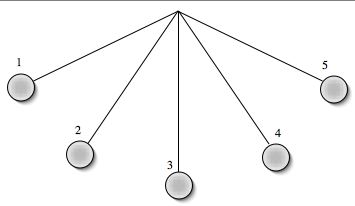
When a pendulum swings, at which point is kinetic (moving) energy highest?
1
2
3
4

What is the difference between potential and kinetic energy?

