
 Worksheets
Heat Transfer and Thermodynamics #2
Total questions: 44
Worksheet time: 7hrs 20mins
Transfer of heat by means of electromagnetic waves
conduction
convection
radiation
Transfer of heat by contact and collisions between the molecules in a substance.
conduction
radiation
convection
The average kinetic energy of the atoms or molecules in a substance is directly related to
heat
specific heat capacity
temperature
Brownian Motion
What is heat?
the amount of thermal energy in an object
an object's internal kinetic energy
the transfer of thermal energy from one object to another
the amount of energy needed to raise the temp of an object
If the pressure inside a container of gas has decreased, it must have been caused by...
adding heat to the gas or increasing the volume of the gas
removing heat from the gas or decreasing the volume of the gas
adding heat to the gas or decreasing the volume of the gas
removing heat from the gas or increasing the volume of the gas
The 1st law of Thermodynamics
Energy can not be created or destroyed. It just changes forms.
Energy can only be created by the sun
Some energy is lost to the environment.
Specific Heat
the amount of energy it takes to raise one gram of a substance by one degree Celsius
The internal energy of an object
The measure of the kinetic energy of an object's molecules
Conductor
A material that thermal energy travels through easily
A material that energy does NOT transfer through easily
Energy that travels in the form of electromagnetic waves
Insulator
A material the energy does NOT transfer through easily
A material that thermal energy travels through easily
The measure of the kinetic energy of an object’s molecules
Conduction
The transfer of thermal energy through solids
The transfer of thermal energy through liquids and gases
The transfer of thermal energy as electromagnetic waves
Convection
The transfer of thermal energy through liquids and gases
The transfer of thermal energy through solids
The transfer of thermal energy as electromagnetic waves
Radiation
The transfer of thermal energy as electromagnetic waves
The transfer of thermal energy through solids
The transfer of thermal energy through liquids and gases
The variable foe HEAT
Q
C
T
The variable for Specific Heat
Q
C
T
The unit for HEAT (thermal energy)
Calories
Cal/gram degree Celsius
Degrees Celsius
If the specific heat of water is 4,186 J/kg∙°C, how much heat is required to increase the temperature of 1.2 kg of water from 23 °C to 39 °C?
-80,371.2 J
44,938.6 J
80,371.2 J
112,575.9 K


What is the heat energy generated/emitted by the metal when a 250 kg lump of iron cools from 650° C to 20° C? Specific heat of iron is 449 J/kgC.
1,459,250,000 J
70,717,500 J
112,250 J
What is the heat gained or lost when 20 kg of water experiences a change in temperature from 10° C to 40° C ? (Specific heat of water is 4186 J/kgC)
8000 J
- 8000 J
2,511,600 J
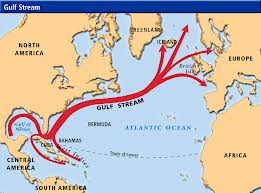
The movement of the tectonic plates is caused by
the rotation of the Earth.
convection currents in the Asthenosphere
the gravity of the iron-nickel core.
the Moho discontinuity.

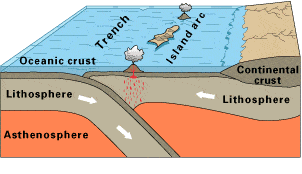
Observe this diagram of a plate boundary. One statement BEST describes what is happening. It is that
the oceanic crust is melting.
the denser ceanic crust is subducting under the less dense oceanic crust
volcanic islands are forming.
the tectonic plates are moving away from each other.

Most geologists think that the movement of Earth’s plates is caused by _______
convection.
continental drift.
subduction.
conduction.

Do sea breezes typically happen during the day or night?
Day
Night

Air moves from _______ pressure to ________ pressure.
high to low
low to high
high to high
low to low

