

wayground logo

Free Printable Worksheets

Font size

S
M
L
XL
Worksheets

Chemical Bonds

Total questions: 25

Worksheet time: 50mins

Name
Class
Date
1.
Ionic bonds are between...
a)
nonmetals and nonmetals
b)
carbon and oxygen
c)
metals and nonmentals
d)
hydrogen and chlorine
2.
Covalent bonds are between...
a)
two or more nonmetals
b)
sodium and chlorine
c)
metals and metals
d)
metals and nonmetals
3.

Which of the following describes covalent bonds?

a)

Bonds form because of opposite charges

b)

electrons are shared to fill outer electron shells

c)

Electrons are transferred between atoms

d)

Covalent bonds are magical

4.

The octet rules states that most elements want to have _____ valence electrons.

a)

2

b)

4

c)

6

d)

8

5.
What is the basis of a metallic bond?
a)
the attraction of neutral metal atoms.
b)
the attraction between protons and neutrons.
c)
the attraction between positive metal ions and interlocking electrons.
d)
the attraction between positive metal ions and free floating electrons.
6.
This is a correct dot diagram for oxygen (O)
a)
true
b)
false
7.

For metals (groups 1-3), its easier to _____ electrons to have a full outer shell.

a)

gain

b)

lose

c)

share

8.

Which is not true of the chemical bond shown on the diagram?

a)

An electron from Na is transferred to Cl.

b)

The bond is ionic since electron is shared by the two atoms.

c)

A metal and a non-metal are involved in the bonding.

d)

Na will become positively charged and Cl will be negatively charged.

9.

Which two statements are correct about the figure shown?

a)

It is a covalent bond.

b)

Hydrogen atoms loss electrons and Carbon gains the atoms.

c)

It happens on metal and on another non-metal.

d)

The valence electrons are shared by both atoms.

10.

Which two are ionic compounds?

a)

NaCl

b)

HCl

c)

CH4

d)

CaO

11.

Diagram 3 shows the electron arrangement of calcium oxide.

Which of the following is correct about calcium oxide?

a)

Calcium atom shares electrons with oxygen atom

b)

Calcium atom transfer electron to oxygen atom

c)

Oxygen atom releases electron

d)

Calcium atom receives electron
12.
Hydrogen bonding occurs when hydrogen is bonded to N, O, or F.  Which of the following has hydrogen bonding?
a)
CBr4
b)
NO2
c)
H2S
d)
NH3
13.
If fluorine is stronger then carbon, what charge will the fluorine receive?
a)
negative
b)
slight negative
c)
positive
d)
slight positive
14.
Type of intermolecular force present in HF.
a)
dipole dipole
b)
dispersion
c)
H-bond
d)
ionic
15.
Intermolecular force present in HCl?
a)
dipole dipole
b)
dispersion
c)
H-bond
d)
ionic
16.
Choose the correct shape for this molecule:
a)
Trigonal planar
b)
Trigonal pyramidal
c)
Tetrahedral
d)
Linear
17.
Choose the correct shape for this molecule:
a)
Trigonal planar
b)
Trigonal pyramidal
c)
Bent
d)
Linear
18.
Choose the correct shape for this molecule:
a)
Trigonal planar
b)
Trigonal pyramidal
c)
Bent
d)
Tetrahedral
19.
Choose the correct shape for this molecule:
a)
linear
b)
Trigonal pyramidal
c)
Bent
d)
Tetrahedral
20.
Choose the correct shape for this molecule:
a)
Bent
b)
Linear
c)
Tetrahedral
d)
Trigonal pyramidal
21.
If an atom loses two electrons what charge will it have?
a)
-2
b)
-1
c)
+1
d)
+2
22.
Atoms form compounds when the compound is more ______________ than the separate atoms.  Noble gases are more _________than other elements because they have a complete outer energy level.
a)
reactive
b)
stable
c)
explosive
d)
toxic
23.
A ____________is the force that holds atoms together in a compound.
a)
Chemical Formula
b)
Chemical Reaction
c)
Chemical Bond
d)
Synthesis Reaction
24.
Which of these is covalent?
a)
NaCl
b)
Pb(NO3)2
c)
CO2
d)
AlCl3
25.
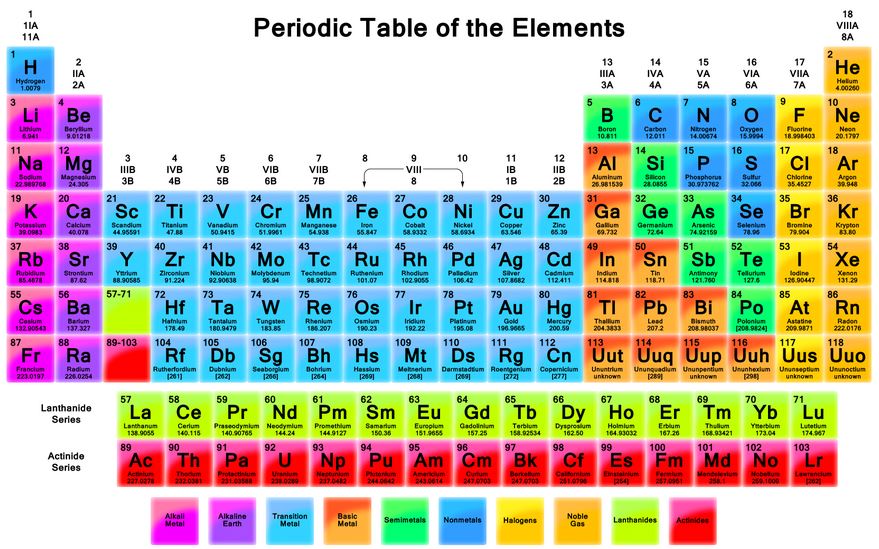
Elements on the LEFT side of the periodic table will most likely form:
a)
Positive ions
b)
Negative ions
c)
Neutral Ions
d)
None of these
