
 Worksheets
STAAR REVIEW: 1920s
Total questions: 57
Worksheet time: 2hrs 54mins
Name
Class
Date
1.
Foreign policy in the 1920s was
a)
imperialist.
b)
internationalist.
c)
expansionist.
d)
isolationist.
2.
What was the African American literary and artistic movement in the 1920s called?
a)
Italian Renaissance
b)
Harlem Renaissance
c)
Great Migration
d)
Hollywood Renaissance
3.
The Harlem Renaissance was one result of the
a)
Dust Bowl.
b)
Great Migration.
c)
Stock Market Crash.
d)
18th Amendment.
4.
The immigration quotas and National Origins Act of 1924 were intended to
a)
expand immigration to the U.S.
b)
create new opportunities for minorities.
c)
preserve the existing make-up of the U.S.
d)
set high limits to encourage Americans to move abroad.
5.
Who was the defending lawyer in the 1925 Scopes Trial?
a)
Clarence Darrow
b)
William Jennings Bryan
c)
William Barnes
d)
Charles Darwin
6.
Who was the prosecutor in the 1925 Scopes Trial?
a)
Clarence Darrow
b)
William Jennings Bryan
c)
William Barnes
d)
Charles Darwin
7.
What was the subject of the Scopes Trial?
a)
teaching of evolution in the classroom
b)
capital punishment in the classroom
c)
requirement to speak English in the classroom
8.
What was the biggest scandal of the Harding Administration?
a)
Iran-Contra Affair
b)
Jackson Land Buyout
c)
XYZ Affair
d)
Teapot Dome Scandal
9.
By using the assembly line, Ford could produce cars cheaply
a)
while still increasing workers' wages.
b)
though the process took longer.
c)
and decrease workers' wages.
d)
but still charge high prices for the cars.
10.
Harding's plan to return to "normalcy" meant
a)
legalizing alcohol.
b)
acquiring new territories.
c)
furthering rights for minorities.
d)
taking the country back economically to pre-war lifestyles.
11.
Flappers in the 1920s represented
a)
the traditional roles of women.
b)
new roles and attitudes for women.
c)
support for Prohibition.
d)
rural fundamentalism.
12.
Mass media in the 1920s promoted
a)
creation of a national culture.
b)
longer working hours.
c)
higher tariff rates.
d)
speculation on the stock market.
13.
Which is the best example of nativist sentiment?
a)
New Deal
b)
Scopes Trial
c)
KKK
d)
Teapot Dome Scandal
14.
In the 1920s most Americans felt buying household goods on credit or with installment plans was a great way to live.
a)
True
b)
False
15.
__________________ led to the farm depression of the 1920s.
a)
Banks refusing to loan money
b)
Government crop control
c)
Overproduction
d)
Excessive rain
16.
Whose flight across the Atlantic symbolized American ingenuity and courage?
a)
Nicola Vanzetti
b)
Father Coughlin
c)
Glen Curtiss
d)
Charles Lindbergh
17.
When WWI started, what was the wealth gap between the rich and poor like in the United States?
a)
It was very small gap between the rich and the poor.
b)
Wealth in American society was basically equal among all citizens.
c)
There was a large gap between the rich and the poor.
d)
None of the above.
18.
The Scopes Monkey Trial of 1925 had to do with teaching of Fundamentalism and ______.
a)
school
b)
Evolution
c)
life
d)
religion
19.
After 1921, cheap labor workers decreased in America. What was the reason for the lack of immigrants? (Red Scare)
a)
Less people wanted to come to the United States
b)
Immigrants were not looking for jobs.
c)
Most of the immigrants were already working.
d)
Adoption of stricter immigration quotas
20.
The Red Scare led to which of the following?
a)
The ratification of the 19th amendment
b)
a demand for limits on immigration
c)
the start of the Great Depression
d)
the repeal of the 18th amendment
21.
Nativists are against _______?
a)
Corruption
b)
African Americans
c)
Railroads
d)
Immigrants
22.
More than likely, the end result of the Sacco and Venzetti trial was a direct result of?
a)
Nativism
b)
Increased racial tensions
c)
Racial prejudice
d)
All of the above
23.
The study or belief in the possibility in improving human qualities by discouraging the reproduction of people who have undesirable inheritable traits, or encouraging the reproduction of people who have desirable inheritable traits
a)
Radicalism
b)
Communism
c)
Eugenics
d)
Democracy
24.
The government of what country was overthrown in 1917 and turned into a Communist country?
a)
Russia
b)
Austria-Hungary
c)
Germany
d)
England
25.

Women who wore short skirts, bobbed their hair, and danced at a speakeasies were called
a)
Hippies
b)
Flappers
c)
Twisters
d)
Hep Cats
26.
Women's suffrage
a)
18th Amendment
b)
19th Amendment
c)
21st Amendment
d)
22nd Amendment
27.
Associated with the Teapot Dome Scandal
a)
President Wilson
b)
President Harding
c)
President Coolidge
d)
President Hoover
28.

Who became the first person to fly alone across the Atlantic Ocean in 1927?
a)
Babe Ruth
b)
Charles Lindbergh
c)
Amelia Earhart
d)
Glenn Curtiss
29.
Movement of Southern blacks to Northern urban cities looking for jobs and opportunities was called
a)
Harlem Renaissance
b)
Great Migration
c)
Fundamentalism
d)
Immigration
30.
This product had the largest impact on the American landscape
a)
Radio
b)
Automobile
c)
Airplane
d)
Vacuum Cleaner
31.
This was a major innovation found in most homes by the end of the 20s.
a)
Radio
b)
Television
c)
Telephone
d)
Microwave.
32.
Prohibition was implemented by passage of the
a)
17th Amendment
b)
18th Amendment
c)
19th Amendment
d)
21st Amendment
33.
The group most credited with pushing prohibition was
a)
The KKK
b)
African Americans
c)
Women
d)
Business Owners
34.
Prohibition created which one of the following?
a)
Reduction in crime.
b)
Reduction in alcohol related deaths
c)
Organized Crime.
d)
More money being made.
35.
All are examples associated w/ Flappers EXCEPT
a)
Smoking
b)
Skin Showing
c)
Lipstick
d)
Ankle length dresses.
36.
The man who flew the first nonstop flight from US to Paris.
a)
Babe Ruth
b)
Charles Lindbergh
c)
Charlie Chaplin
d)
Louis Armstrong.
37.
Henry Ford is credited with mastering
a)
Modern day filming.
b)
Use of the Assembly Line.
c)
Flying aeroplanes.
d)
Radio Broadcasting.
38.
The government of what country was overthrown in 1917 and turned into a Communist country?
a)
Russia
b)
Austria-Hungary
c)
Germany
d)
England
39.
Who were the Palmer Raids meant to find and root out?
a)
Anarchists
b)
Communists
c)
Socialists
d)
All of the above
40.
Who was A. Mitchell Palmer?
a)
Secretary of State during WWI.
b)
President of the United States during WWI.
c)
Attorney General of the United States during WWI.
d)
General in charge of the Army during WWI.
41.
What did opponents of A. Mitchell Palmer say he was doing?
a)
Weeding out groups who were attempting to take down the United States.
b)
Taking down anybody who was a supporter of Woodrow Wilson.
c)
Protecting people's freedom of speech.
d)
Taking away people's freedom of speech during and directly after WWI.
42.
The Scopes Monkey Trial of 1925 had to do with teaching of Fundamentalism and ______.
a)
school
b)
Evolution
c)
life
d)
religion
43.
After 1921, cheap labor workers decreased in America. What was the reason for the lack of immigrants? (Red Scare)
a)
Less people wanted to come to the United States
b)
Immigrants were not looking for jobs.
c)
Most of the immigrants were already working.
d)
Adoption of stricter immigration quotas
44.
The Red Scare led to which of the following?
a)
The ratification of the 19th amendment
b)
a demand for limits on immigration
c)
the start of the Great Depression
d)
the repeal of the 18th amendment
45.
More than likely, the end result of the Sacco and Venzetti trial was a direct result of?
a)
Nativism
b)
Increased racial tensions
c)
Racial prejudice
d)
All of the above
46.
What was the main reason the KKK revived?
a)
WWI veterans had to compete with immigrants for jobs
b)
Sacco + Vanzetti case outrage
c)
Many "New Immigrants" arrived before immigration laws
d)
Bible Belt humiliated by Monkey Trial
47.
The study or belief in the possibility in improving human qualities by discouraging the reproduction of people who have undesirable inheritable traits, or encouraging the reproduction of people who have desirable inheritable traits
a)
Radicalism
b)
Communism
c)
Eugenics
d)
Democracy
48.
Louis Armstrong was a _______________.
a)
Poet
b)
Jazz Musician
c)
An Athlete
d)
Person
49.
The Harlem Renaissance was a cultural, intellectual, and artistic movement.
a)
True
b)
False
50.
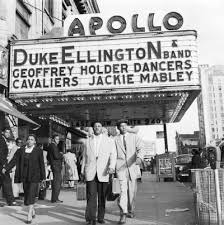
How was the Harlem Renaissance a product of the Great Migration?
a)
Many who migrated ended up in Harlem where they shared their talents such as art and music.
b)
The Harlem Renaissance was not a product of the Great Migration. They have nothhing in common.
51.
When African Americans began to move from the rural South to the urban North, this was called what?
a)
The Great Awakening
b)
The Great Migration
c)
The Great Pumpkin
d)
The Trail of Tears
52.
Harlem is a neighborhood in
a)
New York City
b)
New Orleans
c)
New Jersey
d)
Africa
53.
What technological advancement contributed most to the growth of towns and cities in the 1920s & 1930s?
a)
electric lights
b)
automobile
c)
radio
d)
telephone
54.
Which action was evidence that the prosperity of the roaring 20s was an illusion?
a)
the buying and selling of stocks
b)
the overproduction of consumer goods
c)
the sharp increase in the birth rate
d)
the widespread use of buying on credit
55.
Who was Langston Hughes?
a)
famous African American author and poet
b)
famous African American musician
c)
famous African American artist
56.
The HUAC stands for...
a)
The House Un-American Activities Committee
b)
The House Under American Counsel
c)
The House Un-Republic Activities Committee
d)
The House Under American Communism
57.

The political and economic differences between the U.S. and the Soviet Union that lasted more than 2 presidencies is call the...
a)
Cold War
b)
Red Scare
c)
Nuclear Scare
d)
Tension Talks
100 %

