wayground logo

Free Printable Worksheets

Font size

S
M
L
XL
Worksheets

Biology LEAP Review

Total questions: 201

Worksheet time: 4hrs 28mins

Name
Class
Date
1.
A person with swollen gums rinses his mouth with warm salt water, and the swelling decreases. Which of the following has occurred?
a)
The swollen gums have absorbed the saltwater solution.
b)
The saltwater solution lowers the temperature of the water in the gums.
c)
The salt in the solution has moved against the concentration gradient.
d)
The water in the gums has moved out due to the high concentration of salt in the solution. 
2.
During transcription the DNA base sequence is transcribed into a complimentary mRNA sequence. A codon table like the one shown below lists the amino acids coded for by particular triads of mRNA bases. A segment of DNA has undergone a mutation in which one nucleotide has been changed. The original sequence was ACG and the new sequence is ACA. Use the codon table to determine whether or not this mutation will cause a change in the phenotype of the organism
a)
yes, the phenotype of the organism would change because a new amino acid will be coded for.
b)
yes, the phenotype of the organism would change because any change in the DNA sequence will cause a change in phenotype.
c)
Even though the DNA sequence changed, the sequence still codes for the same amino acid, so no change in phenotype will occur.
d)
It is impossible to determine if a change in phenotype will occur using only the DNA sequence.
3.
Which row in the chart below indicates the correct process for each event indicated? 
a)
row one
b)
row two
c)
row three
d)
row four
4.
While genetic engineering has positive benefits, there are also concerns associated with widespread use of genetic engineering in agriculture. If many farmers begin to plant more genetically modified crops that have an increased tolerance to insects, which of the following may result?
a)
an increase in the use of pesticides
b)
a decrease in the genetic diversity of crops
c)
an increase in the contamination of water supplies
d)
a decrease in crop productivity
5.
Which best represents one fundamental difference between the processes of mitosis and meiosis?
a)
meiosis results in 4 haploid cells, mitosis results in 4 diploid cells
b)
meiosis results in 4 haploid cells, mitosis results in 2 diploid cells
c)
meiosis results in 2 diploid cells, mitosis results in 2 haploid cells
d)
meiosis results in 2 diploid cells, mitosis results in 4 haploid cells
6.
The synthesis of a protein from an mRNA template is called ____________.
a)
transcription
b)
replication
c)
translation
d)
synthesis
7.
Before mitosis begins, which happens before the nucleus starts dividing?
a)
The cytoplasm separates.
b)
The DNA replicates. 
c)
The sister chromatids separate. 
d)
The homologous chromosomes cross over. 
8.
A scientist performs an experiment to see if acids have an effect on the health of a particular type of plant. Three sets of plants were treated with acidic solutions of known pH while the control set was treated with a solution of neutral pH 
Which is the best conclusion for this experiment? 
a)
Acid has no effect on the health of this type of plant
b)
 High acidity is helpful to this type of plant.
c)
Low acidity is harmful to this type of plant.
d)
High acidity is harmful to this type of plant.
9.
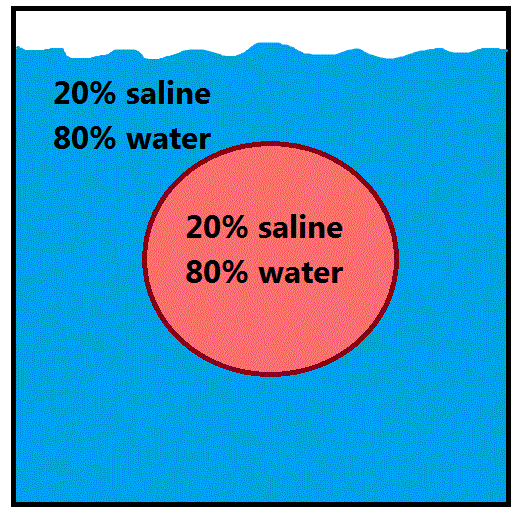
An activity that occurs in the human body is shown. This activity helps to do which of the following? 
a)
provide protection against pathogens
b)
produce antibiotics to control disease
c)
eliminate harmful gene alterations
d)
regulate production of ATP by the cell
10.
How do human diseases caused by bacteria and diseases caused by viruses react to antibiotics? 
a)
Neither responds to antibiotics.
b)
Both respond to antibiotics.
c)
Viral diseases respond to antibiotics; bacterial diseases do not.
d)
Bacterial diseases respond to antibiotics; viral diseases do not.
11.
How do human diseases caused by bacteria and diseases caused by viruses react to antibiotics? 
a)
Neither responds to antibiotics.
b)
Both respond to antibiotics.
c)
Viral diseases respond to antibiotics; bacterial diseases do not.
d)
Bacterial diseases respond to antibiotics; viral diseases do not.
12.
The alleles Bb are:
a)
homozygous
b)
heterozygous
c)
homozygous recessive
d)
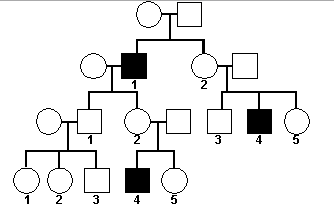
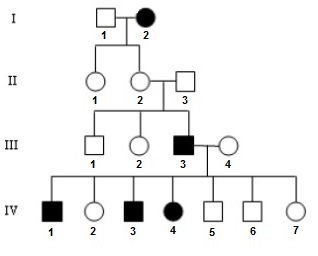
heterozygous dominant
13.
Where in the cell does cell respiration occur?
a)
chloroplast 
b)
central vacuole 
c)
mitochondria
d)
cell membrane
14.
All carbohydrates end what letters?...
a)
tes
b)
glu
c)
ase
d)
ose
15.
If you place a freshwater cell in a salt water solution, what happens to the cell?
a)
nothing
b)
stays the same
c)
swells
d)
shrinks
16.
Which direction does water move in a hypotonic solution?
a)
water moves out of the cell
b)
solutions moves into the cell
c)
water moves into the cell
d)
solution moves out of the cell
17.
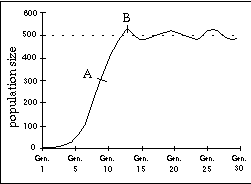
Active transport requires the cell to move materials against the concentration gradient, what molecule is required for this to occur?
a)
ADP
b)
ATP
c)
carbohydrates
d)
lipids
18.
What reactant drives photosynthesis?
a)
carbon dioxide 
b)
oxygen 
c)
water 
d)
sunlight
19.
During the winter time many plants lose their leaves, what happens to the process of photosynthesis?
a)
stays the same
b)
decrease
c)
no effect 
d)
increase 
20.
Where in the cell does photosynthesis occur?
a)
chloroplast 
b)
mitochondria 
c)
plasma membrane
d)
none of these 
21.
This stage of cellular respiration does not require oxygen
a)
Kreb's cycle
b)
glycolysis
c)
ETC
d)
fermentation
22.

Which process generates the highest amount of ATP?

a)

aerobic respiration

b)

anaerobic respiration

23.

This type of respiration occurs in the presence of oxygen....

a)

aerobic respiration

b)

anaerobic respiration

c)

fermentation

d)

lactic acid fermentation

24.
This molecule stores and transmits our genetic information and remains in the nucleus 
a)
rRNA
b)
trna 
c)
DNA
d)
mRNA
25.
Building blocks of proteins are
a)
Simple sugars
b)
Amino acids
c)
Monosaccharides
d)
Polysaccharides
26.
Two structures present in plant cells but NOT animal cells are:
a)
Chloroplasts and centrioles
b)
Chloroplasts and cell wall
c)
Chloroplasts and cell membrane
d)
Chloroplasts and ribosomes
27.
The main benefit of perspiring (sweating) in animals is that it _____
a)
removes dirt from the surface of the skin
b)
cools the skin with evaporation
c)
relaxes the muscles
d)
removes extra water from the cells
28.
Sugar, starch and cellulose are examples of
a)
Lipids
b)
Carbohydrates
c)
Proteins
d)
Nucleic Acids
29.
How are sexual reproduction and asexual reproduction different from each other? 
a)
Sexual reproduction requires two parents and asexual reproduction requires only one parent.
b)
Asexual reproduction requires two parents and sexual reproduction requires only one parent.
c)
Mutation rates are lower in sexual reproduction than in asexual reproduction 
d)
Asexual reproduction occurs only in multicellular organisms 
30.
Which of the following best describes cancer?
a)
absence of cyclins in the DNA
b)
Multiple gene mutations on a chromosome of DNA
c)
Uncontrolled cell growth caused by mutations in genes that control the cell cycle.
d)
Presence of genetic defects caused by hereditary disorders. 
31.

Use the information in Map 1 and Table 2 to answer the question.


Camel fossils are not found in the top layers of soil near Louisiana’s rivers, but they are found in areas away from rivers. Which statement best explains why camel fossils are not found near rivers in Louisiana?


(To make picture larger, right click picture and select open in a new tab)

a)

The soil around the rivers does not have any fossils in it.

b)

The soil around the rivers was brought there from other places.

c)

The soil around the rivers is not old enough to have camel fossils.

d)

The soil around the rivers has been washed away, and the fossils are missing.

32.

A student claims that the top layer of soil in Louisiana is young compared with the land in other states. Which statement best supports this claim?


(To make picture larger, right click picture and select open in a new tab)

a)

Earthquakes cause land to shift and make new soil.

b)

Most of the soil found in Louisiana is from the Mesozoic era.

c)

Rivers deposit younger soil on top of older soil as they move.

d)

Fossils from the Paleozoic era are found in gravel near rivers.

33.
When glucose levels in the blood rise, your brain sends a signal to your pancreas. The pancreas releases insulin, which opens channels in cell membranes to allow glucose to enter the cell, lowering blood sugar levels. 
a)
Positive Feedback Response
b)
Negative Feedback Loop 
34.

Which statements are associated with cellular respiration

a)

Occurs in the mitochondria

b)

Converts solar energy into chemical energy

c)

Occurs in the chloroplast

d)

Produces ATP

e)

Chemical Reaction

35.

Which statements are true about biological molecules?

a)

All bio-molecules are carbon-based molecules

b)

The monomers of DNA are nucleotide

c)

Carbohydrates contain nitrogen and therefore differ from other macro molecules

d)

Ready cellular energy comes in the form of lipids

e)

Cell membranes are made, in part, from phosopholipids

36.

In any population, certain factors may enhance population growth while others may limit or even cause a population to decline. We can describe these factors as either density dependent or density independent. Select the statements that are density independent.

a)

Disease

b)

Flooding

c)

Competition

d)

Pollution

e)

Urbanization

37.

Similar structures with different purposes found in different species are known as _____

a)

vestigial structures

b)

DNA

c)

homologous structures

d)

the fossil record

38.
Structures are similar in appearance but not in structure
a)
Vestigial 
b)
Homologous 
c)
Analogous Structures 
d)
Embryonic 
39.
The changes of species over time
a)
Embryonic 
b)
Natural selection 
c)
Mimicry 
d)
Evolution 
40.

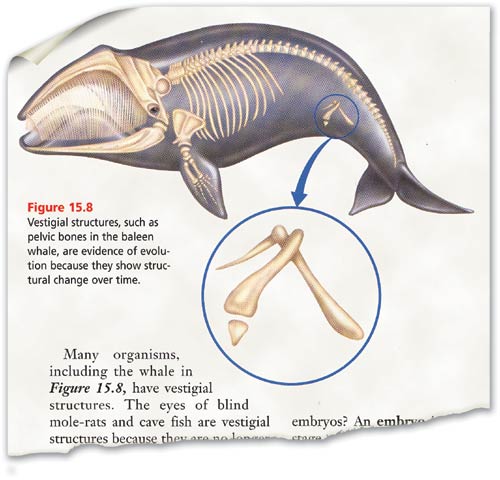
The picture shows a/an ___________

a)

homologous structure

b)

vestigial structure

41.
The opossum and kangaroo both incubate their young in a pouch. This provides evidence that they---
a)
are descended from a common ancestor
b)
Have very similar skeletal structures
c)
belong to the same species
d)
must range great distances to eat
42.

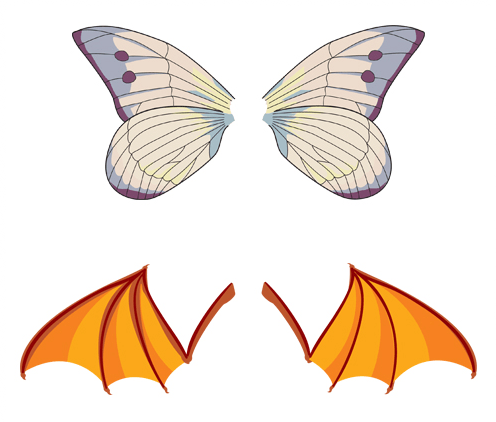
What is this an example of?

a)

Homologous structure

b)

Analogous structure

c)

Vestigial organs

d)

Functional adaption

43.
Which of the following is an example of a vestigial structure?
a)
the wings of a red-tailed hawk
b)
the hind limbs of a house cat
c)
the fins of sharks
d)
the tailbone of a human
44.
Which is not evidence for evolution?
a)
many animals have homologous structures due to common ancestry
b)
Many animals have vestigial structures from an ancestor
c)
We can observe changes in life forms by observing the fossil record
d)
All of these are evidence for evolution
45.
How do fossils provide evidence that evolution has happened on Earth?
a)
Fossils show how the sizes of certain animals has changed drastically over millions of years
b)
Fossils show that some species have gone extinct
c)
Fossils show how life forms present today are different than those from the past
d)
Different sedimentary rock layers provide evidence for how the environment has changed over time
46.
If two organisms have similar traits of DNA they are probably
a)
share a common ancestor
b)
share a common environment
c)
share a common population
d)
speciation
47.

How does embryology support the Theory of Evolution?

a)

It shows that embryos who develop similarly share a common ancestor

b)

It shows that embryos who develop similarly are not related to one another

c)

It shows that organisms have the ability to evolve, or change, over time

48.
In the the third embryonic stage (bottom row), mammal embryos _____
a)
have more characteristics in common with each other than with reptiles or birds.
b)
are still hard to tell from reptiles and birds.
c)
have the same features as fish, reptiles, and birds.
d)
do not have tails.
49.

Which of the following is NOT a source of genetic diversity?

a)

mutation

b)

segregation of homologs

c)

independent assortment of homologous pairs

d)

mitosis

50.

Any change in the sequence of DNA is a

a)

recombination

b)

mutation

c)

chromatin

d)

independent assortment

51.

Which process is shown in the image?

a)

crossing over

b)

independent assortment

c)

segregation

d)

mutation

52.
Crossing over is important because....
a)
It prevents mutations from entering the gametes. 
b)
It allows for even distribution of chromosomes in the gametes.
c)
It allows for more genetic diversity of gametes.
d)
It allows for genetic uniformity of gametes. 
53.
What type of selection is this?
a)
Directional Selection
b)
Stabilizing Selection
c)
Disruptive Selection
d)
Natural Selection
54.

Genetic equilibrium in a population refers to ..

a)

constant allele frequencies in successive generations

b)

constant mutation rate in the population

c)

equal numbers of dominant and recessive alleles

d)

equal numbers of males and females

55.

increases the chance that some individuals in a population will survive

a)

low genetic variation

b)

High genetic variation

c)

no genetic variation

56.
Two organisms that are closely related would have
a)
similar DNA sequence
b)
exactly the same DNA sequences
c)
no proteins in common
d)
completely different DNA sequence
57.
What is one reason that strawberries are surviving in the winter season?
a)
they have larger leaves
b)
they have genetic variations allowing them to be resistant to cold
c)
they reproduce more
d)
the color is dark
58.
The different forms of genes are known as
a)
environment
b)
probability
c)
traits
d)
alleles
59.
An allele or gene that always shows is
a)
recessive
b)
dominant
c)
hidden
d)
present
60.
Two of the same genes for a trait (sometimes called purebred). BB or bb
a)
homozygous
b)
hetrozygous
c)
protein
d)
chromosome
61.
Two different genes for a trait (sometimes called hybrid). Bb
a)
protein
b)
homozygous
c)
heterozygous
d)
genotype
62.
What would the ratio for genotypes be for this Punnett Square?
a)
2Bb:2bb
b)
2BB:2Bb
c)
1BB:2Bb:1bb
d)
4Bb
63.
Which is a true statements about this picture?
a)
Brown is recessive
b)
Brown is dominant
c)
Blue is dominant
d)
Blue is codominant
64.
What are the possible phenotypes in this punnett square?
a)
Bb, bb, BB
b)
purple, white
c)
Bb, bb
d)
light purple
65.

A mom with the heterozygous gene for Widows peak and a father with the heterozygous gene for Widows peak: odds their baby HAS a widow's peak?

a)

0%

b)

25%

c)

75%

d)

100%

66.

A mom with a dominant HOMOZYGOUS gene of a hitchhiker's thumb and a dad with a homozygous recessive gene for a straight thumb. What is the baby's phenotype?

a)

50% straight thumb

b)

100% Hitchhiker's Thumb

c)

25% Hitchhiker's Thumb

67.

Which organelle is the location where protein is made?

a)

Ribosome

b)

Nucleus

c)

Cytoplasm

d)

Nucleotide

68.

Insertion, deletion, and substitution are all examples of a change in a genetic sequence which is also referred to as (a)

a)

Gene

b)

Amino Acid

c)

Ribose

d)

Mutation

69.

During transcription, this type of ribonucleic acid is responsible for copying the DNA and brining it out of the nucleus.

a)

tRNA

b)

mRNA

c)

rRNA

d)

dRNA

70.

When these bond together, they form a protein

a)

Amino Acids

b)

Peptide Bonds

c)

Ribose

d)

Nucleotides

71.

Which of the following is the complementary mRNA sequence to this DNA strand: AACTGAA

a)

UUGACUU

b)

TTGACTT

c)

AACTGAA

d)

AACUGAA

72.

Which of the following is the tRNA that will be used to decode to this DNA strand: AACTGA

a)

AAC and TGA

b)

TTG and ACT

c)

UUG and ACU

d)

AAC and UGA

73.
One human disease is caused by a change in one codon in a gene from GAA to GUA. The disease is a result of 
a)
a mutation
b)
crossing-over
c)
a meiosis error
d)
polyploidy
74.
Genetic info flows in one direction. Which best represents this flow?
a)
DNA-protein-RNA
b)
Protein-RNA-DNA
c)
RNA-protein-DNA
d)
DNA-RNA-protein
75.
The ingredients of photosynthesis are
a)
sugar and water.
b)
sugar and oxygen.
c)
carbon dioxide and water.
d)
carbon dioxide and oxygen.
76.
What are the products of photosynthesis?
a)
Carbon dioxide and water
b)
Carbon dioxide and oxygen
c)
Glucose and oxygen
d)
Glucose and water
77.
Which gas is removed from the atmosphere during photosynthesis?
a)
hydrogen
b)
oxygen
c)
nitrogen
d)
carbon dioxide
78.
Which of the following best describes photosynthesis?
a)
Photosynthesis converts radiant energy into chemical energy.
b)
Photosynthesis produces carbohydrates.
c)
Plants need sunlight, carbon dioxide, water, nutrients, and chlorophyll to complete photosynthesis.
d)
Plants use chlorophyll, water, and carbon dioxide to make sugar.
79.
What gas is released by plants during photosynthesis?
a)
sulfur
b)
carbon dioxide
c)
oxygen
d)
hydrogen
80.
How can photosynthesis be related to cellular respiration?
a)
What's produced by one is needed for the other
b)
They both produce the same products
c)
They both have the same reactants (need the same things)
d)
These 2 processes have nothing in common
81.
Why is photosynthesis important?
a)
creates oxygen for animals to breath
b)
creates energy for heterotrophs to use
c)
creates food for plants to use
d)
all of these are correct
82.
Where does carbon dioxide enter plants?
a)
The leaves
b)
Stem
c)
Roots
83.
The main source of energy for all life comes from ____.
a)
the Earth
b)
the moon
c)
the sun
d)
the food we eat/make
84.

What is the point of a feedback loop?

a)

To provide the body with more energy

b)

To provide the body with more food

c)

To make sure the conditions in the body are always changing

d)

To make sure the conditions in the body remain stable

85.

A feedback loop best fits which characteristic of life?

a)

Cells

b)

Organization

c)

Homeostasis

d)

Adaptation

86.

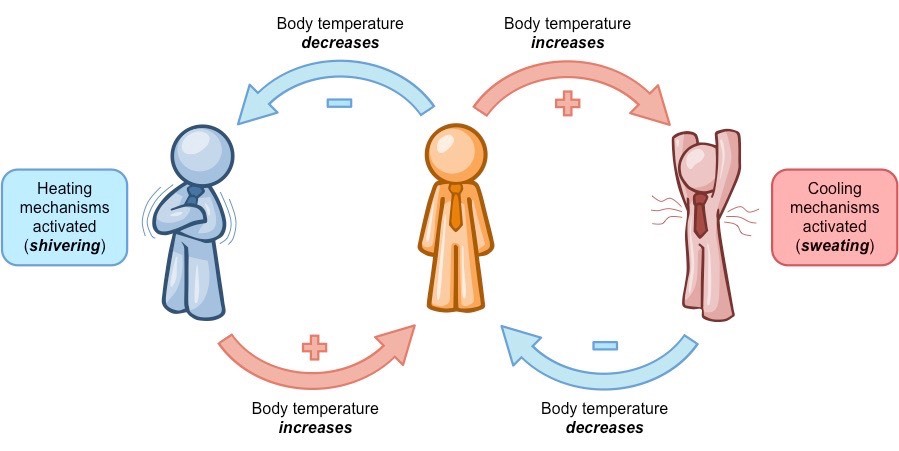
In this body temperature feedback loop, predict what would happen if cooling mechanisms were NOT activated?

a)

The body would not warm up.

b)

The body would not cool down.

c)

Your body would get colder and colder.

d)

Your body would release lots of heat.

87.

According to the feedback loop, what does high blood sugar promote?

a)

Insulin Release

b)

Glucagon Release

c)

Insulin Uptake

d)

Glycogen Uptake

88.
Failure to maintain homeostasis could result in:
a)
lack of internal balance
b)
eventual death
c)
difficulty carrying on metabolism 
d)
all three
89.
Maintaining body temperature is an example of a:
a)
negative feedback loop
b)
positive feedback loop
90.
The process of childbirth is an example of:
a)
negative feedback loop
b)
positive feedback loop
91.
The "cause" for something to happen is the
a)
response
b)
effect
c)
stimulus
d)
homeostasis
92.
When you get cut, your skin cells release hormones that signal platelets to come and stop the bleeding. Platelets then release more hormones that signal even more platelets to help stop bleeding. The hormone signals continue until the cut is closed.
a)
Positive Feedback Response
b)
Negative Feedback Loop 
93.
When glucose levels in the blood rise, your brain sends a signal to your pancreas. The pancreas releases insulin, which opens channels in cell membranes to allow glucose to enter the cell, lowering blood sugar levels. 
a)
Positive Feedback Response
b)
Negative Feedback Loop 
94.
Rapid growth during puberty causes your body to release more and more growth hormones. As you grow, more and more growth hormones are released until puberty is reached, and then the hormones stop.
a)
Positive Feedback Response
b)
Negative Feedback Loop 
95.
Osmosis is the movement of _____ across a membrane.
a)
food
b)
energy
c)
oxygen
d)
water
96.
During osmosis
a)
water moves from high to low concentration
b)
large or oddly shaped molecules move across a cell membrane
c)
water moves when energy is used
d)
proteins are built
97.

Where will the water go?

a)

Into the cell

b)

Out of the cell

c)

Equally in & out - it's isotonic

d)

There is no water

98.

A blood cell is placed into the jar, as seen. Where will the water go?

a)

Into the cell

b)

Out of the cell

c)

Equally in & out - it's isotonic

d)

The water is a lie

99.
The cell below is in a _____________ solution.
a)
Hypertonic
b)
Hypotonic
c)
Isotonic
100.
What type of solution allows water to enter the plant cell?
a)
hypotonic solution
b)
hypertonic solution
c)
isotonic solution
d)
active transport
101.
You put a cell into a solution, the cell grows. Is the solution hypotonic or hypertonic to the cell? 
a)
hypertonic
b)
hypotonic
c)
isotonic
d)
not enough information
102.
What type of solution allows water to enter the plant cell?
a)
hypotonic solution
b)
hypertonic solution
c)
isotonic solution
d)
active transport
103.
An ISOTONIC solution has a(n) ______________ concentration of solute (dissolved stuff) than inside the cell.
a)
lower
b)
equal
c)
higher
104.
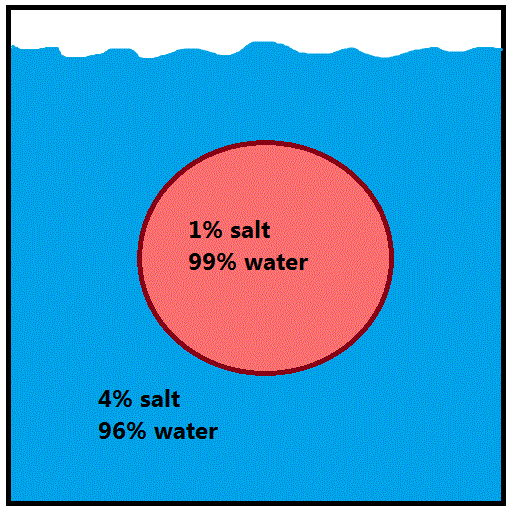
What type of solution is this cell in?
a)
Isotonic
b)
Hypertonic
c)
Hypotonic
d)
diffused
105.
What type of solution is this cell in?
a)
Isotonic
b)
Hypertonic
c)
Hypotonic
d)
diffused
106.
What type of solution is this cell in?
a)
Isotonic
b)
Hypertonic
c)
Hypotonic
d)
diffused
107.

Is it safe to drink salt water?

a)

Yum, so salty!

b)

No, you could die of dehydration.

108.
This type of cell is found in males and is responsible for reproduction.
a)
sperm cell
b)
egg cell
c)
muscle cell
d)
nerve cell
109.
Sperm and egg cells are both known as what type of cell?
a)
fetus
b)
embryo
c)
stem
d)
gamete
110.

Stem cells becoming specialized cells (e.g. nerve, blood, skin, etc.) is called...

a)

cell fertilization

b)

cell differentiation

c)

cell division

d)

cell cycle

111.

Stem cells are

a)

undifferentiated or unspecialized cells in the body.

b)

differentiated or specialized cells in the body.

c)

only found in the inner mass cells of blastocyst

d)

only found in a fetus

112.

_________ refers to a stem cell's ability to differentiate into other cell types

a)

potency

b)

potential

c)

dormancy

d)

aptitude

113.
Stem cells can be obtained from _________.
a)
embryos
b)
some adult tissues
c)
umbilical cord blood
d)
all of the above
114.
Which is true about embryonic stem cells?
a)
They no longer divide; their cell type is set and cannot change.
b)
They can develop into only one type of cell.
c)
They can become any cell type in the body.
d)
They are found in adults.
115.
Adult stem cells can also be referred to as ______________.
a)
somatic stem cells 
b)
embryonic stem cells 
c)
starter cells 
d)
IPS cells 
116.
what is the role of stem cells in the body 
a)
fight against infection 
b)
provide specialized roles in the body 
c)
used for fertility treatment 
d)
they produce new specialized cells in the body to replace old cells that are used up 
117.

What is cell differentiation?

a)

The process where unspecialized cells become different in structure and function.

b)

When DNA controls the cell cycle.

c)

The ability of cells to make more cells.

d)

The ability of cells to maintain homeostasis.

118.
What is one goal of cellular differentiation/specialization?
a)
To create specialized cells to help organism maintain homeostasis.
b)
To many cells.
c)
To make stem cells
d)
to make single celled organisms
119.
All our cells, except sex cells like eggs or sperm, have ___________ DNA
a)
different
b)
similar
c)
exactly the same
d)
half the amount of 
120.
In meiosis, the haploid number of chromosomes in a human sex cell is:
a)
46
b)
92
c)
22
d)
23
121.
When you start with 1 cell, at the end of mitosis, how many identical cells will you have?
a)
1
b)
2
c)
3
d)
4
122.
After meiosis is complete how many cells will there be?
a)
1
b)
2
c)
3
d)
4
123.
Another name for a sex cell is a:
a)
gamete
b)
embryo
c)
bone cell
d)
muscle cell
124.
Place these cells in order of mitosis.
a)
A, B, C, D, E
b)
B, E, D, A, C
c)
C, E, A, D, B
d)
B, D, A, E, C
125.
Which is the correct order for organisation in multi-celluar organisms:
a)
Cell, Tissue, Organ system, Organism
b)
Organ, Tissue, Cell, Organism
c)
Cell, Tissue, Organ, Organ System
d)
Tissue, Cell, Organ, Organ System
126.
You inherited...
a)
most of your chromosomes from your mother
b)
most of your chromosomes from your father
c)
a random number of chromosomes from each parent
d)
half your chromosomes from your mother and half from your father.
127.
Human eggs and sperm are _____, and each has ____ chromosomes.
a)
diploid, 23
b)
diploid, 46
c)
haploid, 23
d)
haploid, 46
128.

The variety of genes and alleles that exist in organisms

a)

independent assortment

b)

chromosomal abnormalities

c)

genetic diversity

d)

mutations

129.

This law describes how each member of a homologous pair is pulled randomly to one side or another in anaphase I

a)

Law of Segregation

b)

Law of Independent Assortment

c)

Law of Gravity

d)

Law of Mathematical Order

130.

This law describes how each homologous pair separates independently of any other pairs during Anaphase I of meiosis

a)

Law of Segregation

b)

Law of Independent Assortment

c)

Law of Gravity

d)

Law of Mathematical Order

131.

What contributes to genetic variation?

a)

crossing over

b)

law of independent assortment

c)

law of segregation

d)

gene linkage

132.
What gamete possibilities could come from this parent's genotype?
a)
AB, AB, aB, aB
b)
Ab, AB, Ab, ab
c)
Ab, Ab, Ab, Ab
d)
AB, aB, ab, aB
133.
Based off this punnett square, what fraction of the offspring will have wrinkled, yellow seeds?
a)
9/16
b)
3/16
c)
1/16
d)
16/16
134.
If this pedigree shows an autosomal recessive disorder, what MUST the genotype of individual II-3 be?
a)
HH
b)
Hh
c)
hh
d)
None of the above
135.
What type of heredity is shown in the pedigree?
(hint: check your notes - "modes of inheritance")
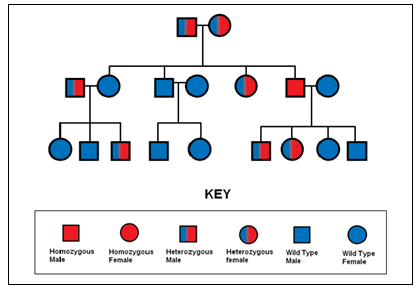
a)
Sex-Linked Dominant
b)
Sex-Linked Recessive
c)
Autosomal Dominant
d)
Autosomal Recessive 
136.
In a pedigree, what shape represents a male?
a)
circle
b)
square
c)
triangle
d)
diamond
137.
This pedigree represents the inheritance of hemophilia in this family. How many of the females have the hemophilia trait?
a)
8
b)
5
c)
2
d)
3
138.
Hemophilia is a recessive sex-linked trait. If H = normal & h = has hemophilia, which genotype represents a male with hemophilia. 
a)
XHY
b)
XHXh
c)
XhXh
d)
Xh
139.

The mechanism of evolution by which the organisms most suited to their environment survive and reproduce; survival of the fittest

a)

Natural Selection

b)

Heredity

c)

Genetics

d)

Adaptation

140.

When a population shifts towards one extreme phenotype over time

a)

Directional Selection

b)

Disruptive Selection

c)

Stabilizing Selection

d)

Sexual Selection

141.

When a population shifts towards the intermediate phenotype, selecting against both extremes

a)

Directional Selection

b)

Disruptive Selection

c)

Stabilizing Selection

d)

Sexual Selection

142.

Formation of a new species

a)

Genetic Drift

b)

Speciation

c)

Migration

d)

Genetic Equilibrium

143.

Maintained (gene pool does not shift in allele frequencies) IF the population shows all five specific

Hardy-Weinberg requirements:

1) Random mating

2) Large Population

3) No migration

4) No mutations

5) No Natural Selection

a)

Genetic Equilibrium

b)

Stabilizing Selection

c)

Sexual Selection

d)

Disruptive Selection

144.

The most common trait of a population becomes less common, while the extremes become more common.

a)

Disruptive Selection

b)

Sexual Selection

c)

Stabilizing Selection

d)

Directional Selection

145.

A type of selection which eliminates ONE extreme phenotype.

a)

Disruptive Selection

b)

Sexual Selection

c)

Stabilizing Selection

d)

Directional Selection

146.

Selection where the most common trait becomes even more common while the extremes decrease

a)

Disruptive Selection

b)

Sexual Selection

c)

Stabilizing Selection

d)

Directional Selection

147.

This shows: _________________

a)

Directional Selection

b)

Disruptive Selection

c)

Sexual Selection

d)

Stabilizing Selection

148.
What type of inheritance do two alleles have if their traits blend together? 
a)
Incomplete Dominance
b)
Co-Dominance
c)
Mendelian Inheritance
d)
Homozygous Inheritance
149.
How are Incomplete Dominance and Co Dominance different than a normal Mendelian cross?
a)
There is no difference
b)
The heterozygous genotype has a unique phenotype
c)
There is no heterozygous genotype
d)
There is only one phenotype regardless of genotype.
150.
A calico cat shows both the traits for orange fur and black fur. What kind of allele expression is this?
a)
Incomplete Dominance
b)
Co dominance
c)
Independent assortment
d)
Recessive inheritance
151.
An allele whose trait only shows up when no dominant allele is present.
a)
hidden allele
b)
dominant allele
c)
recessive allele
d)
present allele
152.
This type of inheritance pattern is a MIXTURE of both traits.
a)
incomplete dominance
b)
co-dominance
c)
complete dominance
d)
recessive pattern
153.
This type of inheritance pattern shows BOTH traits in possible offspring
a)
complete dominance
b)
incomplete dominance
c)
co-dominance
d)
dominant pattern
154.

Click on the picture to answer the question. What is true about a food chain?

a)

It is just 1 path of energy.

b)

It is all possible energy paths.

155.

According to the image, what is the producer?

a)

plant

b)

insect

c)

mouse

d)

snake

156.

This question is confusing! Look CAREFULLY at the image. What trophic level is the PRIMARY consumer?

a)

1st

b)

2nd

c)

3rd

d)

4th

157.

Look carefully at the image. If energy is lost as it moves up the food chain, what trophic level has the most amount of energy?

a)

1st level - producers

b)

2nd level - primary consumers

c)

3rd level - secondary consumers

d)

4th level - tertiary consumers

158.

A primary consumer

a)

makes its own food

b)

eats other animals

c)

is a carnivore

d)

consumes the producer

159.

How much energy is moved from one trophic level to the next trophic level?

a)

100%

b)

1/2

c)

10%

d)

25%

160.

How many calories will be passed on from 2,587 to the next trophic level?

a)

2,587.0

b)

258.7

c)

25.87

d)

10%

161.

What is an example of a scavenger?

a)

vulture

b)

bear

c)

lion

d)

gorilla

162.

a primary consumer is always a

a)

omnivore

b)

carnivore

c)

omnivore or herbivore

d)

herbivore

163.

A large community of organisms in a certain area is

a)

a trophic level

b)

an ecosystem

c)

a family

d)

consumers

164.
In the energy pyramid here, how much of the energy in each level gets lost as heat or used by the organism for survival?
a)
80%
b)
90%
c)
10%
d)
20%
165.
The arrows in a food chain or web represents what?
a)
They point to the organism that is being eaten.
b)
It shows how sunlight flows within an ecosystem.
c)
They show what direction the energy is flowing between organisms. 
d)
They represent how water is transferred within a habitat.
166.
An organism that gets energy from breaking down dead organisms, non-living material or waste is a(an) ___________.
a)
producer
b)
consumer
c)
decomposer
d)
autotroph
167.

What is a keystone species?

a)

A species that helps to hold an ecosystem together

b)

A species that lives in or around rocks

c)

All animals are keystone since all animals are important to an ecosystem

d)

Animals that keep other population numbers normal

168.
When a collection of similar cells group together, they form what is called _________.
a)
Organs
b)
Tissue
c)
Organ system
d)
Organism
169.
A collection of tissue that is grouped together forms an ___________
a)
tissue
b)
organ system
c)
organism
d)
organ
170.

What part is missing in the hierarchy?

a)

cell

b)

organ

c)

tissue

d)

organism

171.

Which level of organization in the human body does the diagram best represent?

a)

cell

b)

tissue

c)

organ system

d)

atom

172.

Composed of cells from the same origin. Examples are connective, muscle, epithelial, and nerve.

a)

Cell

b)

Tissue

c)

Organ System

d)

Molecules

173.
What is the difference between a cell and a tissue?
a)
cell is basic unit of life; tissue is group of cells that work as one
b)
cell is group of tissues; tissue is basic unit of life
c)
cell is basic unit of life; tissue is groups of different cells
d)
cell is group of organs; tissue is group of different cells
174.

The image could best be described as

a)

tissue

b)

organ

c)

organ system

d)

organism

175.

What is biomass energy?

a)

any organic matter that can be used by burning wood and other plant life.

b)

Radiant energy emitted by the sun.

c)

a combustible black or dark brown rock consisting mainly of carbonized plant matter, found mainly in underground deposits and widely used as fuel.

d)

made by tapping into steam or hot water reservoirs underground; the heat is used to drive an electrical generator.

176.

What is the carrying capacity of the graph?

a)

1000

b)

8000

c)

800

d)

600

177.

What happens if a population grows past its carrying capacity?

a)

The population keeps growing

b)

The population starts to die off

c)

The entire species will go extinct

d)

The carrying capacity just increases

178.

Something that regulates the size of a population is called...

a)

a limiting measure

b)

a limiting factor

c)

carrying capacity

d)

biodiversity

179.

What is the carrying capacity of the graph?

a)

around 500

b)

more than 800

c)

less than 300

d)

around 700

180.

When birth rate is high and death rate is low...

a)

population increases

b)

population decreases

c)

population stays the same

d)

all of these

181.

When the death rate rises and the birth rate lowers...

a)

population increases

b)

population decreases

c)

population stays the same

d)

all of these

182.

Needs a HOST to reproduce and spread in

a)

Bacteria

b)

Virus

183.

Reproduces by splitting itself into two

a)

Bacteria

b)

Virus

184.

Can be TREATED with ANTIBIOTICS

a)

Bacteria

b)

Virus

185.

Can infect organisms

a)

Bacteria

b)

Virus

c)

Both bacteria & virus

d)

Neither bacteria nor virus

186.

Which is NOT made of cells and doesn't have a cell structure?

a)

Bacteria

b)

Virus

187.

Who...is non-living, doesn't have a cell structure and can be prevented with a vaccine?

a)

Bacteria

b)

Virus

188.
Which of the following correctly describes viruses?
a)
non-living because they grow and develop
b)
living because they can use energy
c)
non-living because they cannot reproduce on their own
d)
living because they can maintain homeostasis
189.

Why do viruses have projections on the outside?

a)

To send signals to other viruses.

b)

To maintain their structure.

c)

To attach to the host cell.

d)

To reproduce.

190.
The chicken pox is spread via contact from person to person. In order to prevent getting the chicken pox, you can get a vaccination. Is chicken pox caused by a virus or a bacterium?
a)
Bacterium
b)
Virus
191.
Which of the following is something bacteria and viruses have in common?
a)
they are both living
b)
they are both cells
c)
they can both cause disease
d)
they are both non-living
192.

Contain a caspid containing DNA or RNA

a)

Viruses

b)

Bacteria

c)

Both viruses and bacteria

193.

Reproduce by hi-jacking host cell machinery

a)

Viruses

b)

Bacteria

c)

Both viruses and bacteria

194.
What do plants need to go through photosynthesis?
a)
Water, light, soil
b)
Water, CO2, light
c)
Water, Oxygen, light
d)
Light, soil, carbon dioxide
195.
During which season would the most amount of photosynthesis on our planet occur?
a)
Spring
b)
Summer
c)
Winter
d)
Fall
196.
Which of the following materials do decomposers (bacteria and fungi) release into the soil?
a)
Carbon and Nitrogen
b)
Oxygen and Carbon
c)
Nitrogen and Hydrogen
d)
Phosphorus and Carbon
197.

What is the purpose of cellular respiration?

a)

to make food

b)

to release energy from food

c)

to take in food

d)

to release oxygen

198.

Which of the following puts an enormous amount of carbon in the atmosphere?

a)

photosynthesis

b)

burning fossil fuels

c)

cellular respiration

d)

decomposition

199.
Rain, sleet, snow, and hail are all forms of _____.
a)
Percolation
b)
Evaporation
c)
Condensation
d)
Precipitation
200.

Plants use ____________ to make their own food

a)

Water

b)

Sunlight

c)

Carbon dioxide

d)

All of these

201.
What does NOT produce carbon dioxide?
a)
Photosynthesis
b)
Burning Fossil Fuels
c)
Animal respiration
d)
Plants decaying