
Font size
 Worksheets
Chemistry EOY REVIEW II 2026
Total questions: 30
Worksheet time: 49mins
protons
Which is a finding attributed to Rutherford's Gold Foil Experiment?
atoms are indivisible and have a dense positive nucleus.
atoms are divisible and have multiple layers of electrons scattered uniformly about the atom.
atoms are like plum pudding with positive and negative charges uniformly scattered throughout the atom.
atoms are mostly empty space with a dense positive nucleus.
1s22s22p63s23p64s23d10

Which of the following will have a larger radius than Zinc?
Gallium
Aluminum
Magnesium
Strontium
The element with the lowest electronegativity in Period 3 is -
Na
Cl
Ar
Mg
Which of the following will have a higher electronegativity than arsenic (As)?
Carbon (C)
Neon (Ne)
Antimony (Sb)
Germanium (Ge)
Formula for barium sulfide
B2S3
BaS
Ba2S
BaS2
Formula for lead (II) chloride
PbCl2
Pb2Cl
Pb2Cl3
Pb3Cl2
Name for Hg2S
mercury (IV) sulfide
mercury (III) sulfide
mercury (II) sulfide
mercury (I) sulfide
Name for LiOH
lithium hydrogen oxide
lithium hydroxide
lithium (II) hydroxide
lithium (I) hydroxide
Formula for sulfur dioxide
S2O
SO2
S2O2
(SO)2
Name for CO
carbon monoxide
carbon oxide
monocarbon oxide
carbide monoxide
How many total hydrogen atoms are present in a molecule of ammonium acetate,3 NH4C2H3O2?
21
15
12
7

Identify the type of chemical reaction
Synthesis
Decomposition
Single replacement
Double replacement
Combustion

Identify the type of chemical reaction
Synthesis
Decomposition
Single replacement
Double replacement
Combustion

A white tablet is dropped into water. The water becomes cloudy and bubbles are produced. What type of change has occurred?
Physical change
Chemical change
No change

The image shows the partial electron configuration of manganese (Mn). Below there are two empty boxes. Correctly drag the final two answers in the correct order to finish its electron configuration.
(a) (b)
Match the following

potassium

lithium

magnesium

titanium

sodium

Which of the following elements make up the unknown sample?
A and B
B and C
C and D
The frequency of violet light is 7.5x10¹⁴ Hz. What is its wavelength?
4.0x10⁻⁷ m
4.0x10⁷ m
2.25x10²³m
2.25x10²³ Hz
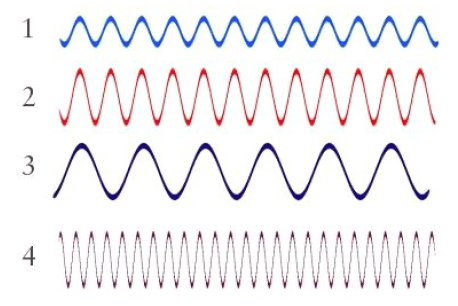

Visible light is part of the electromagnetic spectrum humans can detect. It can be broken into different colors. Looking at the chart, which color has the greatest energy?
violet
red
green
yellow
Which of the following best explains why ultraviolet rays can cause sunburn but visible light from a light bulb does not damage skin?
Ultraviolet rays come before the light rays in the electromagnetic spectrum, which means anything before visible light automatically causes cancer.
Ultraviolet rays have lower frequencies than visible light rays and thus have higher energy than light rays from a light bulb.
Ultraviolet rays have higher frequency than visible light rays and thus have more energy than light rays from a light bulb.
Ultraviolet rays have higher frequencies than visible light rays and thus have less energy than light rays from a light bulb.

Predict the products of the following reaction.
Al + HCl -->
AlCl + H
AlCl3 + H2
HAl + Cl
H3Al + Cl2

