
 Worksheets
Pan-African Movement plus
Total questions: 50
Worksheet time: 30mins
What is Pan-Africanism?
a belief in colonizing and controlling another country or foreign land
coming from one or more of the hundreds of different African tribes
a nationalist movement across the African continent with the goal of creating a unified African political identity
the use of authority or power in a cruel or unfair manner

What was the main goal of the Pan-African Movement?
To establish independence among European Nations
To walk for independence
To establish independence among African Nations
To stand up for those who could not
Why was the Pan African movement so important?
It forced African countries to become members of the United Nations.
It created an ethnic division that led to civil war in many African countries.
It granted African countries sovereignty from their European colonizers.
It allowed unity to exist among Africans and ignited nationalist movements.
Which country's independence movement involved the Mau Mau uprising?
Kenya
Nigeria
South Africa
South Africa & Nigeria
Who was a staunch supporter of Pan Africanism who eventually became Kenya's president?
Nnamdi Azikiwe
Joseph Kenyatta
Marcus Garvey
Martin Luther King
The Pan-African Movement is an example of...
Nationalism
Religion
An Ethnicity
A Political Movement
After Kenya officially became a British colony in 1895, what was controversial about the government in Kenya?
Kenyans could participate in government but British citizens could not.
The Prince of England went to Kenya to rule.
British citizens could participate in government but Africans from Kenya could not.
There was nothing controversial, the British citizens and Kenyans shared responsibility in the government.
In 1952 the Kikuyu, Meru and Kamba tribes of Kenya unified to fight against British rule and to attempt to create a free and independent Kenya.
What movement is being described?
Pan-Africanism
Imperialism
Mau Mau
Independence
In 1954 Africans were allowed to participate in Kenya's government but it wasn't until 1963 that this important event took place.
Kenyan Independence
Nigerian Independence
Pan-Africanism
British Independence
For hundreds of years, outsiders did not enter the region now known as Kenya for what reason?
wild animals
inhospitable land
fierce warrior tribes
extreme weather conditions
When did Kenya gain it’s independence from Britain?
1973
1963
1863
1873


Members of the same ethnic group always share what in common?
Belief system, food, holy text, language
Dress, food, holy places, music
Language, food, dress, music
Belief system, holy places, god(s), symbols

Which of the following are major religious groups found in Africa?
Arab, Christianity, traditional beliefs
Christianity, Islam, traditional beliefs
Islam, Persian, Swahili
Judaism, Christianity, Islam

The area indicated with the red arrow has a very low population density because it
floods annually.
is dominated by desert.
has been plagued by invasion.
is prone to outbreaks of disease.
Which African region has been negatively affected by commercial logging, excessive fuel wood consumption, and slash and burn farming techniques?
the Sahel
the Sahara
the savanna
the rainforest
In which region are some of Africa's most populated cities located?
Sahara
Sahel
Savanna
Tropical Rainforest
How are companies in the African Tropical Rainforest involved in trade?
They harvest rare and valuable wood that is sold around the world.
They do not want to cut down rare and valuable wood, so they fish instead.
The Congo River has too many snakes for companies to ship logs down the river.
The Congo River is a great place to swim.
Which statement about the population of the Sahara is correct?
Most people living in the Sahara work in the mining industry.
Most people living in the Sahara live in highly dense urban centers.
Most people living in the Sahara are nomadic
Most people living in the Sahara work in the logging industry.
What are many of the largest cities on or near?
sahel and Kalahari desert
rivers, lakes, coastline, water sources
sahel and Sahara desert
Atlas Mountains
How do people living in areas around Africa's rainforest usually make a living?
Mining
Logging and Agriculture
Raising Camels
Living as nomadic herders
It is difficult to grow crops in much of inland Africa MAINLY because of the region's lack of
soil.
sun.
land.
water.
Extensive commercial logging, the use of wood for cooking and heating, and excessive clearing of land by subsistence farmers has led to __________________ in most areas of Sub-Saharan Africa.
erosion
deforestation
desertification
water pollution
Which is an effect of deforestation?
an increased number of animal species due to the land that has been cleared
a decrease in the number of floods since there are less trees to trap rainfall
an increased amount of soil erosion and poor soil quality due to a lack of roots and nutrients
a larger variety of agricultural products since there are less trees to take out nutrients in the soil

In the Sahel, overgrazing and drought have resulted in a decrease in the steppe region and increase of the Sahara. What is this process called?
Deforestation
Desertification
Unequal Distribution
Environmental Pollution
What destroyed the grassland and forests that were once found in the Sahel?
Years of heavy flooding
Continuous farming and over-grazing
The development of factories
Why is most rainforest area lost today?
harsh drought and high winds
diseases that attack old growth trees
logging for industry, farming, and fuel
What is Africa's largest river?
The Mississippi River
The Nile River
The Yellow River
The Congo River
What is the name of the large desert that covers most of northern Africa?
The Sahara Desert
The Mojave Desert
The Nile Desert
I don't know

Feature #4
Sahara Desert
Kalahari Desert
Sahel
Congo Basin

Feature #1
Niger River
Nile River
Congo River
Danube River

What is the highest peak in Africa?
Mt. Kilimanjaro
Mt. Everest
Himalayan Mountains
Rocky Mountains
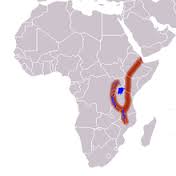
Why is the population of the Sahara so low?
Too much water
Too much oil
Limited access to oil
Limited access to water

What number marks South Africa?
11
13
14
15
What landform has rolling grassland and scattered trees?
Savanna
Nile River
Tropical Rain Forest
Niger River
What landform lies along the Atlantic Coast near the equator?
Sahel
Savanah
Niger River
Tropical Rain Forest
What mountain range is located in North Africa?
Mt. Kilimanjaro
Atlas Mountains
Sahel Mountains
The Alps

