
 Worksheets
Chapter 11 "Feudalism and the Middle Ages"
Total questions: 46
Worksheet time: 23mins
Name
Class
Date
1.
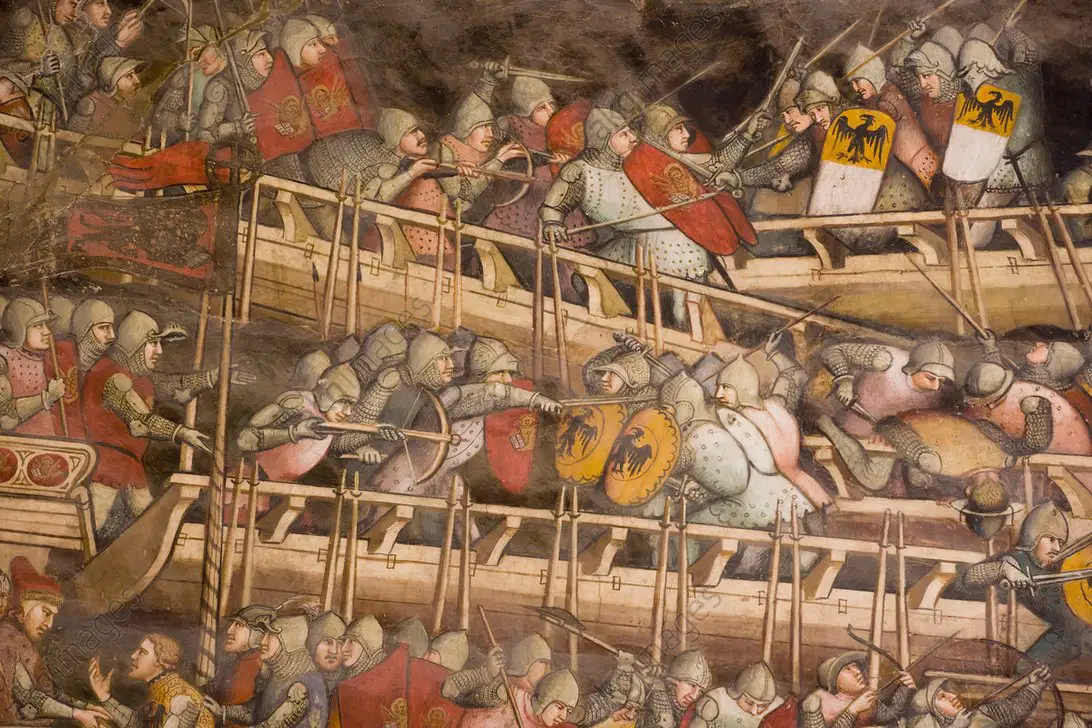
Why was the early Middle Ages so violent? (¿Por qué la Edad Media temprana fue tan violenta?)
a)
Small kingdoms were constantly fighting each other.
b)
Barbarians are attacking the Roman empire
c)
The Turks are invading Europe
d)
There is a religious war
2.

What was the only thing that united the Germanic kingdoms? (¿Qué fue lo único que unió a los reinos germánicos?)
a)
Wealth
b)
Christianity
c)
Power
d)
Lands
3.

He united the Germanic tribes into one empire, conquered the Saxons, stabilized Europe, kept order, established laws, promoted education, established a Christian empire, and protected Pope Leo III.
a)
Julius Ceasar
b)
Charlemagne
c)
Alexander the Great
d)
King Henry II
4.

They were a fighting people who valued good weapons and might decorate them with gold and gems. (Eran personas luchadoras que valoraban las buenas armas y podían decorarlas con oro y gemas.)
a)
Incas
b)
Anglo Saxons
c)
Hindus
d)
Byzantines
5.

What is the (center) or source of power in a Feudal Society (¿Cuál es el (centro) o fuente de poder en una sociedad feudal)
a)
Gold
b)
Land
c)
Castle
d)
Soldier
6.

In a feudal society, vassals are expected to return __________ and _________ to their lord. (En una sociedad feudal, se espera que los vasallos regresen __________ y _________ a su señor.)
a)
love and respect
b)
honor and dignity
c)
truth and loyalty
d)
tax and loyalty
7.

What was the role of the manor (system) in feudal society? (¿Cuál fue el papel del señorío (sistema) en la sociedad feudal?)
a)
The role of the manor in feudal society for religious training for priests.
b)
The role of the manor in feudal society was to provide the lord, priest, peasants, and serfs with everything they needed and to provide security against attacks by rival lords.
c)
The role of the manor in feudal society to provide a place for traders during the middle ages.
8.
How did Christianity unify the people of medieval Europe? (¿Cómo unificó el cristianismo a la gente de la Europa medieval?)
a)
People started believing in one religion.
b)
Priests prayed and people were miraculously united.
c)
People throughout Western Europe shared the same religious beliefs and practices.
9.

Why was the conflict between King Henry IV and Pope Gregory VII important? (¿Por qué fue importante el conflicto entre el rey Enrique IV y el papa Gregorio VII?)
a)
Kings (monarchy) are more powerful than the Catholic church
b)
People love their kings more than religion and God.
c)
The conflict determined that the Church had authority over Christendom and its rulers.
10.

What was the source of conflict between King Henry IV and Pope Gregory VII? (¿Cuál fue la fuente del conflicto entre el rey Enrique IV y el papa Gregorio VII?)
a)
Who is in-charge of the French throne.
b)
Who receives taxes
c)
Who gets to appoint bishops in the church
11.

Feudalism is a reciprocal relationship between ___________ and ______________ (El feudalismo es una relación recíproca entre ___________ y ______________)
a)
knight and king
b)
lord and vassal
c)
king and queen
d)
serfs and peasants
12.
What is the name of the large portion of land given by the king to a duke? (note: there are two possible answers) (¿Cuál es el nombre de la gran porción de tierra dada por el rey a un duque? (nota: hay dos respuestas posibles))
a)
Fifth
b)
Duffy
c)
Duchy
d)
Fief
13.

These are workers who are bound to their lord to work on the land for life. (Estos son trabajadores que están obligados a que su señor trabaje en la tierra de por vida.)
a)
Peasants
b)
Townspeople
c)
Serfs
d)
Knights
14.

At what age does training for knighthood begin? (¿A qué edad comienza el entrenamiento para la caballería?)
a)
7
b)
14
c)
21
d)
28
15.

If the page showed signs of improvements in training, then at fourteen years of age he could become a _________ . (Si la página mostraba signos de mejoras en el entrenamiento, entonces a los catorce años podría convertirse en un _________.)
a)
Square
b)
Squirrel
c)
Squire
d)
Squid
16.

Who is this powerful ruler who built an empire in what is now France? (¿Quién es este poderoso gobernante que construyó un imperio en lo que ahora es Francia?)
a)
Augustus
b)
Charlemagne
c)
William
d)
Donald
17.

He established the first parliament in England. (Estableció el primer parlamento en Inglaterra.)
a)
John II
b)
Edward I
c)
William IV
d)
Joe I
18.

What is the “code of honor” knights live by? (¿Por qué viven los caballeros del "código de honor"?)
a)
Grizzly Pride
b)
10 Commandments
c)
Code of Chivalry
d)
Da Vinci Code
19.

Who is the Pope who called the First Crusade in Clermont France? (¿Quién es el Papa que llamó a la Primera Cruzada en Clermont, Francia?)
a)
Urban 1
b)
Urban 2
c)
Urban 3
d)
Urban 4
20.
The main purpose of this campaign is to drive away non-Christians from the Iberian Peninsula (Spain and Portugal). (El objetivo principal de esta campaña es expulsar a los no cristianos de la Península Ibérica (España y Portugal).)
a)
Reconquista
b)
Peninsularismo
c)
Evangelismo
d)
Fedulsimo
21.

This document forced King John of England to give or at least acknowledge basic human rights of Englishmen, thus ending the “all powerful” right of Kings. (Este documento obligó al rey Juan de Inglaterra a dar o al menos reconocer los derechos humanos básicos de los ingleses, poniendo fin al derecho "todopoderoso" de los reyes.)
a)
Constitutional Convention
b)
Magna Carta (Great Charter)
c)
The Great Schism
d)
The Mysterious Document
22.

Which of the following documents below was NOT influenced by the Magna Carta? (¿Cuál de los siguientes documentos a continuación no fue influenciado por la Carta Magna?)
a)
English Bill of Rights
b)
Declaration of Independence
c)
U.S. Bill of Rights
d)
The 10 Commandments
23.

In what way did the Magna Carta limit the king’s authority? (¿De qué manera la Carta Magna limitó la autoridad del rey?)
a)
It made him subject to the law of the land and limited his authority.
b)
It made him obey the teachings of the church
c)
It made him acknowledge the rights of serfs and peasants.
24.
Do you think the Magna Carta affected the lives of ordinary people? Why or why not? (¿Crees que la Carta Magna afectó la vida de la gente común? ¿Por qué o por qué no?)
a)
Yes, this document forced the King to take care of ordinary people like serfs and peasants.
b)
No, the document only dealt with the concerns of the upper classes in medieval society.
25.

Bubonic plague is also known as _____________ which killed about ___ _______ people. ( La peste bubónica también se conoce como _____________, que mató a aproximadamente ___ _______ personas.)
a)
Black Death // 20 Million
b)
Grey Worm // 20 Thousand
c)
Yellow Diarrhea // 30 MIllion
d)
Red Rash // 30 Thousand
26.

When did the Black Death initially occur? (¿Cuándo ocurrió inicialmente la Peste Negra?)
a)
14th century CE
b)
19th century CE
c)
541 CE
d)
1904 CE
27.

How was the Black Death likely spread? (¿Cómo se propagó la Peste Negra?)
a)
From person to person
b)
By a contaminated food
c)
Through mosquitos
d)
By rats and their fleas
28.

What proportion of the affected population was killed by the Black Death? (¿Qué proporción de la población afectada fue asesinada por la Peste Negra?)
a)
Less than 10%
b)
About 25%
c)
Over 90%
d)
About 50%
29.
The Black Death was the second major epidemic of its kind. What was the first known epidemic of the disease that also caused the Black Death? (La Peste Negra fue la segunda gran epidemia de este tipo. ¿Cuál fue la primera epidemia conocida de la enfermedad que también causó la Peste Negra?)
a)
The Plague of India
b)
The Plague of Justinian
c)
The Hong Kong Plague
d)
The Antonine Plague
30.

Which part of the world did bubonic plague come from? (¿De qué parte del mundo vino la peste bubónica?)
a)
Northern Asia
b)
Southern Africa
c)
Central Asia
d)
Central Africa
31.

Choose on of the two factors or reasons that started the Hundred Years’ War? (¿Elija uno de los dos factores o razones que comenzaron la Guerra de los Cien Años?)
a)
The English wants independence or full control of Aquitaine from the French.
b)
The King of France wants his wig back and the King of England said "over my dead and bald head"
c)
The King of England wants to change the name of the "French toast" to "English muffin"
d)
The kings of England from 1337 claimed the crown of France.
e)
The King of France dared the King of France and the King of France double dared the king of England.
32.

Joan of Arc is a/an __________________ (Juana de Arco es un / a ____________________)
a)
English peasant girl who claimed that Christians saints had told her to save her country.
b)
French peasant girl who claimed that Christians saints had told her to save her country.
c)
French noble girl who practiced witchcraft to win wars
d)
English monarch who used her authority to win a war against France
33.

Which of the four Crusades sailed around Spain? (¿Cuál de las cuatro cruzadas navegó por España?)
a)
First Crusade
b)
Second Crusade
c)
Third Crusade
d)
Fourth Crusade
34.

How far did Muslim rule reach into Europe? (¿Hasta dónde llegó el dominio musulmán a Europa?)
a)
into France
b)
into Italy
c)
into Spain
d)
across the Byzantine Empire
35.

From what city was the First Crusade launched? (¿Desde qué ciudad se lanzó la Primera Cruzada?)
a)
Paris
b)
Venice
c)
Vienna
d)
Bruges
36.

To what group did the king give land and power? (¿A qué grupo le dio el rey tierra y poder?)
a)
clergy
b)
nobility
c)
peasants and serfs
d)
vassals
37.

To what group did knights belong? (¿A qué grupo pertenecían los caballeros?)
a)
clergy
b)
nobility
c)
peasants and serfs
d)
vassals
38.

What did peasants and serfs do? (¿Qué hicieron los campesinos y los siervos?)
a)
conduct trade
b)
pay taxes
c)
serve in the military
d)
work the land
39.

True r False: A knight's warhorse does NOT wear armor on battles. It is just for parade or display.
a)
True
b)
False
40.
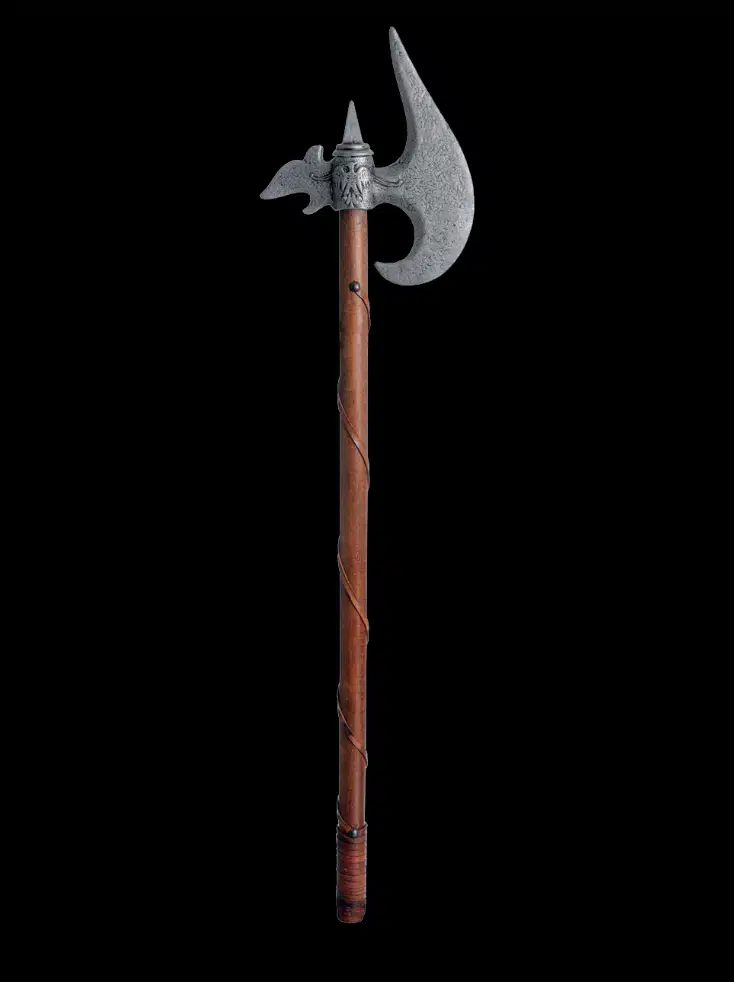
This weapon consisted of an ax with spike. What type of weapon is this?
a)
Halberd
b)
Malberd
c)
Spax
d)
Holberg
41.
What is the purpose of the shield of a knight besides defense and as a weapon?
a)
It is some kind of ritual.
b)
It serves as a distraction.
c)
The decoration identifies the knight.
42.

What is the name of this part of the armor in box number "2"?
a)
Sabatons
b)
Gauntlet
c)
Pauldron
d)
Breastplate
e)
Helmet
43.

What is the name of this part of the armor in box number "5"?
a)
Sabatons
b)
Gauntlet
c)
Pauldron
d)
Breastplate
e)
Helmet
44.

What is the name of this part of the armor in box number "4"?
a)
Sabatons
b)
Gauntlet
c)
Breastplate
d)
Helmet
45.

What is the name of this part of the armor in box number "3"?
a)
Sabatons
b)
Gauntlet
c)
Pauldron
d)
Breastplate
e)
Helmet
46.

What is the name of this part of the armor in box number "1"?
a)
Sabatons
b)
Gauntlet
c)
Breastplate
d)
Helmet
100 %

