
 Worksheets
Nuclear Chemistry (PS)
Total questions: 19
Worksheet time: 14mins
Which 2 elements did Marie & Pierre Currie discover were radioactive?
neptunium & uranium
polonium & radium
iron & lead
americium & europium
In nuclear chemistry, an isotope is referred to as
alpha particle
nucleus
nuclide
nucleon
What does the 218 in polonium-218 represent?
the mass number
the neutron number
the atomic number
the electron number
What does the 101 in 101256Md represent?
the mass number
the atomic number
the number of neutrons
the nuclide number
Which isotope is most commonly used in the radioactive dating of the remains of organic materials?
Cobalt-60
Carbon-14
Iodine-131
Potassium-37
Which radioisotopes is used for diagnosing thyroid disorders?
Cobalt-60
Carbon-14
Iodine-131
Potassium-37
Which radioisotope is used in treating cancer?
Cobalt-60
Carbon-14
Iodine-131
Potassium-37
A serious risk factor associated with the operation of nuclear power plant is the production of
radioisotopes with long half-lives
helium gas
acid rain
greenhouse gases, such as carbon dioxide
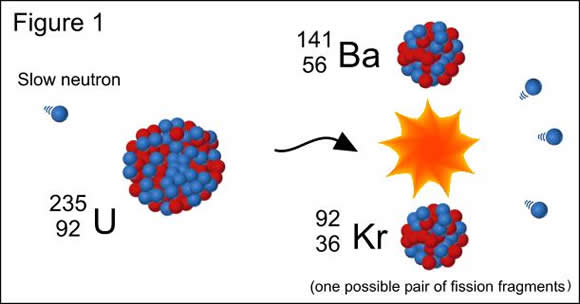
The splitting of nuclei is called
fusion
fission
denaturation
Which statement best describes what happens in a fusion reaction?
Heavy nuclei split into lighter nuclei
Light nuclei combine into heavier nuclei
Energy is released and less stable elements are formed
Energy is absorbed and more stable elements are formed
What kind of nuclear reaction occurs in nuclear power plants?
Fusion
Fission
Combustion
What type of nuclear reaction naturally occurs in the stars?
Fusion
Fission
Double Displacement
Which is more powerful/produces more energy?
Fusion
Fission
Fusion produces long-lived toxic waste, which can affect humans for millions of years.
True
False
If we start with 200 atoms of a radioactive substance, how many atoms would remain after one half-life?
200
100
50
20
If we start with 22 atoms of a radioactive substance, how many atoms would remain after one half-life?
22
11
10
2
What is an advantage of nuclear energy?
radioactive waste
no pollution
nuclear meltdowns
it is the safest way to make energy

