
Font size
 Worksheets
5th Grade Science GA Milestones Review
Total questions: 51
Worksheet time: 1hrs 22mins
What questions can be used to sort fish, such as a bass, from amphibians, such as a frog?
Does the organism use gills to breathe?
Does the organism eat insects?
Is the organism able to move around?
Does the organism lay eggs?
Animals that usually have the same body temperature, regardless of their surroundings are called:
terrestrial
aquatic
warm-blooded
cold-blooded
A student argues that a constructive process changed Earth's surface in a park near his home.
Which surface feature could the student use as evidence for his argument?
a canyon
a U-shaped valley
a crack in Earth's crust
a moraine (a mass of rocks and sediment deposited by a glacier)
A student drops some nails into a trashcan half filled with wood shavings. Which is a way to separate the mixture of nails and wood shavings?
using a filter
flotation
evaporation
using a magnet
A student wants to research invertebrate animals. Which of these animals should she study? Select THREE animals.
frog
fish
clam
worm
spider
A student is hiking on a summer day. She sees pieces of rock fall down a cliff.
Which TWO processes MOST LIKELY occurred?
erosion by water
weathering by ice
erosion by gravity
deposition by wind
A robin sings a song, hunts worms on a school lawn, builds a nest, and sleeps at night.
These behaviors are all considered _____________.
instincts
learned behaviors
A junkyard needs a magnet to separate iron and nickel scraps from other items. The scraps will be placed in a container for recycling. A manager is deciding whether to purchase an electromagnet or a bar magnet.
Which is the BEST reason to choose an electromagnet or a bar magnet?
bar magnet-- because it is permanent
electromagnet -- because it attracts iron and nickel
electromagnet -- because it can be turned on and off
bar magnet -- because it is stronger than an electromagnet
What are the effects of seawalls and jetties? Select TWO effects.
restore damaged beachers
control beach deposition by wind
hold back floodwaters from rivers
allow floodwater to flow into drains
prevent beach erosion by ocean waves
Which of these actions will cause a chemical change?
burning a substance
evaporating a substance
dissolving one substance in another substance
mixing two different states of the same substance
A student argues that some microorganisms are harmful. Which is the BEST evidence to support the student's claim?
Bacteria turn mild into cheese.
Fungi and bacteria are decomposers.
Bacteria in raw meat can make people sick.
Algae are the main producers of oxygen in oceans and lakes.
Winds blow across a desert. Which landform will MOST LIKELY form where the winds slow down?
dune
delta
mountain
floodplain
A student is making an electrical circuit. She needs one more part--wire. What will the wire do?
open and close the circuit
supply electric current
allow electric current to flow through the circuit
convert electrical energy into another form of energy
A scientist studies seismograms from an area near a coast.
Which question can the scientist BEST answer with the seismograms?
How old are cliffs along the coast?
When will the next earthquake occur?
How do ocean waves affect landforms?
What was the strength of an earthquake in the area?
What TWO organelles to plant cells have that animal cells do not?
Chloroplasts
Vacuoles
Cell Membrane
Cell Wall
A student gives a toy to a cat. The cat rolls and plays with the toy.
Which is the BEST question the student could ask to determine whether playing with toys is an instinct or a learned behavior in cats?
What is the toy made of?
Does the cat play with the toy every day?
Do the cat's brothers and sisters also play with toys?
When the cat was young, did it see its mother play with toys?
Which of these actions can BEST limit the erosion of coastal dunes?
planting grass on the dunes
removing animals from the dunes
moving sand from the ocean floor to the dunes
A student sorts animals into groups. One group includes a hawk, a mouse, a fox, and a bear.
Which animal should the student remove from this group?
fox
bear
hawk
mouse
Which statement about levees is true?
They limit coastal flooding.
They prevent erosion of river banks
They allow deposition on floodplains.
They help control flooding along rivers.

What piece of scientific equipment would you use to see human cells?
telescope
microscope
microwave
computer
Which of the following objects could NOT be picked up with an electromagnet?
staples
aluminum cans
rubber bands
keys
What type of disease can you get from fungi?
measles
chicken pox
food poisoning
athlete's foot
A destructive process
builds up landforms
breaks down landforms
makes volcanoes
moves tectonic plates
Juan's dog, Luna, was hit by a car. Fortunately, she lived and is healthy. But she is now missing a leg. Having only three legs is a(n)
inherited trait.
learned behavior.
instinct.
acquired trait.
What is the BEST description of static electricity?
surface charge that can't move
surface charge that can move
current in a wire
an electrical surface
The ability to play chess is BEST described as
genetic trait
learned behavior
DNA behavior
result of protein production
Which of the following materials is the MOST electrically conducting?
wood
copper
water
plastic wrap
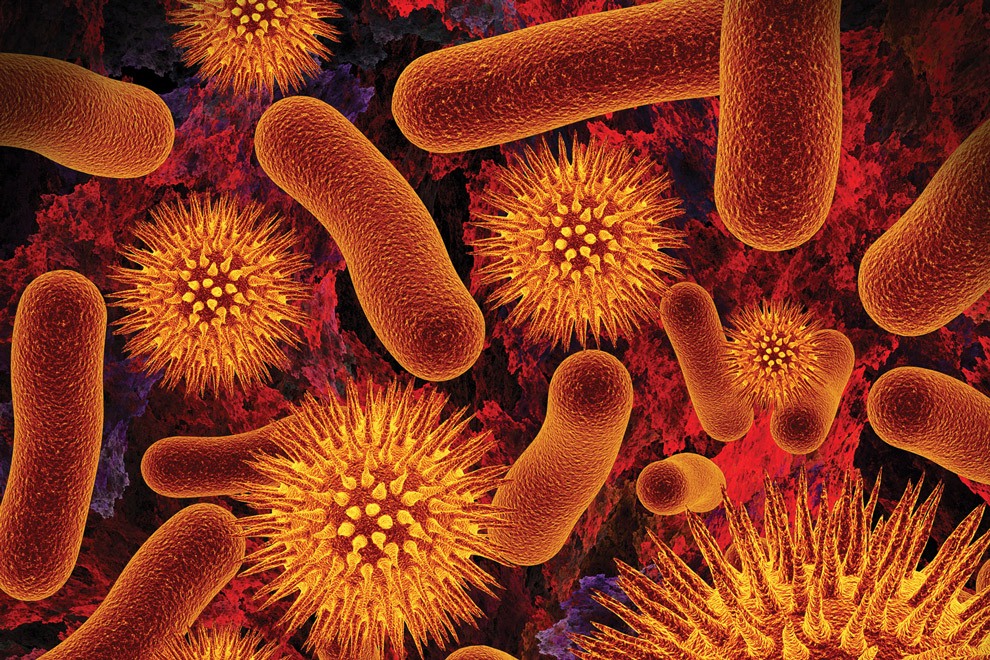

Which two examples below are helpful bacteria?
Medicine and Cherry Coke
Yogurt and yeast
Salmonella and E. Coli
Water and germs

True or False: Recessive traits are______________________
never present
always present
present when their is one factor (Aa)
only present when their are two factors (aa)


__________is a build up of electric charges within or on the surface of a material.
static electricity
current electricity
circuits
load
Most birds know how to build nests. Some birds can learn to build nests. Which is true of both behaviors?
Both behaviors are learned traits.
Both behaviors are inherited traits.
Building a nest is learned, but building a better nest is inherited.
Building a nest is inherited, but building a better nest is learned .
Why are microorganisms important?
Some produce oxygen.
Some are food sources for other organisms.
Some are nutrient recyclers.
All of the reasons are correct.

This type of animal must hunt, gather, and store food because it can't make it's own food.
consumer
producer
decomposer
cell
These may all be classified as...

How can we sort the three plants seen here into two groups?
tall or short
land or water
seeds or no seeds
woody or non-woody

