wayground logo

Free Printable Worksheets

NEW

Font size

S
M
L
XL
Worksheets

Chemistry Part 1 - 8th Grade

Total questions: 29

Worksheet time: 19mins

Name
Class
Date
1.
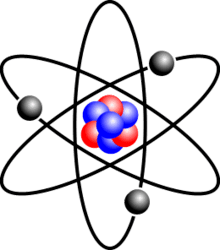
What is the atomic number?
a)
the number of protons
b)
the number of protons and neutrons
c)
the number of neutrons
d)
the number of protons and electrons
2.
Which particle has a positive charge?
a)
electron
b)
orbital
c)
proton
d)
neutron
3.
This particle determines what element you have - the elements identity.
a)
electron
b)
proton
c)
neutron
d)
valence shell
4.

The fluorine atom has an atomic number of

a)

19

b)

9

5.

What is the mass number and atomic number ?

a)

Mass number = 7, atomic number = 14

b)

Mass number = 14, atomic number = 7

6.

Which subatomic particle has a negative charge in the atom?

a)

proton

b)

neutron

c)

electron

d)

quark

7.

What is Atomic Mass Number ?

a)

Number of Protons

b)

Number of Neutrons

c)

Number of Protons and Neutrons

d)

Number of Protons and Electrons

8.
What is the formula to solve for the neutron?
a)
Mass + Atomic Number= Neutrons
b)
Mass x Atomic Number = Neutrons
c)
Mass - Atomic Number = Neutrons
d)
Mass + Number of Protons = Neutron
9.
Where is the neutron located?
a)
In the loose nucleus with the electron
b)
In the dense nucleus with the protons
c)
In the electron cloud
d)
The nucleus floats on orbitals
10.
What is the charge of the neutron?
a)
Negative
b)
Positive
c)
electrical charge
d)
Neutral (no charge)
11.
How many neutrons does the an element with an atomic number of 3 and a mass of 6.9 contain?
a)
6.9
b)
4
c)
3
d)
7
12.
An atom with 19 protons, and 19 electrons and a mass of 39 has how many neutrons?
a)
19
b)
39
c)
20
d)
58
13.
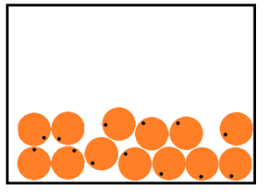
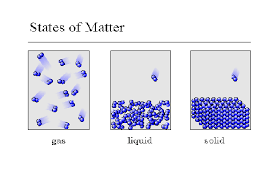
When molecules flow around each other, they are in this phase
a)
solid
b)
liquid
c)
gas
d)
plasma
14.
Sam had a solid and added energy to it. What did the molecules look like?
a)
The molecules moved in place.
b)
The molecules moved away from each other.
c)
The molecules didn't move.
d)
The molecules moved around each other.
15.
What takes place when a liquid changes to a gas?
a)
condensation
b)
melting
c)
evaporation
d)
freezing
16.
What is a group of atoms joined together called?
a)
an atom
b)
molecule
c)
matter
d)
compound
17.
What takes place when a solid changes to a liquid?
a)
condensation
b)
melting
c)
evaporation
d)
freezing
18.
What takes place when a liquid changes to a solid?
a)
condensation
b)
melting
c)
evaporation
d)
freezing
19.
What takes place when a gas changes to a liquid?
a)
melting
b)
freezing
c)
evaporation
d)
condensation
20.
What takes place when a solid changes to a liquid?
a)
condensation
b)
freezing
c)
melting
d)
evaporation
21.
If energy is taken out of the substance, and the substance changed into a liquid,
a)
the substance started as a solid
b)
the substance started as a liquid
c)
the substance stayed the same
d)
the substance started as a gas
22.
Something that takes up space and has mass.
a)
volume
b)
matter
c)
mass
d)
density
23.
What cannot be broken down into other substances?
a)
Compound
b)
Mixture
c)
Solids
d)
Element
24.
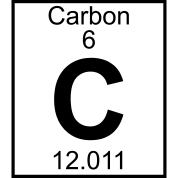
What does 12.011 represent?
a)
atomic mass
b)
atomic number
c)
element name
d)
chemical symbol 
25.
What does the 6 represent?
a)
atomic mass
b)
atomic number
c)
element name
d)
chemical symbol 
26.
At higher temperatures
a)
particles in an object have less energy
b)
particles in an object move faster
c)
a gas contracts
27.

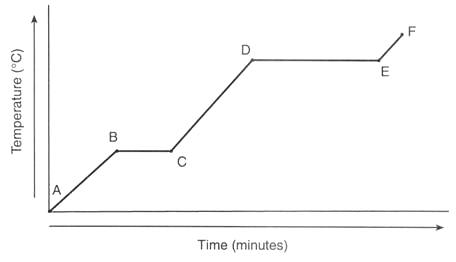
What line segment represents only the solid state? (Diagram F)

a)

A-B

b)

B-C

c)

C-D

d)

D-E

28.

Between which points is the temperature of the substance remaining constant? (Diagram F)

a)

A-B only.

b)

A-B, C-D, E-F

c)

B-C only.

d)

B-C, D-E

29.

What type of process is happening as one moves along line segment B toward the right? (Diagram F)

a)

An endothermic Process

b)

An exothermic Process

c)

The calorimetry process

d)

Nuclear fusion