
Font size
 Worksheets
Stage 5 Chemistry
Total questions: 50
Worksheet time: 2hrs 40mins
How many total atoms are written here?
6MgF2
3
6
12
18
___________________ are the elements are compounds that leave (are formed in) a chemical reaction.
Polymers
Bonds
Reactants
Products
If I suspect carbon dioxide is a product of a reaction, to test for the gas I could ...
Bubble it through limewater and it will go milky
do the pop test and it will burn
Light a taper and it will burn brighter
note the colour change to yellow
2H2 + O2 --> 2H2O
2H2 + O2 --> 2H2O
Al + O2 --> 2Al2O3
Mg + __HCl ---> MgCl2 + H2
a process or reaction in which the system absorbs energy from its surroundings; usually, but not always, in the form of heat which makes it feel cold
Endothermic Reaction
Exothermic Reaction
Corrosion
Precipitation

Which type of reaction takes place in the presence of oxygen and produces carbon dioxide and water?
double replacement
decomposition
combustion
corrosion
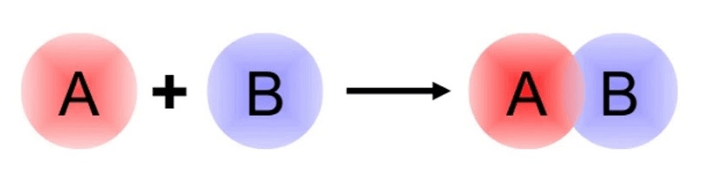
What is the type of reaction shown above?
Synthesis
Decomposition
Precipitation
Neutralisation
Identify the reaction type:
C2H6 + O2 --> CO2 + H2O
Corrosion
Synthesis
Neutralisation
Combustion
Identify the reaction type for the following equation:
K + F2 --> KF
Neutralisation
Precipitation
Synthesis
Decomposition
Which of the following is an neutralisation reaction?
2Na + Cl2 → 2NaCl
CH4 + 2O2 → CO2 + 2H2O
HCl + KOH → KCl + H2O
CaCO3 → CO2 + CaO
Identify the reaction type:
H2O2 --> H2O + O2
Decomposition
Synthesis
Combustion
Neutralisation

The picture above is a signage for dangerous good Class 5. Substances under this class are usually:
oxidising substances that readily yields oxygen and cause other materials to combust
readily ignite and burn explosively, some spontaneously
Pose harm from inhalation, ingestion, absorption
cause disintegration of tissues, external fuming potential

Which of the following substances follow the signage above?
Liquified Petroleum Gas
Hydrocyanic Acid
Biohazard material
Plutonium

Radioactive materials are under class:
6
7
8
9

Corrosive substances are under class:
8
7
6
5

Flammable liquids are liquids, or mixtures of liquids, or liquids containing solids in solution or suspension (for example paints, varnishes, lacquers, etc., but not including substances otherwise classified on account of their other dangerous characteristics.
Class 1
Class 2
Class 3
Class 4

What does this symbol mean if found as a label on a substance?
Explosive
Flammable
Set this on fire
Oxidising
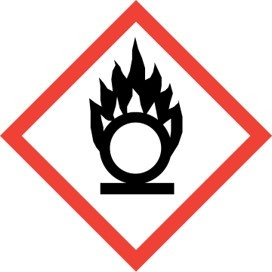
What does this symbol stand for?
Flammable
Oxidising
Non-flammable
Explosive

What does this symbol stand for?
Flammable
Oxidising
Irritant
Corrosive

What does this symbol stand for?
Flammable
Toxic
Deadly
Corrosive

This symbol tell us the chemical it is labelling is:
Harmful to the environment
A pressurised container
Explosive
Corrosive

This symbol would be seen on which of the following
Radioactive substance
Waste bin of used vaccinations
Cancer patient
Petroleum
A reaction between an acid and a base is called
Neutralisation
Precipitation
Combustion
Corrosion
Which types of reaction are classified as 'oxidation' reactions?
Precipitation
Corrosion
Neutralisation
Combustion
Acid + Base -->
Salt + hydrogen gas
Salt + water
Carbon dioxide + water
Salt + precipitate
Which gas test should I use to check for hydrogen gas as a product of a reaction?
pop test
burning splint test
limewater test
fire extinguisher test
Which test should I use to test for the presence of oxygen gas as a product?
pop test
burning splint test
limewater test
fire blanket test
A metal reacting with oxygen in the presence of water is
precipitation
decomposition
combustion
corrosion
The energy required to begin a chemical reaction is know as
initiation energy
kinetic energy
activation energy
commencement energy

