
 Worksheets
6th Grade Science Semester Final
Total questions: 22
Worksheet time: 2hrs 50mins
Name
Class
Date
1.
__________ is stored energy.
a)
Potential
b)
Kinetic
c)
None of the above
d)
All of the above
2.

What kind of energy is in a moving skateboard?
a)
Potential
b)
Kinetic
c)
Both potential and kinetic energy
d)
none of the above
3.
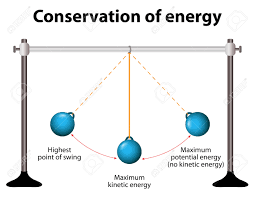
Conservation of energy states that energy cannot be ________ or ________, but can be altered from one form to another.
a)
created, destroyed
b)
gravity, force
c)
heat, created
4.
Energy stored in the bonds of atoms and molecules is __________ potential energy.
a)
Chemical
b)
Elastic
c)
Nuclear
d)
Gravitational
5.
The movement of energy through substances in longitudinal waves (vibrating matter) is called ___________ energy.
a)
Heat
b)
Sound
c)
Electical
d)
Light
6.
Heat will always flow from
a)
from warmer object to a cooler object
b)
inside and object to outside an object
c)
from a cooler object to a warmer object
d)
up to down
7.

Which type of heat transfer is shown?
a)
convection
b)
conduction
c)
radiation
d)
stir frying
8.

What type of heat transfer is shown here?
a)
convection
b)
conduction
c)
radiation
d)
sun shining
9.

What type of heat transfer is shown here?
a)
convection
b)
conduction
c)
radiation
d)
boiling water
10.
Which natural resource is a renewable energy resource?
a)
coal
b)
oil (petroleum)
c)
natural gas
d)
sun
11.
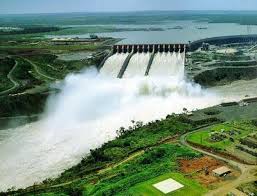
Hyrdo Power is a __________ energy resource.
a)
Renewable
b)
Nonrenewable
12.
What are the 3 major types of rocks?
a)
Igneous, Metamorphic, Sedimentary
b)
Metamorphic, Igneous, Cementation
c)
Brown, Red, Gray
d)
Streak, Hardness, Breakage
13.
This rock was formed when molten rock cooled into a solid. What type of rock is it?
a)
Igneous Rock
b)
Metamorphic Rock
c)
Sedimentary Rock
14.

The process when rocks break into smaller pieces due to exposure to natural elements is called
a)
erosion
b)
weathering
c)
sediments
15.
The process by which metamorphic rock changes to igneous rock begins with
a)
melting
b)
erosion
c)
deposition
d)
crystallization
16.
The process by which metamorphic rocks are formed...
a)
heat and pressure
b)
erosion and deposition
c)
melting and cooling
17.
What is process in which water, wind, and heat break down rock?
a)
weathering
b)
exfoliation
c)
cementation
d)
composition
18.
Which diagram shows a plate boundary that is typical for the formation of volcanoes?
a)
b)
c)
d)
19.

What kind of plate boundary is shown here?
a)
divergent
b)
convergent
c)
transform
d)
submergent
20.
What geologic feature/event would you most likely to find at a divergent boundary between two pieces of oceanic crust?
a)
Rift Valley
b)
Mid-Ocean Ridge
c)
Island Arc
d)
Flat land
21.
An _______ is between the orbits of Mars and Jupiter.
a)
Oort Cloud
b)
Asteroid belt
c)
Kuiper belt
d)
Photosphere
22.
Which choice shows the correct order of the planets?
a)
Mars, Venus, Earth, Mercury, Jupiter, Saturn, Uranus, Neptune
b)
Earth, Venus, Mars, Mercury, Jupiter, Saturn, Uranus, Pluto
c)
Mercury, Venus, Earth, Mars, Jupiter, Saturn, Uranus, Neptune
d)
Saturn, Venus, Mars, Mercury, Jupiter, Neptune Mercury, Uranus
100 %

