
 Worksheets
PROGRAMMING TECHNIQUES
Total questions: 25
Worksheet time: 17mins
Choose the programming techniques used in planning and monitoring of project performance (you may choose more than one techniques)
Bar Chart
Line of Balance
Network Technique - CPM
Network Technique - Precedence
PERT - Programme Evaluation and Review Techniques
What are the limitations of using Bar Chart?
Show relationships between project activities
Does not identify activities which control a project's total duration (i.e., critical activities comprising critical path)
Does not relate delay or change of one activity to the entire project
Can be used for large projects
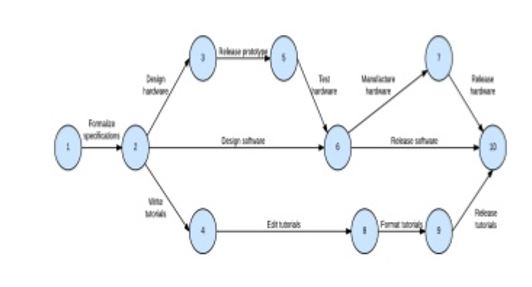
A network is a graphical diagram as shown. Select important elements in a network
Arrows
Nodes
Activities
Duration
Resources
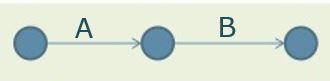
Select the correct description for the following network
Activity B must be completed before Activity A completed
Activity A must be completed before Activity B completed
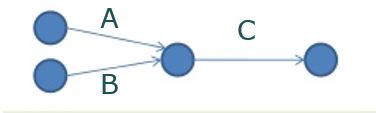
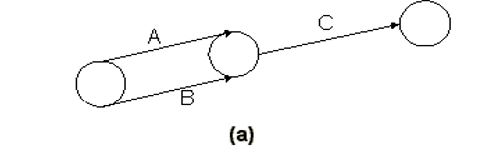
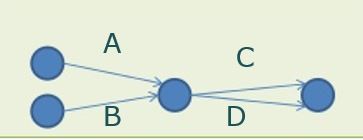
Select the correct description for the network below
Activities A and B can occur concurrently, but both must be completed before Activity C can begin
Activity C must be completed before Activity A is completed
The choice of Scheduling Method/Planning Techniques will depend on the followings
Familiarity on the technique to be used and acceptable by parties involved
Type and size of project
Purpose of scheduling
Network analysis
is a method of project planning done on activities so that it is connected to each other
is used to optimized the usage of resources and also for monitoring and controlling
the purpose of network analysis is to ascertain the critical path for a certain project.
has a number of techniques for planning and control of projects
Objectives of Network Analysis are:
to minimize project cost
To minimize project time
To ensure optimum utilization of human and other resources
To ensure minimum conflicts and unnecessary delay
To minimize wastage of resources
Activity on Arrow (AOA) are:
Arrow represents activity
start or end of each activity is represented by a node.
existence of dummy activities
Node represents activity
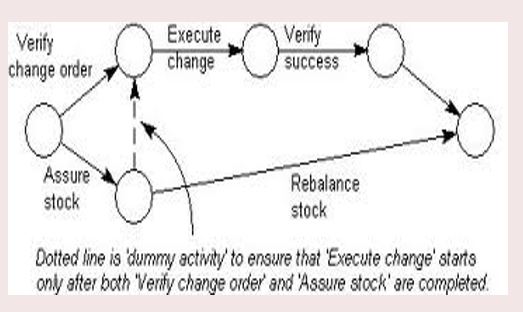
Select the type of Network Analysis shown in the given figure
AOA - Activities on Arrow
AON - Activities on Nodes
The followings are information on AOA
Show Finish to start relationships
It is not possible to show lead or lag time. This makes project tracking difficult
There are instances where "dummy activities" can occur in AOA diagram.
AOA networks are not supported by many software tools , thus it is not widely used.
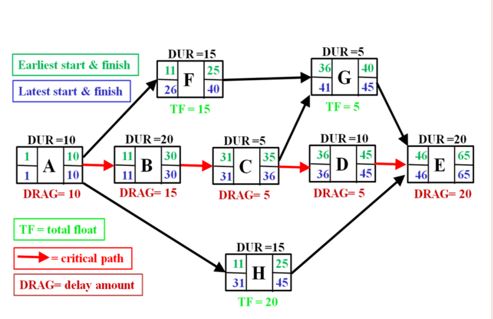
Select the correct network analysis technique for the given figure
AOA
AON
PERT
select the relevant information related to AON - Precedence Diagram Network
does not have dummy activities as the arrows represents only dependencies
can accommodate any types of relationship ( Finish to Start, Finish to Finish, Start to Start, Start to finish, Lead and Lag)
widely as it is supported by almost all the project management software tools
Select the following statement on dummies which are sometimes needed in AOA
The relationship that exist among activities cannot always be shown
is usually drawn as a dotted line but assigned no duration
are required for unique activity designation
are required to maintain proper logic of various construction activities
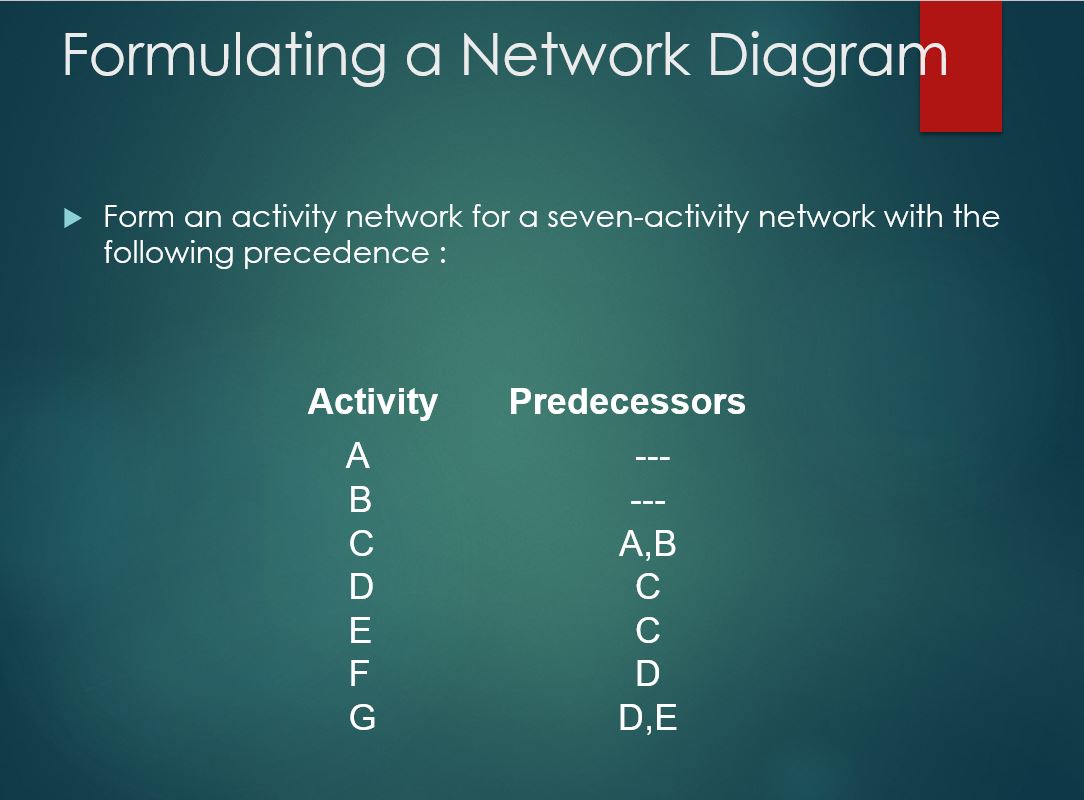
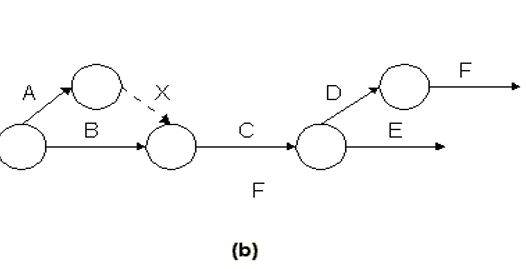
Form an activity network for a seven-activity network with the following AOA precedence - select the correct and complete diagram
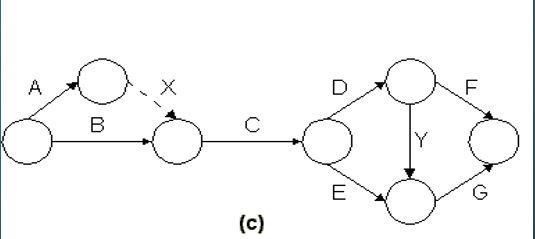
CPM - Critical Path Method is a project scheduling method where activities are arranged based on interrelationships and the longest time path through the network.
YES
NO
The followings are the advantages of CPM
Identify critical tasks
Easier to plan, schedule and control project
Determine the resource required
Improve productivity
Select the correct representation of activity duration for CPM
ES - Early Start
EF - Early Finish
LS - Late Start
LF - Late Finish
TF - Total Float and FF- Free Float
In Activity on Nodes diagram, select the use of lag that is commonly represented by the following relationships
FS - Finish to Start
FF - Free to Float
SS - Start to Start
SF - Start to Finish
FF - Finish to Finish
Determine ES and EF
Backward Pass
Forward Pass
Determine LS and LF
Backward Pass
Forward Pass
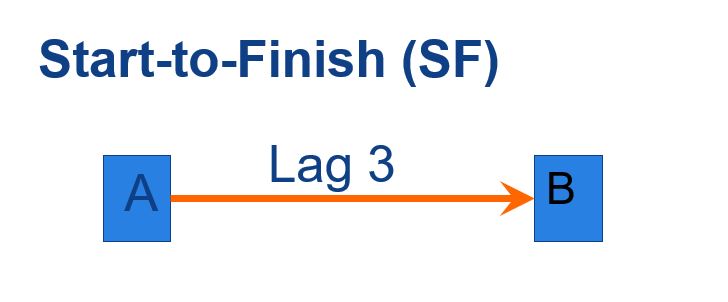
Select the correct description of the relationship (SF=3)
Activity B cannot finish until 3 days after Activity A has started
Activity A cannot finish until 3 days after Activity B has started
The total amount of time that a scheduled activity (or milestone) may be delayed or extended without delaying the project end date or violating/compromising a schedule constraint.
Free Float
Total Float
Negative Float
The amount of time that a scheduled activity (or milestone) can be delayed or extended without delaying the start of the next activity in the network (ES Act B - EF Act A)
Free Float
Total Float
Negative Float
The amount of time that by which a critical activity (or milestone) misses a required date.
Free Float
Total Float
Negative Float

