Wayground logo

Free Printable Worksheets

Font size

S
M
L
XL
Worksheets

1920s-1960s

Total questions: 68

Worksheet time: 46mins

Name
Class
Date
1.

In the early 1900s, many southerners moved to big cities for what reason?

a)

to find more food

b)

because they didn't like growing cotton

c)

to find better jobs

d)

to get bigger homes

2.
It was hard for black people to find jobs in the south because of __________, which made segregation legal.
a)
Jim Crow laws
b)
Slave laws
c)
Segregational Act of 1900
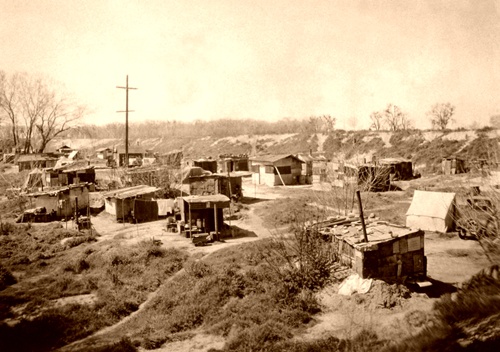
d)
Civil Rights
3.
What area of New York did many African Americans move to?  It became known for artistic, poetic, intellectual and musical creativity.
a)
The Bronx
b)
Harlem
c)
Staten Island
d)
Queens
4.
What name was given to the movement of African Americans moving from South Carolina to the North for better opportunities?
a)
The Great Migration
b)
The Great Emigration
c)
The Great Depression
5.
One of the most famous American poets of all-time, he infused jazz and blues rhythms into much of his work.
a)
Duke Ellington
b)
Cab Calloway
c)
Louis Armstrong
d)
Langston Hughes
6.
What was the impact of the Harlem Renaissance? 
a)
promoted the growth of New York cities
b)
promoted culture identity of African Americans 
c)
it fought discrimination in southern cities
d)
it established programs such as the NAACP
7.
What type of music was popularized during the Harlem Renaissance?
a)
Jazz
b)
Hip Hop
c)
Country
d)
Rock
8.
What is extending a country's power and influence through diplomacy or military force?
a)
imperialism
b)
nationalism
c)
militarism 
9.
What was the immediate cause of WWI?
a)
The invasion of France
b)
The assassination of Archduke Francis Ferdinand
c)
The assassination of Kaiser Wilhelm II
d)
The rise of militarism
10.

Which was NOT a cause of WW1?

a)

nationalism

b)

imperialism

c)

militarism

d)

isolationism

11.
What was the British ship sunk by Germany, killing over 1,000 passengers and 128 Americans?
a)
USS Maine
b)
Titanic
c)
Lusitania
d)
Envoy
12.

What events draw the United States into World War I?

a)

Zimmerman telegraph

b)

Sinking of Lusitania

c)

US ships are sunk by Germany

d)

All of these

13.

During WWI, what was the policy of not taking sides in the conflict in Europe?

a)

Neutrality

b)

Alliance

c)

American Expeditionary Force

d)

Armistice

14.

International peacekeeping organization that U.S. did not join after WWI.

a)

United Nations

b)

League of Superheroes

c)

League of Nations

d)

United Governmental Agency

15.

Ended WWI with provisions that were considered very harsh on Germany and other defeated countries.

a)

Treaty of Paris

b)

Treaty of Versailles

c)

Treat of Ghent

d)

Treaty of Nanking

16.

Secret message from German foreign Minister to Mexico, promising to return lost territories to Mexico in exchange for alliance.

a)

DeLome Letter

b)

Zimmerman Telegram

c)

Wilhelm Message

d)

Franz Communication

17.

Proposed by Wilson before the end of WWI as the basis for the peace in Europe include a plan for the League of Nations.

a)

Fourteen Points

b)

Treaty of Versailles

c)

United Nations

d)

Treaty of Paris

18.
The government of what country was overthrown in 1917 and turned into a Communist country?
a)
Russia
b)
Austria-Hungary
c)
Germany
d)
England
19.
When WWI started, what was the wealth gap between the rich and poor like in the United States?
a)
It was very small gap between the rich and the poor.
b)
Wealth in American society was basically equal among all citizens.
c)
There was a large gap between the rich and the poor.
d)
None of the above.
20.
Who were the Palmer Raids meant to find and root out?
a)
Anarchists
b)
Communists
c)
Socialists
d)
All of the above
21.
The Scopes Monkey Trial of 1925 had to do with teaching of Fundamentalism and ______.
a)
school
b)
Evolution
c)
life
d)
religion
22.
The Red Scare led to which of the following?
a)
The ratification of the 19th amendment
b)
a demand for limits on immigration
c)
the start of the Great Depression
d)
the repeal of the 18th amendment 
23.
Nativists are against _______?
a)
Corruption
b)
African Americans
c)
Railroads
d)
Immigrants
24.

The 18th Amendment began this period forbidding the sale of alcoholic beverages.

a)

Evolution

b)

Prohibition

c)

Alcholism

d)

Flappers

25.

The day the stock market crashed in 1929.

a)

Black Monday

b)

Black Wednesday

c)

Black Tuesday

d)

Black Friday

26.

Popular baseball player who lived an excessive lifestyle that embodied the 1920s.

a)

Babe Ruth

b)

Lou Gehrig

c)

Joe Sewell

d)

Jackie Robinson

27.

Name of an illegal and secret bar or saloon that sold alcohol during Prohibition.

a)

Secret Bar

b)

Scopes

c)

Flappers

d)

Speakeasy

28.

America's viewpoint on foreign policy after WWI.

a)

Isolationism

b)

World involvement

c)

Self governance

d)

Internationalism

29.

The execution of Italian immigrants Sacco and Vanzetti was another example of the fear of ___________ in the U.S. during the 1920s.

a)

Communism

b)

Monarchy

c)

Imperialism

d)

Immigrant takeover

30.
Who was the President of the United States when the Stock Market crashed?
a)
Franklin D. Roosevelt
b)
Herbert Hoover
c)
Woodrow Wilson
d)
Theodore Roosevelt
31.
How did "bank runs" impact the American people during the Great Depression?
a)
Banks eventually ran out of money to loan, and people's life savings were gone.
b)
Banks made loans throughout the Great Depression, helping people pays bills until they could find work.
c)
Banks were able to people's deposits safe, but they could not loan out any more money.
d)
Banks were not at all involved in the Great Depression because people did not use them.
32.
What was the main reason for the emergence of “Hoovervilles” like the one shown in the photograph?
a)
Many Americans had lost jobs during the Great Depression.
b)
Thousands of homes had been destroyed by the effects of the Dust Bowl.
c)
Housing projects could not keep up with the demand for homes needed by the poor.
d)
Preparations for World War I had created a shortage of building materials.
33.
During the early 1930s, the main goal of the Bonus Army was to pressure the Hoover administration to
a)
strengthen the nation’s defenses
b)
end the military draft
c)
bring American troops home from overseas
d)
support the early payment of money promised to veterans
34.
During the 1930s, poor land management and severe drought conditions across parts of the Midwest resulted in the
a)
formation of the United States Department of Agriculture
b)
creation of wheat surpluses
c)
growth of the Populist movement
d)
development of Dust Bowl conditions on the Great Plains
35.
A major difference between the philosophies of President Herbert Hoover and President Franklin D. Roosevelt in responding to the Great Depression is that Roosevelt
a)
wanted to rely on private charities to provide assistance
b)
stressed the need for individual rugged individualism
c)
supported direct relief to people out of work
d)
thought the government should not be involved in economic reform
36.
FDR addressed the American public in weekly broadcasts known as:
a)
FDR Hour
b)
Hangin' With Franklin
c)
Fireside Chats
d)
Around the Fire
37.
As part of the New Deal, the Securities and Exchange Commission (SEC) and the Federal Deposit Insurance Corporation (FDIC) were created to
a)
allow for a quick recovery of stock prices
b)
provide direct loans to businesses
c)
protect individual investors from stock fraud and bank failure
d)
allow banks and companies to invest in the stock market
38.
The Civilian Conservation Corps (CCC) and the Works Progress Administration (WPA) were both New Deal programs developed to address the problem of
a)
excessive stock market speculation
b)
high unemployment
c)
increased use of credit
d)
limited income of senior citizens
39.
The TVA is significant because it hired people to 
a)
deliver food to the poverty-stricken Dust Bowl residents
b)
build dams and generators that provided electricity
c)
work on farms to help stabilize agriculture
d)
publish important facts about businesses
40.
Passage of the Social Security Act (1935) helped American workers by 
a)
creating jobs for the unemployed
b)
guaranteeing a minimum wage
c)
legalizing the right to join labor unions
d)
providing financial assistance after retirement
41.
A major result of the New Deal was that it
a)
eliminated poverty in the US
b)
extended the merit system in the civil service
c)
destroyed the private enterprise system
d)
greatly increased the size and power of the Federal Government
42.
What effect did the Dust Bowl storms have on the Great Depression?
a)
Many farmers were forced to leave the Great Plains.
b)
Unemployment decreased gradually.
c)
Many homes long the Mississippi River were flooded.
d)
Hoover was re-elected as president.
43.
Which of the following was NOT an effect of the Great Depression?
a)
homelessness
b)
bank failures
c)
high tariffs
d)
struggling farmers
44.
The Bonus Army incident in 1932 best illustrates the idea that
a)
F.D.R.'
s relief programs were unsuccessful.
b)
many felt that Herbert Hoover was not handling the Depression well.
c)
protests by veterans during the Depression were effective.
d)
the U.S. Army had increased in size and power during the Depression.
45.

What was President Herbert Hoover's response to the Great Depression?

a)

He believed "rugged individualism" would solve the economy

b)

He created mass welfare

c)

He increased infrastructure to create jobs

d)

He violated his policy of laissez-faire

46.
What was the name of FDR's plans and programs designed to meet the needs and problems of the Great Depression?
a)
New Deal
b)
Great Deal
c)
Social Security
d)
the New Liberalism
47.

What was created to protect bank deposits up to $5,000?

a)

Works Progress Administration

b)

Civilian Conservation Corps

c)

Tennessee Valley Authority

d)

Federal Deposit Insurance Corporation

48.
Why did Franklin Roosevelt close banks when he became president?
a)
to prevent "runs" on the banks
b)
to consolidate the assets fo several banks
c)
to reduce the number of banks in operation
d)
to allow the banks to receive money from the federal government
49.
In the 1930’s, the enactment of New Deal programs demonstrated a belief that
a)
corporations were best left to operate without government interference
b)
state governments should give up control over commerce inside their states
c)
the government should be more involved in regulating economy
50.
The New Deal program which primarily employed single, young men and worked to preserve parks and forests
a)
Works Progress Administration
b)
Tennessee Valley Authority
c)
Civilian Conservation Corps
d)
Bureau of Land Management
51.
Which New Deal law restricted crop production to reduce crop surplus and was ruled unconstitutional by the Supreme Court?
a)
The Agricultural Adjustment Act
b)
The Glass-Steagall Act
c)
The Pure Food and Drug Act
d)
The Truth-in-Labelling Act
52.

Who was the leader of the United States during World War II?

a)

Mussolini

b)

Stalin

c)

Roosevelt (FDR)

d)

Hitler

53.
Leader of Germany during World War II.
a)
Mussolini
b)
Stalin
c)
Roosevelt
d)
Hitler
54.
Which country did Hitler invade that triggered the all-out conflict in Europe?
a)
Spain
b)
Greece
c)
Poland
d)
Great Britain
55.
What policy did other European nations adopt when dealing with Germany before WWII?
a)
Totalitarianism
b)
Isolationism
c)
Appeasement
d)
Aggressionism
56.
Which was a consequence of the Treaty of Versailles?
a)
It created a long-lasting peace in Europe
b)
It resulted in a strong League of Nations
c)
It paved the way for future conflicts in Europe
d)
It reduced political tensions in the world
57.
Who bombed Pearl Harbor
a)
Italy 
b)
Germany 
c)
Japan 
d)
Canada 
58.

The division between Soviet-controlled Eastern Europe including East Germany and half of Berlin and Western Europe which was mostly democratic.

a)

Truman Doctrine

b)

The Iron Curtain

c)

The Berlin Airlift

d)

Marshall Plan

59.

Which organization was democratic?

a)

NATO

b)

Warsaw Pact

60.

What is one result of World War II?

a)

Britain, France, and Spain began to seek new territories

b)

General Douglas MacArthur supervised the rebuilding of Germany

c)

Colonial people renewed their drive for independence from European powers

d)

The United States had the world's largest military force

61.

During the Cold War, what bill did the U.S. Congress pass to provide financial assistance to western European countries?

a)

Truman Doctrine

b)

Open Door Policy

c)

Marshall Plan

d)

Domino Theory

62.

What policy implemented in the Cold War said the U.S. would give military aid to a country that needed to resist communism?

a)

Marshall Plan

b)

Truman Doctrine

c)

Domino Theory

d)

Open Door Policy

63.

During the Cold War, what policy did the U.S. follow to stop the spread of communism?

a)

Open Door Policy

b)

Big Stick Policy

c)

Containment Policy

d)

Dollar Diplomacy

64.

What happened as a result of the launch of Sputnik in 1957?

a)

It started the space race between the USSR and U.S.

b)

The U.S. government started NASA.

c)

U.S. began to spend more money on math and science to maintain national security.

d)

All of the above

65.

During what Cold War event did the U.S. bypass a Soviet blockade in Germany without provoking a military conflict?

a)

Berlin Airlift

b)

Vietnam War

c)

Watergate Scandal

d)

Bataan Death March

66.

What was the purpose of the Berlin Airlift, between the years 1948 and 1949?

a)

To bring necessary supplies to assist the Communists after World War II.

b)

It was designed to help citizens in France to resist Communism.

c)

Moving Allied soldiers to help fight the Nazis during World War II.

d)

To supply the citizens of West Berlin while the Soviet blockade continued.

67.

How did the US win the space race?

a)

LAUNCHED THEIR OWN SATELLITE

b)

LAUNCHED THEIR FIRST FEMALE ASTRONAUT INTO SPACE

c)

LANDED THE 1ST ASTRONAUTS ON THE MOON

d)

JOHN GLENN ORBITING THE EARTH

68.

Which president committed to putting a man on the moon?

a)

LBJ

b)

JFK

c)

DWIGHT EISENHOWER

d)

FDR