
 Worksheets
Summative Test Quarter 3 - Grade 6
Total questions: 50
Worksheet time: 55mins

What is this a picture of?
flowering plant
conifer
Ripe seeds fall to the ground where they can _____________, or grow.
germinate
spread
die
live

Mosses and ferns produce _____ instead of seeds.
flowers
spores
roots
With conifers, pollen grains are transferred by wind from the male cones to the female cones?
true
false
In seed plants, after fertilization the zygote becomes?
Ovule
Fruit
Seed
Embryo
A push or a pull action upon an object is called as ...
(a)
The gravitational force exerted by an object depends on its
volume
mass
weight
Which of the following causes a change in motion?
balanced forces
either balanced or unbalanced forces
unbalanced forces
any combination of forces
Rougher surfaces have ...
greater friction
lesser friction
the same level of friction
When placed at equal distances apart, the greatest gravitational attraction will be between two
skateboards
bowling balls
school buses
The use of lubricants in motor vehicles ______________
the excessive frictional force in the engine
compartment.
reduces
increases
reuses
enlarge
A student drops a bowling ball and an apple from a third-story window. Both objects hit the ground at the same time. From the experiment, the student should conclude that
the apple weighs more than the bowling ball
more air friction is acting on the apple than on the bowling ball
gravity pulls on both objects, causing them to fall at the same time.
Which of the following is NOT an effect of a force?
changed speed
changed mass
changed shape
changed direction

Who will experience more friction?
A
B
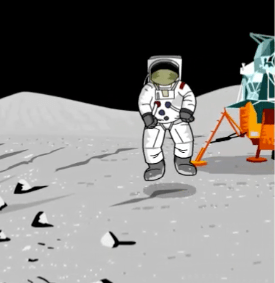
What is Gravity?
A force that makes us float
An invisible force that keeps us on the ground
An invisible force that rocks us
Does gravity help us stay on the ground?
Yes
No
Sometimes
Which planet has the strongest gravity?
Earth
Jupiter
Mars
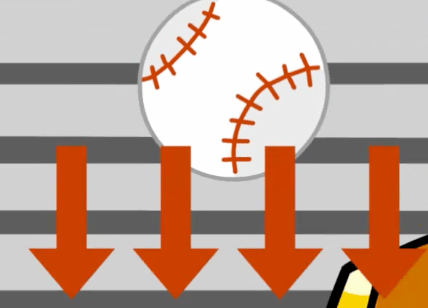
What goes up...... _______________
Stays up
Must come down
comes down 1 hour later
What is energy?
moving energy
stored energy
renewable energy
The ability to do work.
What is potential energy?
moving energy
stored energy
renewable energy
non renewable energy
What is kinetic energy?
moving energy
potential energy
stored energy
renewable energy
Which of these things is an example of potential energy?
a car motor
firewood
battery
a fan
Which of these is an example of kinetic energy?
a bicycle
a battery
a solar panel
firewood
____________ is the ability to do work or cause change.
Work
Energy
Motion
Mass
The two main categories of energy include:
electrical and radiant
kinetic and potential
sound and chemical
nuclear and electrical
____________ energy is energy that is stored in the bonds of compounds like food and fuel.
Radiant
Electrical
Thermal
Chemical
________ energy is the energy of moving electrons, also known as electricity.
Nuclear
Radiant
Electrical
Chemical
Which of the following objects does not use electrical energy?
Lamp
Hair Dryer
Riding a Bike
Television
Which of the following is an example of mechanical kinetic energy?
Mowing the lawn
Gasoline in a gas can
Firework that has not been lit
Food on a plate
_________ energy is the energy an object possesses because of its position.
Mechanical kinetic
Mechanical potential
Electrical
Thermal
Which of the following is an example of mechanical potential energy?
A ball rolling across the floor
A rubber band that has been stretched
Heat from an oven
Playing the guitar
Which of the following are examples of simple machines?
calculator
door knob
flag pole
fireplace
Where on a bicycle might you find a pulley?
the gears
the handlebars
the seat
the tires

What does this image represent?
A pulley
A wedge
A lever
A wheel and axle
A pulley is an example of a:
Simple Machine
Book
Science Tool
Test Taking Strategy

What must a pulley have ?
a rope
wheel
axle
all the above

What is this part of pulley?
Axle
Groove
Rope
Wheel

What is this part of pulley?
Axle
Groove
Rope
Wheel

What is this part of pulley?
Axle
Groove
Rope
Wheel

Identify the type of pulley above.
fixed pulley
movable pulley
compound pulley

What are two types of pulleys?
wings, fries
load. weight
fixed, movable
effort, force

How do fixed pulleys make work easier?
they change the direction of a force
they change the amount of force required
the distance over which the force is applied
the measurement of an object

Pulleys make work:
Easier
Rigorous

