
 Worksheets
Hernandez STAAR Review
Total questions: 100
Worksheet time: 3hrs 0mins

The year 1620 is significant because
it is the year that the Mayflower Compact was signed.
it is the year that Jamestown was established.
it is the year that the Fundamental Orders of Connecticut were adopted.
it is the year that Georgia was established.
The Mayflower Compact, Virginia House of Burgesses, and Fundamental Orders of Connecticut have which of the following in common?
They all occurred in the New England Region.
They are all examples of settlement for religious reasons.
They all promote separation of church and state.
They all established self-government.
The colonial region primarily settled for religious reasons is the
Southern Colonies
New England Colonies
Middle Colonies
Spanish Florida

The colonial region whose main economic activity was cash crops grown on plantations was the
Southern Colonies
Oregon Country
New England Colonies
Middle Colonies
Lord Baltimore established which colony as a refuge for Catholics?
Pennsylvania
Massachusetts
Virginia
Maryland
The idea that the mother country (England) gains wealth and power by controlling the trade of its colonies is known as
Free Enterprise
Mercantilism
Free Trade
Government Regulation
Which two people were banished from Massachusetts and became co-founders of Rhode Island?
Anne Hutchinson and William Penn
Roger Williams and Anne Hutchinson
William Penn and Thomas Hooker
Thomas Hooker and Roger Williams
Which colony was established by William Penn as a refuge for Quakers and was tolerant of other religious beliefs?
Pennsylvania
Maryland
Massachusetts
Rhode Island
Which of the following is NOT a reason that the New England Colonies' economy focused on shipbuilding, fishing and timber?
rocky soil
long, cold winters
long growing season
good harbors
The year 1607 is significant because it is the year that
the Mayflower Compact was written.
the Act of Toleration was adopted.
Jamestown was founded.
the Fundamental Orders of Connecticut was adopted.

What geographic feature made it difficult for colonists to move westward?
Chesapeake Bay
Appalachian Mountains
St. Lawrence River
James River
Who led the Continental army?
John Adams
George III
George Washington
Charles Cornwallis
Which of the following was a weakness of the Continental (Patriot) Army?
had little money
had only a small number of people to serve
had no, little navy
All of the above
Why was the Battle of Saratoga important?
First battle of the war
Bloodiest battle of the war
Turning point of the war
Last battle of the war
What was the last major battle of the American Revolution?
Trenton
Saratoga
Bunker Hill
Yorktown
After the Battle at Saratoga, who pledged foreign aid to the Americans?
Spain
France
Canada
Germany
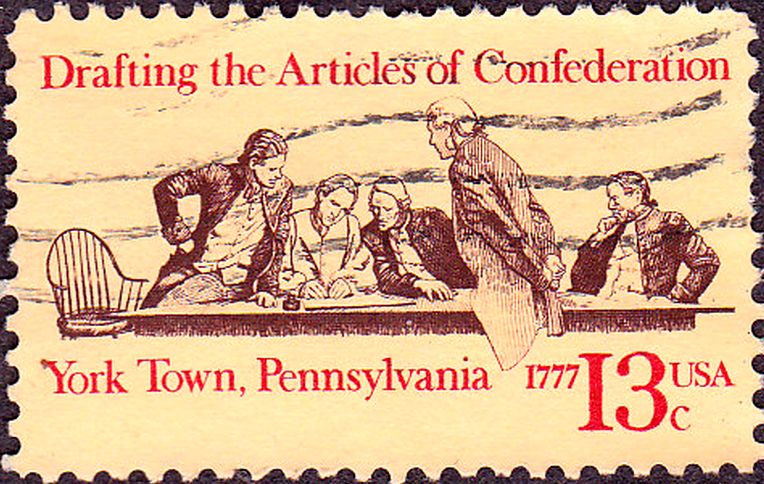
A system in which power is divided between the national and state governments.
Federalism
Division of Powers
Checks and Balances
Localism
To approve
Checks and Balances
Veto
Override
Ratify

Andrew Jackson's election victory in 1828 depended on support from
the rich and well-born.
Native Americans.
the common people.
states' rights supporters.

Jackson's practice of rewarding political supporters with government jobs became known as
the spoils system.
Jacksonian democracy.
mudslinging.
a corrupt bargain.

How did tariffs affect imported goods?
Tariffs lowered the prices of imported goods.
Tariffs made imported goods illegal to buy.
Tariffs set weight restrictions for imported goods.
Tariffs raised the cost of imported goods.

Andrew Jackson was seen as a national hero after defeating the British at what battle?
Battle of New Orleans
Battle of Yorktown
Battle of Little Big Horn
Battle of Saratoga
What was President Jackson's response to the nullification crisis?
He admitted that the Union was a "compact" of the states
He offered to raise tariffs to keep South Carolina in the Union
He conceded South Carolina's right to secede
He threatened to use force against South Carolina if it did not repeal its nullification policies

More white men voted for president the 2nd time Jackson ran for president because they no longer had to own what?
slaves
cows
land
a college degree

Which Supreme Court decision established the principle that the federal government rather than the individual state governments has authority to deal with American Indian affairs?
Marbury v. Madison
Worcester v. Georgia
McCulloch v. Maryland
Gibbons v. Ogden

This President purchased the Louisiana Territory ---
Thomas Jefferson
John Adams
George Washington
James Monroe
Which of the following did NOT help explore the Louisiana Territory --
Robert Fulton
Meriweather Lewis
William Clark
Sacagawea

The Louisiana territory ______ the size of the United States!
Doubled
Tripled
Made Smaller
Quadrupled
What was discovered out in California during the 1840s?
Gold
Frankinsence
Myrrh
Salt
"From Sea to Shining Sea..." can best be used to describe --
Manifest Destiny
Globalization
Eastern Expansion
Great Migration
On water, these inventions helped move people and products up and down rivers --
Steamboat
Locomotive
Kayak
Canoe


The Second Great Awakening was a movement that promoted--
spiritual revival and the need for social reform
the use of reason and scientific theory
states' rights and governmental reform
mercantilism and the development of global trade
The introduction of interchangeable parts led directly to the--
formation of the patent system
creation of labor unions
use of mass-production techniques
eight-hour workday
Which of the following best describes how canals helped boost the American economy during the 19th century?
Canals provided the raw materials for building the transcontinental railroad
Canals lowered the cost of shipping goods and helped unite the country
Canals helped maintain water levels exiting the Mississippi River
Canals created economic conflict between plantation owners and manufacturers.
The development of railroads and telegraph lines had which of the following effects on northern urbanization?
Caused the decline of child labor practices
Allowed efficient market opportunities for manufactured goods
Plantation systems to develop within the Ohio River Valley
Advanced the construction of a national highway system
Which of the following would be a painting of the Hudson River School artists?


One of the most popular and influential American novels of the 1800s was Harriet Beecher Stowe's Uncle Tom's Cabin. It addresses the topic of--
women's suffrage
industry
slavery
westward movement
The primary goal of the American Temperance Society was to--
ban the spread of slavery to new territories
decrease the consumption of alcohol
gain the release of mentally ill people form prisons
create a self-sufficient utopian society
How did the factory system contribute to the rapid industrialization of the United States?
By using slave labor to mass-produce goods
By relying on skilled artisans to create custom goods
By making the production of goods more efficient
By making the distribution of goods less costly
Which of these occurred during early U.S. industrialization?
Manufacturers instituted a five-day workweek
Labor laws required factories to provide a safe working environment
Workers were required to attend schools to develop technical skills
Production of goods transitioned from homes to factories
Which of the following was a result of the Kansas-Nebraska Act of 1854?
Fighting broke out between pro-slavery and anti-slavery groups in Kansas.
Kansas entered the Union as a slave state through popular sovereignty in 1856.
Nebraska settlers who supported abolition moved to Kansas.
The boundary established by the Missouri Compromise of 1820 was extended farther south.
After General Robert E. Lee's surrender at Appomattox Courthouse, the main priority of the United States was to-
elect a new president and vice president
complete construction of the Capitol
establish Union forts in the former Confederate states
implement a plan to bring Confederate states back into the Union
Why did Lincoln wait until after the Union victory at the Battle of Antietam to announce the Emancipation Proclamation?
He thought the North would support his decision after the victory.
He wanted to catch the Confederacy off guard.
He wanted the Union to be in a position of strength.
He thought the South would be more receptive to the proclamation at that time.
On what principle from the Declaration of Independence did President Lincoln base the Emancipation Proclamation?
the principle that political power belongs to the people.
the principle that the federal government should control slavery.
the principle of limited government.
the principle that all men are created equal.
The Emancipation Proclamation was an order from Lincoln
granting slaves U.S. citizenship.
requiring slaves to join Union troops.
calling for all Confederate slaves to be freed.
ending slavery in the United States.
What was the strategy of total war adopted by General Sherman?
destroying civilian and military resources
executing all prisoners of war without a trial
attacking the enemy both on land and from the sea
killing the slaves and, consequently, the work force.
The idea that your region is more important than your country; increased by economic and geographic differences
Nationalism
Sectionalism
Capitalism
Socialism
Better generals, home field advantage, and playing defense were all advantages of the __________ Army.
Union
Confederate
More factories, more people, and more miles of railroad were all advantages of the ___________ Army.
Union
Confederate
Abraham Lincoln's justification for the Civil War
Preserving the Union
Abolishing Slavery
Punishing the South
Protecting the North

The Northern economy was based MOSTLY on:
Unpaid workers
Industry
Agriculture
Goods & Services
When was the Civil War?
1861-176
1861-1865
1870-1876
2015-2019

What's important about Fort Sumter?
This is where Lee surrender and it ended the Civil War.
The Confederates open fired on the fort, which began the Civil War.
Lincoln gave the Gettysburg Address here.

Why is important to know about the Appomattox Courthouse's location for the Civil War?
This is where Lee surrender and it ended the Civil War.
The Confederates open fired on the fort, which began the Civil War.
Lincoln gave the Gettysburg Address here.


This group opposed Lincoln's plan for reconstruction and felt the south should be punished.
Democrats
Radical Republicans
Libertarians
Socialists

This gave all men regardless of race the right to vote.
13th Amendment
14th Amendment
15th Amendment
16th Amendment

This secret society attempted to keep Freedmen from exercising their rights through threats and violence.
the Freedmen's Bureau
The Anti-Freedmen Group
the Ku Klux Klan
the NAACP

The 13th Amendment
gave former slaves citizenship
gave former slaves the right to vote
gave slaves their freedom
gave women the right to vote
The 14th Amendment to the Constitution ...
abolished slavery
gave former slaves their citizenship
gave former slaves the right to vote
gave women the right to own property

The intent of the KKK was to
help former slaves vote in elections
prevent former slaves from voting in elections
help former soldiers adjust to life at home
prevent women from voting

Some of the goals of the Freedmen's Bureau included
helping former slaves vote
building and running schools
providing food and clothing for former slaves
all of the above

In what year did Reconstruction end? With the election of which president?
1877, Rutherford B. Hayes
1889, U.S. Grant
1866, Andrew Johnson
1890, Robert E. Lee

