wayground logo

Free Printable Worksheets

NEW

Font size

S
M
L
XL
Worksheets

Evolution Practice Quiz

Total questions: 37

Worksheet time: 29mins
Name
Class
Date
1.

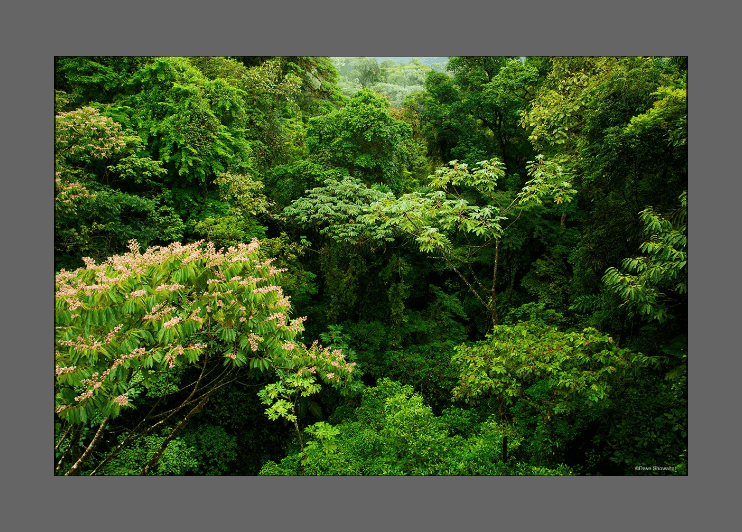
A yellow morph and green morph of an insect lives in the rainforest canopy. You would expect:

a)

the green population to increase and the yellow to decrease

b)

both populations should stay the same

c)

both populations will increase

d)

the green population to decrease and the yellow to increaseThis is a wrong answer

2.
Survival of the Fittest and Evolution were proposed by what scientist?
a)
Charles Darwin
b)
Albert Einstein
c)
Steven Hawking
d)
Isaac Newton
3.
A flash flood carried a raft of Amazon ants away from their original population. There is enough distance between the two groups, that they will never meet in nature again. What type of reproductive barrier is this?
a)
behavioral isolation
b)
temporal isolation 
c)
gametic isolation
d)
geographic isolation 
4.
The flowers of pink tulips open in the morning, while the flowers of lavender tulips open in the early afternoon. The bees that pollinate these tulips cannot carry pollen back & forth between the two types of tulips because of their flowers being closed at different times of day. What type of reproductive barrier is this?
a)
behavioral isolation
b)
hybrid sterility 
c)
temporal isolation
d)
mechanical isolation 
5.
The term for the formation of new and distinct species over the course of evolution is...
a)
speciation
b)
biological species concept
c)
reproductive barrier
d)
natural selection
6.
What is a species? 
a)
A group of organisms that can mate with each other and produce fertile offspring. 
b)
A group of organisms that can mate and produce offspring even if those offspring are infertile.
c)
A group of organisms that genetically are very different from each other. 
d)
Indivual organisms that live in the same environment. 
7.
Structures with the same parts have different functions; suggests that organisms share a common ancestry
a)
vestigial structures
b)
homologous structures
c)
adaptive radiation
d)
fossil
8.
Study of embryos of various organisms to show a common ancestor because of similarities in development
a)
natural selection
b)
embryology
c)
speciation
d)
evolution
9.
Two organisms that are closely related would have
a)
very similar DNA sequence
b)
exactly the same DNA sequences
c)
no proteins in common
d)
completely different DNA sequence
10.
What does Darwin's theory of evolution suggest?
a)
species change over time
b)
extinct species are not related to living species
c)
different species can interbreed
d)
animals that look alike are most closely related
11.
Some organisms that share a common ancestor have features that have different functions, but similar structures.  These are known as
a)
vestigial structures
b)
analogous structures
c)
homologous structures
d)
fossil structures
12.
If modern organisms have a lot of homologous structures, what inference might paleontologists make about those organisms?
a)
They are reptiles
b)
One organism evolved from the other.
c)
The organisms have a common ancestor
13.
Which is not evidence for evolution?
a)
many animals have homologous structures due to common ancestry
b)
Many animals have vestigial structures from an ancestor
c)
We can observe changes in life forms by observing the fossil record
d)
All of these are evidence for evolution
14.
What is a structure that is similar across species?
a)
vestigial
b)
homologous
c)
adaptaion
d)
variation
15.
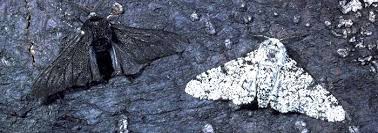
Predict which moth would increase in population
a)
light 
b)
dark
16.
How do fossils provide evidence that evolution has happened on Earth?
a)
Fossils show how the sizes of certain animals has changed drastically over millions of years
b)
Fossils show that some species have gone extinct
c)
Fossils show how life forms present today are different than those from the past
d)
Different sedimentary rock layers provide evidence for how the environment has changed over time
17.
Scientists compare organisms' DNA to support the theory that all species share a common _________________
a)
separation
b)
ancestor
c)
population
d)
environment
18.
What characteristic did Darwin observe about the finches on the Galapagos Islands?
a)
Their feathers 
b)
Genotypes 
c)
Their beaks
d)
Their body sizes
19.
The diagram illustrates an embryonic stage of two organisms.

Which of the following can be determined by observing the embryos shown in the diagram
a)
The organisms share a common ancestry.
b)
The organisms belong to the same genus.
c)
The organisms are native to the same geographic areas.
d)
The organisms will grow into anatomically similar adults.
20.

Recently, scientists have been able to use ___________to find common proteins and amino acids to determine how closely related species are.

a)

DNA

b)

Vestigial structures

c)

Fossils

d)

Homologous structures

21.

Which IS NOT used as evidence for evolution?

a)

Fossils

b)

Natural Selection

c)

Early Development/Embryos

d)

Body Structure/Anatomy

e)

DNA/Proteins

22.

individuals with alleles for an extreme type are more likely to survive and reproduce

a)

stabilizing selection

b)

directional selection

c)

disruptive selection

d)

genetic drift

23.

the selection pressure favors the extreme phenotypes, dividing the population into 2 distinct groups

a)

directional selection

b)

stabilizing selection

c)

geographic selection

d)

disruptive selection

24.

Individuals with intermediate traits are more likely to survive and reproduce

a)

stabilizing selection

b)

directional selection

c)

adaptive radiation

d)

disruptive selection

25.
______ _________ explains how two or more organisms could evolve similar traits even though they are not related to each other.
a)
convergent evolution
b)
reproductive isolation
c)
derived characters
d)
hybrid vigor
26.
__________ characters are similar characteristics that have evolved separately in two unrelated organisms.
a)
analogous
b)
homologous
c)
cladistic
d)
phylogenic
27.

The three species pictured do not share a common ancestor, yet have evolved to have a similar anatomy and life style. This is an example of ?

a)

Homologous Structures

b)

Divergent Evolution

c)

Vestigial Organs

d)

Convergent Evolution

28.

The three species pictured share a common ancestor and have adapted so that each lives in a different environment. This is an example of

a)

Law of Superposition

b)

Evolutionary Arms Race

c)

Divergent Evolution

d)

Convergent Evolution

29.

By what mechanism did the anoles on Puerto Rico diverge to occupy species specific niches?

a)

Adaptive Radiation

b)

Artificial Selection

c)

Stabilizing Natural Selection

d)

Coevolution

30.

Being able to find the three species of bears in North America is an example of ?

a)

Convergent Evolution

b)

Acquired Traits

c)

Embryology

d)

Biogeography

31.

Why has antibiotic resistance evolved in bacteria?

a)

Bacteria reproduce quickly

b)

Bacteria with a resistance to the antibiotic, passed that trait to offspring

c)

Bacteria that are resistant reproduce faster than non resistant strains

d)

Bacteria exposed to antibiotics develop a resistance to them

32.

Genetic drift is change in the allele frequency of a population due to...

a)

random chance

b)

natural selection

c)

non-random mating (sexual selection)

d)

artificial selection

33.

When members of two populations reproduce during different times.

a)

behavioral isolation

b)

temporal isolation

c)

geographic isolation

d)

calendar isolation

34.

When members of two populations cannot successfully reproduce.

a)

reproductive isolation

b)

lonely isolation

c)

convergent isolation

d)

genetic drift

35.
During gestation (pregnancy), a developing male pig had a change in his genetic code. The result was that he was able to walk and do karate.
a)
Genetic Drift
b)
Non-random mating
c)
Mutation
d)
Natural Selection
36.
A few deer wander out of their native woods into a completely new park where no deer had ever been before. They go on to create an entirely new population.
a)
Genetic Drift
b)
Natural Selection
c)
Non-random mating
d)
Mutation
37.
Wolves from the Arizona mesa were transferred to the Colorado Rockies after a forest fire destroyed their habitat. They quickly became part of the local pack and had offspring.
a)
Mutation
b)
Natural Selection
c)
Genetic Drift
d)
Gene Flow