
 Worksheets
Yr 11 Bio: Cell size, structure and function
Total questions: 40
Worksheet time: 54mins
Name
Class
Date
1.
Which type(s) of cells have genetic material that is contained in a nucleus?
a)
bacteria
b)
only animal cells
c)
protists
d)
both plant and animal cells
2.
There are some similarities between prokaryotic and eukaryotic cells. Which of the following structures is found in both prokaryotic and eukaryotic cells?
a)
lysosome
b)
mitochondrion
c)
nucleus
d)
ribosome
3.
Which cell structure is correctly paired with its primary function?
a)
ribosome-protein synthesis
b)
mitochondrion-movement
c)
vacuole-cell division
d)
nucelus-storage of nutrients
4.

The diagram below represents a cell of a green plant. Solar energy is used to produce energy-rich compounds in which structure?
a)
A
b)
B
c)
C
d)
D
5.
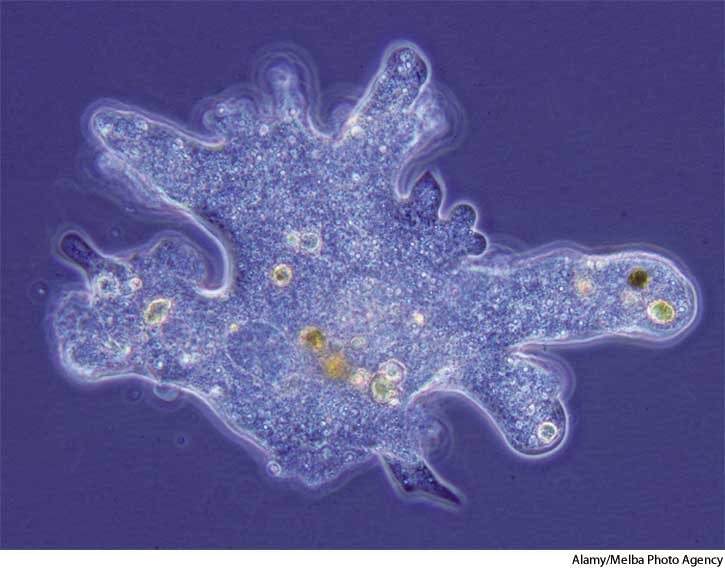
An Amoeba is a unicellular, animal-like protist that lives in ponds and streams. According to cell theory, where did this cell come from?
a)
another pre-existing amoeba cell.
b)
energy from sun that allowed the protist to reproduce.
c)
a multicellular organism.
d)
the nonliving environment.
6.

Robert Hooke, Anton van Leeuwenhoek, Theodor Schwann, Rudolf Virchow, and Matthias Schliden were all responsible for what theory?
a)
The Theory of Gravity
b)
The Theory of Relativity
c)
The Cell Theory
d)
The Theory of Continental Drift
7.

Which of the following is NOT a cell theory.
a)
All non-living things are made of cells
b)
All cells come from pre-existing cells
c)
Cells are the basic unit of structure and function of all living things
8.
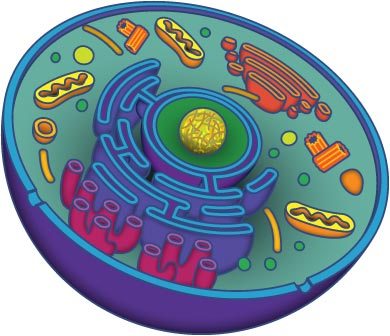
All living things are made up of...
a)
cells
b)
cell tissues
c)
organ
d)
organ systems
9.
All cells come from___________ cells.
a)
pregnant
b)
pre-existing
c)
paternal
d)
pin size
10.
What is the basic structural and functional unit of all living things?
a)
atom
b)
cell
c)
molecule
d)
human
11.
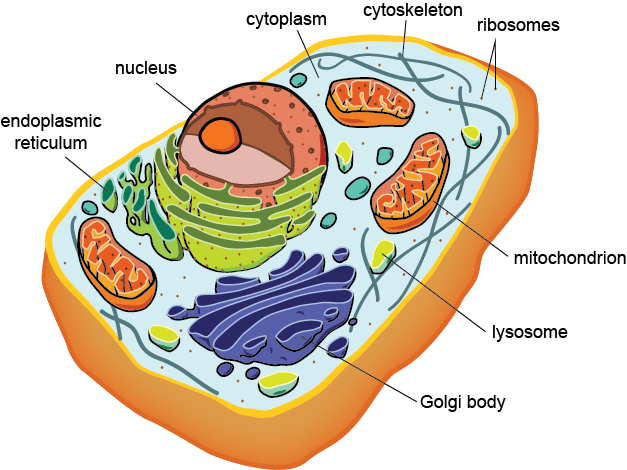
Which of the following statements is not part of the cell theory?
a)
Cells are the basic unit of structure and function in all living things.
b)
All cells are produced from other cells.
c)
Only animal cells are composed of cells.
d)
All living things are composed of cells.
12.
In order to sustain life, all cells must...
a)
digest nutrients and water
b)
excrete waste and fluids
c)
must be able to maintain a homeostasis environment (aka cellular respiration and regulation)
d)
All of the above
13.
Which is NOT part of the Cell Theory
a)
New cells are produced from existing cells
b)
All living things are composed of cells
c)
Only eukaryotic cells have a nucleus
d)
Cells are the basic unit of structure & function in living things
14.
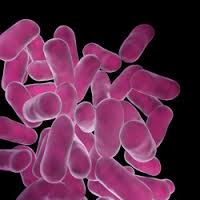
How are unicellular organisms different from multicellular organisms?
a)
There are no differences.
b)
They are made of many cells.
c)
They are only classified as prokaryotes.
d)
They are made of only one cell.
15.
What determines the rate of nutrients and waste are exchanged from the cell and the environment?
a)
surface ratio
b)
volume
c)
surface area
d)
surface area to volume ratio
16.
Which cells are more efficient at obtaining nutrients?
a)
Small Cells
b)
Medium Size Cells
c)
Large Cells
d)
X-Large Cells
17.
The absorption of nutrients is determined by...
a)
The cell's volume
b)
The cell's surface area
c)
The cell's ribosomes
d)
The cell's DNA
18.
The amount of nutrients needed is determined by...
a)
The cell's volume
b)
The cell's surface area
c)
The cell's Rough ER
d)
The cell's Smooth ER
19.
As a cell becomes larger, its
a)
surface area increases faster than its volume.
b)
volume increases faster than its surface area
20.
The larger a cell is, the more difficult it is for the cell to move enough nutrients and wastes across its cell membrane to maintain its normal functions.
a)
True
b)
False
21.
As a cell’s size increases, its ratio of surface area to volume decreases.
a)
True
b)
False
22.
The rate at which wastes are produced by a cell partially depends on the cell’s
a)
surface area
b)
volume
23.
Define Surface area
a)
The total area on the surface of an object
b)
Length X Width
c)
6 X (length X width)
d)
Add up the sides and divide by 4
24.
High Surface area to volume ratio allows cells to do what quickly?
a)
Move materials around inside the cell
b)
Move materials in and out of the cell
c)
Communicate to other cells
d)
Divide
25.

This image shows how materials move into various sized cells in a given amount of time.... why does one square cell have more pink coloring than the others?
a)
The surface area was too larger to get through
b)
The volume of the other cells was too large for the dye to get through
c)
There was not enough surface area for the dye to get through
d)
The volume was too low for the dye to stay in the square
26.

Microvilli are tiny projections that extend off the cell to increase the Surface Area. What purpose might that serve?
a)
Increased absorption
b)
Better communication among cells
c)
Maintain homeostasis
d)
Decreased oxygen use
27.

What type of microscope was likely used to obtain this image of plant cells?
a)
Scanning Electron Microscope (SEM)
b)
Transmission Electron Microscope (TEM)
c)
Compound Light Microscope
28.
surrounds the cell; controls what enters/leaves cell; maintains homeostasis
a)
vacuole
b)
cell wall
c)
cell membrane
d)
lysosome
29.
control the cell's activities; contains the cell's DNA
a)
mitochondria
b)
cell membrane
c)
nucleus
d)
golgi body
30.
This organelle is a gel-like fluid that takes up most of the space inside the cell.
a)
Cytoplasm
b)
Cell Membrane
c)
Vacuole
d)
Golgi Body
31.
What distinguishes a eukaryotic cell from a prokaryotic cell is the presence of
a)
A cell wall
b)
A nucleus
c)
DNA
d)
Ribosomes
32.

What is the difference between rough and smooth Endoplasmic Reticulum?
a)
There is no difference.
b)
Plants have rough ER, animals have smooth ER.
c)
What type of injuries the Doctors treat.
d)
Rough has ribosomes, smooth does not.
33.

Which describes structure 3?
a)
It serves as the site for protein synthesis.
b)
It contains genetic information.
c)
It transforms the sun's energy.
d)
It stores water and nutrients.
34.
What organelle works with the plasma membrane to store water brought in so it can be used at a later time, especially in plants?
a)
vacuole
b)
cytoplasm
c)
chloroplast
d)
mitochondria
35.
Which best explains the relationship between chloroplasts and mitochondria?
a)
Chlorplasts absorb light energy from the sun, which is converted to glucose by the mitochondria.
b)
Chloroplasts produce carbon dioxide and water, which are used by the mitochondria to produce energy.
c)
Chloroplasts store energy in the chemical bonds of glucose, which is used by the mitochondria to produce ATP.
d)
Chloroplasts release light energy stored in the glucose in the form of ATP, which is absorbed by mitochondria.
36.
All cells, prokaryotic and eukaryotic, have a few common features. Which cell feature is found in both the prokaryotic and eukaryotic cells?
a)
ribosome
b)
chloroplast membrane
c)
nucleus
d)
endoplasmic reticulum
37.

Which is the best titles for A and B?
a)
A is eukaryotic and B is prokaryotic.
b)
A is prokaryotic and B is eukaryotic.
c)
A is plant and B is animal.
d)
A is animal and B is plant.
38.
What make eukaryotic cells more complex than prokaryotic cells?
a)
the presence of ribosomes
b)
the presence of nucleic acids
c)
the presence of the plasma membrane
d)
the presence of membrane-bound organelles
39.
Which best describes what type of cell(s) contain a plasma membrane?
a)
eukaryotic cells
b)
prokaryotic cells
c)
both eukaryotic and prokaryotic cells
d)
all eukaryotic cells and select prokaryotic cells
40.
Which organelles work together to provide a plant cell with structure and support
a)
The cell wall and large vacuole
b)
The cytoskeleton and the cell wall
c)
The cytoskeleton and the nucleus
d)
The cell wall and chloroplast
100 %

