
 Worksheets
Ch. 12 Quizizz #2
Total questions: 50
Worksheet time: 24mins

Which of the following senses are MOST closely related:
touch and smell
smell and taste
taste and hearing
hearing and smell

The nerves associated with smell are referred to as the:
olfactory receptor cells
smell cells
gustatory receptor cells
hair cells
The chemical sense of smell is formally known as
vision
gustation
olfaction
equilibrium
Olfactory receptors and taste buds are what type of receptor?
chemoreceptors
mechanoreceptors
photoreceptors
nociceptors
When the sense of smell is continuously stimulated there will be a quick decline in the brain registering the smell. AS IN, YOU WON'T SMELL IT ANYMORE. This is known as
accommodation
sensory adaptation
anosmia
getting "used" to a smell
Which of the following senses is MOST CLOSELY linked to the limbic system (center for memory and emotion) HINT: The "smellitizers" at Disneyland-- the cologne your Dad wears
gustation
equilibrium
olfaction
vision
Where does interpretation of sound take place? Ex: I identify a sound as my dog barking
auditory cortex

The tunnel or canal through the temporal bone that funnels sound waves from the auricle to the tympanic membrane is known as the
aka the ear canal
external aucoustic meatus
cochlea
organ of Corti
auricle

The outermost part of ear; COLLECTS SOUND WAVES, funnels sound to external acoustic meatus
auricle
cochlea
semicircular canals
tympanic membrane

The inner ear structure involved in hearing
auricle
cochlea
semicircular canals
vestibule

Second auditory ossicle from eardrum
incus
malleus
stapes
auricle

The first ear ossicle from eardrum
auricle
incus
malleus
stapes

The third middle ear ossicle from eardrum
auricle
incus
malleus
stapes

Inner ear part involved in equilibrium
auricle
cochlea
semicircular canals
tympanic membrane

Transmits vibrations to auditory ossicles; a.k.a. the eardrum
auricle
cochlea
tympanic membrane
vestibule

Allows pressure to be equalized between outer and middle ear; more horizontal in children HINT: This is why your ears "pop" when you change altitude
external auditory meatus
auditory tube
semicircular canals
vestibule
Type of receptor used for hearing and equilibrium
chemoreceptor
mechanoreceptor
nociceptor
photoreceptor
The "fancy" word for ear wax
cerumen
mucus
olfactory bulb
sebum

The auricle, external acoustic meatus, and tympanic membrane are all located in the
external ear
internal ear
middle ear

The cochlea, semicircular canals, and vestibule are all located in the
external ear
internal ear
middle ear
One of the MOST common cause of sensorineural deafness (damage to cochlea or vestibulocochlear nerve) is
blows to the head
birth defect in cochlear nerve
load noises damaging hair cells
meningitis

The 3 Main parts of the ear are...
The outer ear, middle ear, and inner ear
The outer ear, central ear, inner ear
The auricle, ear canal, and cochlea

The auditory ossicles are
three tiny bones connected to the tympanic membrane
three tiny bones connected to the external acoustic meatus
three tiny bones connected to the semicircular canals
Which of the following is NOT a general sense?
Touch
Pressure
Pain
Taste

_________________ have specialized receptors specifically located in the HEAD.
special senses
general senses

What does the auricle do?
Special skin made for piercing
Collects sound and funnels it down the ear external acoustic meatus
Helps with balance
Collects wax, bacteria, viruses, and dirt
If your auditory ossicles were removed, you would NOT be able to:
Transmit sound vibrations to the inner ear
Carry nerve impulses to the auditory cortex of the cerebrum

Which organ of the inner ear is NOT involved in hearing?
the cochlear branch of the vestibulocochlear nerve
organ of Corti
Which statement about the sense of taste is true?
Taste is influenced by the sense of smell
Taste buds are called olfactory receptors
The taste buds are only located on the tongue
CONDUCTIVE hearing loss (damage to the external or middle ear), can be caused by:
auditory nerve damage
an infection in the semicircular canals
a ruptured tympanic membrane
damage to the cochlea

Organisms in the throat can travel up the auditory tube and cause:
Otitis externa
Cerumen impactation
Otitis media
Meniere's disease

The ________________ carries sound information from the cochlea to the auditory cortex of the brain.
cochlea
vestibulocochlear nerve
semicircular canals
Hearing loss that occurs in the outer ear or the middle ear is called ____________ hearing loss.
conductive
sensorineural
mixed
Hearing loss that occurs in the inner ear is called ____________ hearing loss.
sensorineural
mixed
conductive

What is the proper order of the auditory ossicles of the middle ear ? (1,2,3 in order )
Malleus, Incus, Stapes (MIS)
Stapes, Incus, Malleus (SIM)
Incus, Stapes, Malleus (ISM)

what is the function of the auditory tube?
Helps with balance and equilibrium
Filters out ear wax
Equalizes pressure between the middle and outer ear

Which part of the inner ear helps you keep your balance ?
Vestibule
Auditory Ossicles
Auricle
Semicircular canals

The HEARING hair cells (stereocilia) are located in the
auricle
auditory ossicles
semicircular canals
organ of Corti

Which of the following parts function in EQULIBRIUM in the inner ear. Choose all that apply
Auricle
vestibule
cochlea
semicircular canals

When would a cochlear implant be used?
A burst tympanic membrane
A tumor in the external acoustic meatus
A missing vestibulocochlear nerve
Damage to the cochlea
The tympanic reflex is designed to protect us from loud sounds. In order to do this, it must
STOP the vibrations in the middle ear
SLOW the vibrations in the middle ear
STOP the sound waves in the middle ear
SLOW the sound waves in the middle ear
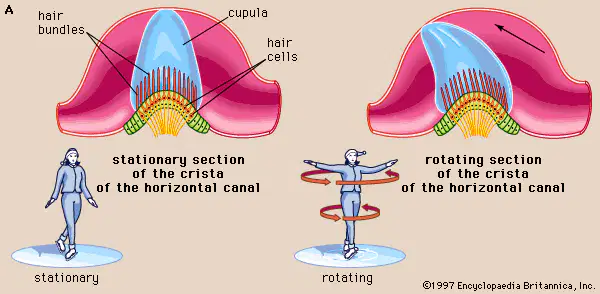
Movement of hair cells in the semicircular canals signals
The DIRECTION of the motion of the head
Sound waves to the brain
FREQUENCY of the sound
VELOCITY of the sound waves
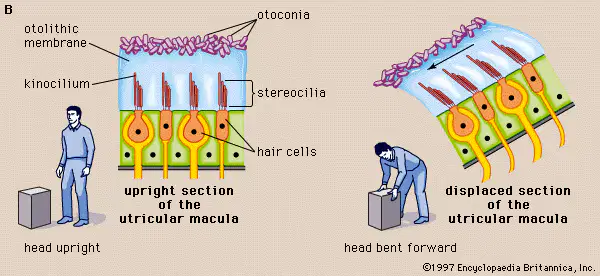
Which are true of STATIC equilibrium. Click all that apply
Organs associated with static equilibrium are located in the MACULA in the vestibule
Maintains balance when body is STILL
Maintains balance when body is in MOTION
Organs associated with static equilibrium are located in the CRISTA AMPULLARIS in the semicircular canals
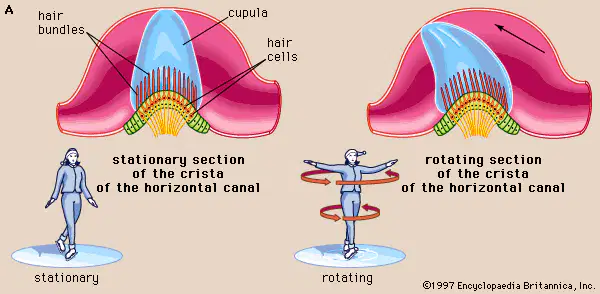
Which are true of DYNAMIC equilibrium. Click all that apply
Organs associated with dynamic equilibrium are located in the MACULA in the vestibule
Maintains balance when body is STILL
Maintains balance when body is in MOTION
Organs associated with dynamic equilibrium are located in the CRISTA AMPULLARIS in the semicircular canals

Why are children more prone to otitis media or middle ear infections than an adult? Click all that apply
Their auditory tube is shorter
Their auditory tube is more vertical
Their auditory tube is more horizontal
Their auditory tube is longer

Olfactory neurons are UNIQUE because they are the ONLY NERVES IN THE BODY THAT (click all that apply)
Live forever
Regenerate
Are in contact with external environment
Are used everyday
Flavor is actually _________% of smell?
10-20%
40-60%
75-80%
90-100%

Children's auditory tubes are more HORIZONTAL and SHORTER than adults. Why does this cause more cases of otitis media (middle ear infections)? Click all that apply
MORE HORIZONTAL: so fluid cannot drain as easy
MORE HORIZONTAL: so fluid CAN drain easier
SHORTER: so bacteria CAN'T make its way up the auditory tube quicker
SHORTER: so bacteria can make its way up the auditory tube quicker
To be "tasted" a chemical must be dissolved in...
water
mucus
vitreous humor
saliva
Taste information is processed in the __________ cortex of the brain.
Visual
Auditory
Gustatory
Olfactory

