
 Worksheets
Modern Physics Review
Total questions: 20
Worksheet time: 54mins
Which particle has a charge of +2/3e?
an up quark
a down quark
a strange quark
a muon
A particle that is made out of three quarks is a
boson
baryon
lepton
meson
_____________ is the force that binds protons together in the nucleus of an atom.
Gravity
Electromagnetism
Strong Nuclear Force
Weak Force
When two small nuclei combine into a larger nucleus.
fission
fusion
alpha decay
beta decay
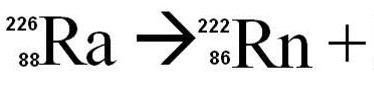
Most of the mass of an atom is located in the...
isotopes
electrons
nucleus
electric charge
What is the energy equivalent of a mass of 0.026 kilogram?
2.34 X 10¹⁵ J
9 X 10¹⁶ J
1.14 X 10⁻³⁰ J
1.8 X 10¹² J
What color of light has the greatest energy per photon?
Red
Green
Blue
Violet
What is the energy of a photon with with a wavelength of 650 nm (650x10-9 m)?
5.23x10¹⁵ J
3.2x10³ J
4.23x10⁻¹⁵ J
3.0x10⁻¹⁹ J
One (1) electrovolts (eV) is equals to:
1.32 x 10 -9 J
1.6 x 10 -11 J
1.6 x 10 -19 J
1.6 x 10 -34 J
What is the energy of the emitted photon as an electron in a mercury atom transitions from level c to the ground state?
5.52 eV
4.86 eV
10.38 eV
15.9 eV
What happens when a particle meets its anti-particle?
They are both annihilated.
They combined to form a quark
They combined to form matter.
The repel and move away.
Emission of light from an atom occurs when an electron
drops from a higher to a lower energy level.
jumps from a lower to a higher energy level.
moves within its atomic orbital.
falls into the nucleus.
A tritium nucleus is formed by combining two neutrons and a proton. The mass of this nucleus is 9.106 x 10⁻³ universal mass units less than the combined mass of the particles from which it is formed. Approximately how much energy is released with the nucleus is formed?
8.48 x 10⁻² MeV
2.37 MeV
8.48 MeV
273 MeV
A particle has quark composition of dds. What is the charge & classification of the particle?
-1, baryon
-1, lepton
0, hadron
0, lepton
What does the equation E=mc2 tell us?
A small amount of mass can be converted into a large amount of energy.
Gravity bends both time and space.
Gravitational waves are emitted from black holes.
Atomic nuclei emit gamma rays, beta particles, and alpha particles.

