wayground logo

Free Printable Worksheets

NEW

Font size

S
M
L
XL
Worksheets

Photosynthesis l1 boosted!

Total questions: 20

Worksheet time: 12mins

Name
Class
Date
1.

Which part of a flower is known to attract pollinators?

a)

Stem

b)

Leaf

c)

Pollen

d)

Colorful Petals

2.

Which part of the plant holds the main networks of xylem and phloem?

a)

leaves

b)

petals

c)

stem

d)

roots

3.
Which of the following is the correct equation for PHOTOSYNTHESIS?
a)
CO+ light + H2O --> O+ Sugar
b)
CO+ sugar + H2O --> O+ light
c)
O2 + light + H2O --> CO+ Sugar
d)
CO+ O2 + H2O --> Light+ Sugar
4.
What is the ultimate ORIGINAL source of energy for living things
a)
Sugar
b)
Sun
c)
Moon
d)
Carbon Dioxide
5.
What is the pigment in chloroplasts that performs photosynthesis?
a)
Chlorosynthesis
b)
Chlorophyll
c)
ADP
d)
Electron Transport
6.

What is one the largest differences between plant and animal cells? Think of the thing that is made of Cellulose

a)

The presence of the chloroplast and cell wall

b)

Don't select

c)

Size

d)

The presence of large vacuoles and the chloroplast

7.

What do plants release into the atmosphere?


They take in CO2 and let out _______?

a)

Nitrogen

b)

Oxygen

c)

Carbon Dioxide

d)

Farts

8.

Does this object give off its own light?

a)

yes

b)

no

9.

Which electromagnetic wave can you see?

a)

Gamma ray

b)

Microwave ray

c)

Visible light

d)

X-ray

10.

The sun's electromagnetic waves are roughly 99%

a)

Gamma rays

b)

Violet rays, and ultraviolet

c)

Visible light, UV, and infrared

d)

Sun rays

11.
Which of the following lists these levels in the correct order of organization from the simplest to the most complex?
a)
cells, tissues, organs, organ systems, organisms
b)
organisms, organ systems, organs, tissues, cells
c)
tissues, cells, organs, organisms, organ systems
d)

organs, organ systems, organisms, cells, tissues
12.
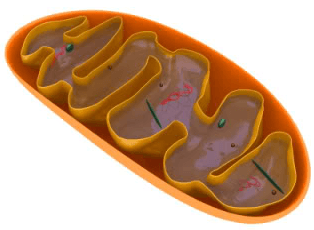
What are tiny organelles that convert glucose into ATP?
a)
Ribosomes
b)
Vesicles
c)
Cytoskeleton
d)
Mitochondria
13.
A rigid layer that lies outside the cell's  membrane is...
a)
Cytoskeleton
b)
Cilia
c)
Cell Wall
d)
Flagella
14.
Light bounces when it is 
a)
reflected
b)
absorbed
c)
refracted
15.
Which are the two type of light sources?
a)
Artificial and Natural
b)
Natural and Invented
c)
Artificial and Not Artificial
d)
All of them
16.
Which is translucent?
a)
tissue paper
b)
air
c)
wood
d)
clear plastic
17.

Which of the following colors of light have the highest energy

a)

red

b)

orange

c)

green

d)

purple

18.

Waves with a long wavelength have a __________ energy

a)

high

b)

low

19.
Emission of light from an atom occurs when an electron
a)
drops from a higher to a lower energy level.
b)
   jumps from a lower to a higher energy level.   
c)
   moves within its atomic orbital.
d)
falls into the nucleus.
20.

Infrared rays have a shorter wavelength than

a)

Ultraviolet ray.

b)

X-rays.

c)

radar waves.

d)

gamma rays