
Font size
 Worksheets
U.S. History Final Exam Review
Total questions: 100
Worksheet time: 1hrs 11mins
What document declared the Americas weren't able to be colonized anymore by European countries?
Monroe Doctrine
Embargo Act of 1807
Declaration of Independence
Trail of Tears
What happened as a result of a high tariff & led to the Southern states trying to cancel federal laws?
Nullification Crisis
Monroe Doctrine
Embargo Act
Panic of 1837
Which state had enough population with the Gold Rush that they could apply for statehood?
California
New Mexico
Utah
Texas
Which native american tribe was most affected by the Trail of Tears?
Cherokee
Creek
Seminole
Chickasaw
What was the idea that America should all of the continent from coast to coast?
Embargo Act
Manifest Destiny
Underground Railroad
Monroe Doctrine
What was the time period where America moved from making things by hand to by machine instead?
Industrial Revolution
Immigration
Manifest Destiny
Farming Revolution
What was the most controversial right for women that was discussed at the Seneca Fall Convention?
suffrage
allowing divorce
property rights
discrimination in the workplace
What is one way that the Industrial Revolution did NOT change farming?
more advanced equipment
able to farm faster and make more money
less people were needed to work on farms
people worked long hours and were paid very little
What was the major impact of immigration on America?
cultural diffusion
acculturation
population growth
less jobs for Americans
What created sectionalism because it divided the country into slave & free states with a line?
Missouri Compromise
Compromise of 1850
Nullification Act
Kansas-Nebaska Act
What was used in the Dred Scott case to prove that slavery was protected by the Constitution?
Fifth Amendment
Missouri Compromise
First Amendment
Declaration of Independence
What gave people in the territories, like Kansas, the option to decide if they wanted slavery or not?
popular sovereignty
sectionalism
states' rights
secession rights
Which of the following was NOT a strength of the Union in the Civil War?
strong military leadership
Abraham Lincoln
better transportation
more population
Which branch enforces the laws?
Executive Branch
Legislative Branch
Judicial Branch
Which branch makes the laws?
Executive Branch
Legislative Branch
Judicial Branch
Which branch interprets the laws?
Executive Branch
Legislative Branch
Judicial Branch
How was the Monroe Doctrine a reflection of the outcomes of the War of 1812?
The U.S. had a stronger place in the international community
The U.S. created alliances with stronger powers in Europe, such as Britain
The U.S. needed the assistance of other countries in the Western Hemisphere to rebuild its economy
the U.S. spread its control of the North American continent to the Pacific Ocean, giving us control of the Western Hemisphere
Which powers are given to the state governments, like education?
enumerated
reserved
implied
concurrent
Which powers are shared between the states and federal government, like collecting taxes?
reserved
enumerated
concurrent
implied
The purchase of which territory doubled the size of the county......
Mexico
Spanish Florida
Oregon Territory
Louisiana Territory
Which of the following were political philosophies of Jacksonian Democracy? (Choose 2)
No support for Manifest Destiny
Abolition of slavery
Suffrage for all adult white males
A strong executive branch and weaker Congress
Which factor most affected the outcome of the Civil War?
The north did not have many slaves
The system of government in the south
The military traditions of the south
The industrial capacity of the north
Which of the following statements was accurate at the beginning of the Civil War?
There was great economic disparity between the north and south.
The north had a disadvantage because of their lack of slaves.
The north was guaranteed to win at the beginning of the war.
The south relied on industry as the basis of its economy.
Which event resulted in: The election of Rutherford B. Hayes, the removal of federal troops from the south and the end of Reconstruction?
The Presidential Election of 1876
The Second Great Awakening
The Emancipation Proclamation
The War of 1812
Which of the following was an issue in Jacksonian Democracy?
The Nullification Crisis
The Dred Scott decision
The Emancipation Proclamation
The Declaration of Independence
How did the Missouri Compromise impact the admission of new states from the Louisiana Territory?
States entering the Union north of the 36 30 latitude line would be free states.
States entering the Union would decide the issue of slavery based on popular sovereignty.
States entering the Union were required to be slave states.
States entering the Union east of the Mississippi would be slave states.
Which of the following is an example of Manifest Destiny?
The Compromise of 1850
Jacksonian Democracy
The annexation of Texas and acquisition of the Oregon Territory
The ban on slave trade in Washington, D.C.
Which issue led to the secession (leaving) of southern states prior to the start of the Civil War?
sectionalism
Manifest Destiny
reform movements
Women's equality movement
What did the Missouri Compromise, the Compromise of 1850 and the Kansas-Nebraska Act all have in common? (Choose 2)
The extension of slavery into western territories
The equal distribution of land to owners of small farms
Equal representation between slave and free states in Congress
The end of mercantilism
How did the Battle of Gettysburg affect the Civil War?
It was the last major Confederate invasion of the north.
It forced Robert E. Lee to resign his position.
It forced Jefferson Davis to resign.
It cut the Confederacy in half.
What happened next in this list? Sectionalism -> States' Rights -> The issue of slavery -> The Civil War -> ??
Reconstruction
The Nullification Crisis
The War of 1812
The Treaty of Ghent

The Missouri Compromise stated
Future states north of the 36*30 parallel would be free states; south of the line would become slave states
Missouri would be admitted as a free state
All lands acquired by Mexico would have the option of popular sovereignty
For every slave state, there needed to be two free states

The cotton gin brought upon all of the following changes EXCEPT
Separating seeds more quickly from cotton fibers
Cotton becoming the leading cash crop in the South
The increase of slavery
The decrease of slavery

Nativism is
Preserving an immigrant group's culture in the U.S.
Protecting the Native Americans from the effects of westward expansion
Racism towards Native Americans
Protecting the interest of native-born peoples over those of immigrants

Andrew Jackson was criticized for all of the following EXCEPT
Abuse of the veto power
Abuse of the spoils system
Ending the Second National Bank
Creating the Missouri Compromise

All of the following describe this region EXCEPT
It had the majority of slaves right before the Civil War
It produced the most textiles in the U.S.
It was the first region that seceded from the Union
The majority of U.S. cotton was grown here

Manifest destiny is
A mass migration of 80,000 men to California
America's God-given right to civilize the west
Life, liberty, and property
A religious movement that promoted the salvation for all

The Compromise of 1850 allowed for
Popular sovereignty in Utah and New Mexico
Missouri to be admitted as a slave state
Popular sovereignty in Kansas and Nebraska
California to be admitted as a slave state

The Dred Scott Decision led to all of the following EXCEPT
Dred Scott did not have the right to sue
Dred Scott remained a slave
Northern abolitionists were infuriated by the decision
Dred Scott was freed by Roger B. Taney

The significance of the Election of 1860 was
It was the closest electoral race in U.S. history
It was the ultimate event that led to the Lower South's secession
The South predominantly voted for Stephen Douglas
Lincoln only earned electoral votes from the South

Select TWO contributions of Eli Whitney to the Industrial Revolution.
He built the first textile plant in Waltham, Massachusetts
He designed tools that could rapidly produce interchangeable musket parts
He invented a machine for twisting yarn to give it a smooth surface
He doubled the speed of power looms
He created a version of the cotton gin that aided in the American cotton boom

What change over time do these maps display?
An increase in women's suffrage
Greater restrictions on suffrage
An increase in white male suffrage
Greater restrictions on African-American suffrage

All of the following were part of the Jacksonian Democrat platform in 1828 EXCEPT
Equal rights and popular rule for all white men
Encouragement of big business and the American System
Hostility towards Native Americans
Seeking a fair tariff to replace that of the Tariff of 1828

All of the following were Northern advantages during the Civil War EXCEPT
Home turf advantage
Larger population and military
Better balance between farming and industry
An established government and military

All of the following were Southern advantages during the Civil War EXCEPT
Greater motivation to fight
Home turf advantage
More military academies
More railroads

Which of the following best summarizes the course of the Civil War?
The Confederacy earned early victories; however, the Union dominated the second half of the war
The Union earned early victories; however, the Confederacy dominated the second half of the war
The Confederacy quickly defeated the Union and earned its independence
The Union captured Richmond within one year of the war

All of the following were significant about women's participation in reform EXCEPT
It was the first time that many women worked towards a goal outside of the home
Middle class women, out of all the social classes, became aware of women's inferior status to that of men
Women began to advocate for their social, political, and religious rights, including suffrage
Men eagerly accepted women's demands for equal rights, expediting a suffrage law in the mid-1840s

Frederick Douglass led abolitionist movements using all of the following EXCEPT
Sharing his personal experiences through his autobiography
Delivering powerful speeches
Instigating violent attacks on plantations
Starting abolitionist newspapers

The Declaration of Sentiments called for
The abolition of slavery
Labor unions for factory workers
Independence from Great Britain
Women's rights


How did most people in the United States and Europe make a living in the 1700s?
farming
sewing
working in a factory
content creator
As more trains and railroads were built, a demand for _ and _ increased.
coal, iron
wood, steel
coal, steel
wood, marble
Samuel F. B. Morse invented the
spoon
telephone
microwave
telegraph


Industrialists were also called Robber Barons because . . .
they did not pay their workers a fair wage
they used cutthroat tactics to take over other companies
they created monopolies
all of these
The disaster at the Triangle Factory was . . . ?
a fire that killed many workers
they ran out of triangles and had to use circles
the workers had won an increase in wages
disaster? There wasn't any disaster.

Which phrase best completes the diagram?
end of plantation lifestyle
increase in use of slave labor
decrease in cotton production
industrialization of the South
The first factories in the U.S. primarily focused on creating....
Machines
Textiles
Material
Agriculture
Which is most likely the importance of the Erie Canal being built in 1825?
connected the Mississippi River and the Hudson River making transportation of goods easier
more water for the settlers to use for their crops
loss of business in the port of New York
the bankruptcy of several railroads
The Dawes Severalty Act dealt with which group in America?
Indians (Native Americans)
Immigrants
Chinese
Settlers
Political Machines took advantage of what major groups?
The Immigrants and the Poor
The Immigrants and Big Businesses
The Poor and the Chinese
The Chinese and the Big Businesses
Changing their names, cutting their hair, forcing them to adopt Christianity, requiring them to learn English, etc. These are all examples of what pushed on many Immigrants, but especially the Indians (Native Americans)?
Assimilation
Nativism
Protectionism
Temperance
Americans who grew angry and resentful at the increased Immigrant migration into the country, especially those from Southern and Eastern Europe
Nativists
Populists
Philanthropists
Social Workers
The Homestead Act caused a shift in population to move from where to where?
East Coast to West Coast
West Coast to East Coast
Overcrowding and pollution were caused primarily by what?
Urbanization
Industrialization
Nativism
Assimilation
Declining wages and a rise unemployment on the west coast led to what piece of legislation?
Chinese Exclusion Act
Dawes Act
Homestead Act
Pendleton Act of 1883
Roads, skyscrapers, prisons, sewers, schools, railroads, etc, are all examples of what?
Infrastructure
Rural Expansion
Assimilation
Nativism
What Supreme Court case set the precedent for "Separate but Equal", which would last until the Civil Rights Movement of the mid 1900s?
Plessy v Ferguson
Brown v Board of Education
Marbury v Madison
Roe v Wade
Who is most associated with political machines in New York City?
"Boss" Tweed
John Rockefeller
Jane Adams
Andrew Carnegie
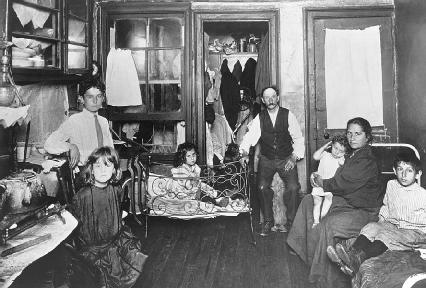
During the Gilded Age there was an increase in ____________________ and ___________________ as people moved to U.S. cities looking for economic opportunities.
Work and Infrastructure
Corruption and Laissez-Faire
Urbanization and Immigration
Monopolies and Political Bosses
Andrew Carnegie was an entrepreneur and a _____________ because he donated money to libraries and universities.
Person
Philanthropist
Nativist
Political Boss
What did the 13th amendment accomplish?
It mad slavery illegal
Grants citizenship & equal protection
Guarantees voting rights
What did the 14th amendment accomplish?
Freedom of religion
Grants citizenship and equal protection
Made slavery illegal
Guarantees voting rights

