wayground logo

Free Printable Worksheets

Font size

S
M
L
XL
Worksheets

BIO 101 Exam 2 Review Summer 2025

Total questions: 42

Worksheet time: 15mins

Name
Class
Date
1.
What is the correct equation for cellular respiration?
a)
6O2 + C6H12O6 -> 6CO2 + 6H2O + Energy
b)
6O2 + C6H12O6 + Energy -> 6CO2 + 6H2O
c)
6CO2 + 6H2O -> 6O2 + C6H12O6 + Energy
d)
6CO2 + 6H2O + Energy -> 6O2 + C6H12O6
2.
In cellular respiration, the electron transport chain takes place in
a)
the membrane of the mitochondrion
b)

the folds of the inner membrane of the mitochondrion

c)
the cytoplasm
d)
the cell nucleus
3.
Fermentation enables glycolysis to continue under 
a)
anaerobic conditions
b)
aerobic conditions
c)
photosynthetic conditions
d)
hydrophobic conditions
4.

Cellular Respiration occurs in what cell organelle?

a)

chloroplast

b)

cytoplasm

c)

mitochondria

d)

animal

5.

Which molecule is the reactant of Glycolysis?

a)

water

b)

glucose

c)

carbon dioxide

d)

ATP

6.
Where does glycolysis take place?
a)
Cytoplasm
b)
Stroma
c)
Thylakoid
d)
Mitochondria
7.
Along with 2ATP, what is produced during glycolysis?
a)
6CO2
b)
6O2
c)
C6H12O6
d)
2 pyruvate
8.

Which is a product of the Citric Acid Cycle?

a)

Carbon dioxide

b)

Glucose

c)

Pyruvate

d)

Water

9.
In which way are photosynthesis and cellular respiration different?
a)
Cellular respiration stores ATP, while photosynthesis releases ATP.
b)
Cellular respiration produces oxygen, while photosynthesis uses oxygen.
c)
Photosynthesis releases energy, while cellular respiration stores energy.
d)
Photosynthesis uses carbon dioxide, while cellular respiration produces carbon dioxide.
10.
Which is a product of the ETC?
a)
Carbon dioxide
b)
Glucose
c)
Oxygen
d)
Water
11.
What are the total outputs of glycolysis?
a)
4 ATP, 2 pyruvate, 2 NADH
b)
2 ATP, 2 pyruvate, 2 NADH
c)
2 ATP, 2 pyruvate, 1 NADH, 1 FADH2
d)
4 ATP, 1 pyruvate, 3 NADH
12.

What are the total outputs of Pyruvate Processing (step before the citric acid cycle)?

a)

2 NADH, 2 CO2, 2 Acetyl-CoA

b)

2 NAD+, 1 CO2, 2 Acetyl-CoA

c)

2 NADH, 1 CO2, 2 Acetyl-CoA

d)

1 NAD+, 2 CO2, 2 Acetyl-CoA

13.
Where does the Citric Acid Cycle (Krebs Cycle) happen in the cell?
a)
Cytosol
b)
Inner Mitochondrial Membrane
c)
Cell Membrane
d)
Mitochondrial Matrix
14.
How many carbons are in Acetyl-CoA
a)
1
b)
2
c)
3
d)
4
15.
What are the outputs of the Citric Acid Cycle (Krebs Cycle)?
a)
1 ATP, 3 NADH, 1 FADH2, 2 CO2
b)
1 ADP, 3 NADH, 1 FAD+, 2 CO2
c)
1 ATP, 3 NAD+, 1 FADH2, 2 CO2
d)
1 ADP, 3 NAD+, 1 FAD+, 2 CO2
16.
Where is the Electron Transport Chain in the cell?
a)
Cytoplasm
b)
Cell Membrane
c)
Inner Mitochondrial Membrane
d)
Mitochondrial Matrix
17.
What are the inputs of the Electron Transport Chain?
a)
NADH, FAD+, O2, ATP
b)
NAD+, FAD+, H2O, ATP
c)
NADH, FADH2, O2, ADP
d)
NADH, FADH2, H2O, ADP
18.

•Cellular respiration is a type of anabolic reaction.

a)

True

b)

False

19.
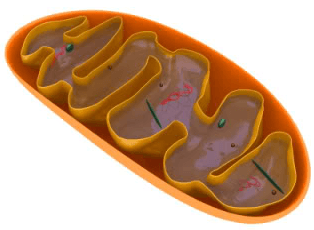
Functions in energy production, known as the energy factory of the cell
a)
mitochondria
b)
chloroplast
c)
vacuole
d)
cytoplasm
20.
Rigid, outermost layer of the plant cell
a)
nucleus
b)
cell membrane
c)
cell wall
d)
cytoplasm
21.
Semi-permeable layer around the cell that encloses the contents of the cell
a)
nucleus
b)
cell membrane
c)
cell wall
d)
chloroplast
22.
jelly-like substance that is located between the cell membrane and the nucleus
a)
mitochondria
b)
chloroplast
c)
vacuole
d)
cytoplasm
23.
I am located in the nucleus – I’m the genetic material of a cell
a)
cytoplasm
b)
membrane
c)
chromosomes/DNA
d)
vacuole
24.
Which organelle is only found in a plant cell? 
a)
nucleus
b)
chloroplast
c)
mitochondria
d)
cell membrane
25.
Which of the following is directly involved in the transportation of materials inside/within the cell?
a)
Endoplasmic Reticulum
b)
Vacuole
c)
Lysosome
d)
Mitochondria
26.
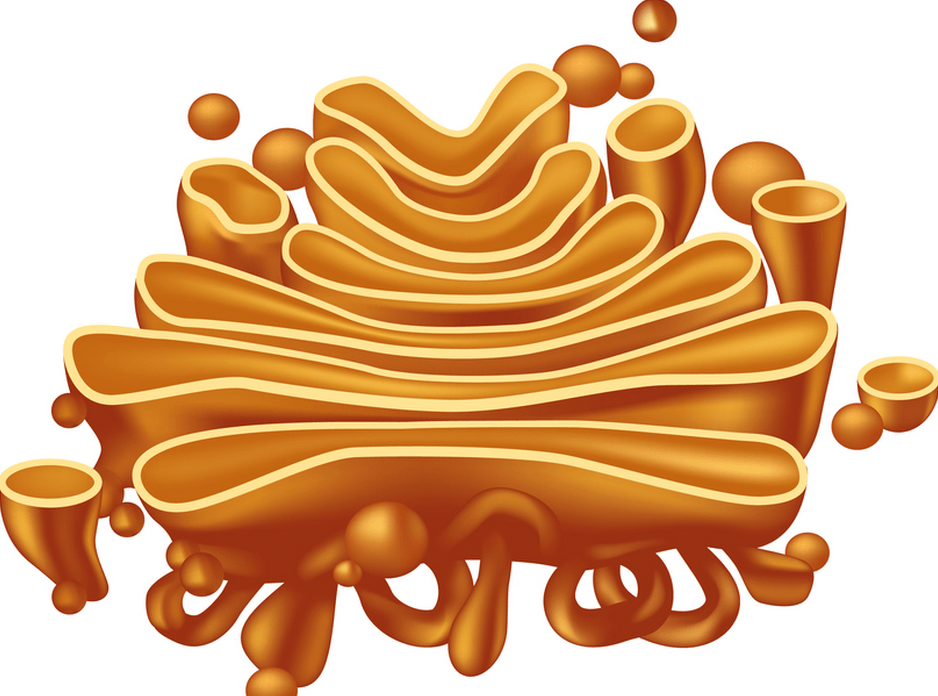
I am a protein packaging and shipping machine! Who am I?
a)
vacuole
b)
ribosome
c)
mitochondrion
d)
golgi apparatus
27.
You might think of me as the trash collector, but recycler is maybe more accurate. What am I?
a)
mitochondria
b)
lysosome
c)
vacuole
d)
ribosome
28.
Where are proteins made?
a)
Golgi body
b)
Mitoichondria
c)
Chromosomes
d)
Ribosomes
29.
What are tiny organelles that convert glucose into ATP?
a)
Ribosomes
b)
Vesicles
c)
Cytoskeleton
d)
Mitochondria
30.

Which of the following describes the function of the nucleolus?

a)

Command Center for the Cell

b)

Produce initial parts of ribosomes

c)

To hold chromosomes

d)

To make DNA

31.
The two kinds of cells are Prokaryotes and Eukaryotes. How are they different?
a)
Prokaryotes have a nucleus.
b)
Eukaryotes have a nucleus.
c)
Prokaryotes are plant cells.
d)
There is no difference.
32.

Which organelles are present in plant cells but absent in animal cells?

a)

Cell membrane, Cell Wall, Mitochondria

b)

Central vacuole, Golgi Apparatus, Cytoplasm

c)

Chloroplast, Central Vacuole, Cell Wall

d)

Mitochondria, Endoplasmic Reticulum, Cell Wall

33.

This organelle is the transportation network for the cell and moves materials around in the cell. What am I?

a)

mitochondria

b)

lysosomes

c)

chloroplast

d)

endoplasmic reticulum

34.

The H+ concentration gradient created by the electron trasport chain is used to 

a)
make NADPH
b)
split a water molecule
c)
generate ATP
d)
form water
35.
What is the name of the enzyme involved in ATP production?
a)
ATP synthase
b)
ADP synthase
c)
ATP synthize
d)
ADP synthize
36.

What is the main purpose of cellular respiration?

a)

To produce oxygen

b)

To break down glucose and produce ATP

c)

To produce carbon dioxide

d)

To absorb nutrients

37.

Anabolic reactions ______ molecules, and catabolic reactions ______ molecules.

a)

build up; break down

b)

break down; build up

38.

Where does the substrate bind to an enzyme?

(a)  

39.
The second  law of thermodynamics states that entropy of a system  tends to ______________. 
a)
increase
b)
decrease
c)
stay constant
d)
fluctuate wildly
40.

What does the second law of thermodynamics state about disorder?

a)

Every reaction increases the entropy

b)

Every reaction decreases the entropy

41.

Energy cannot be created or destroyed, but transferred or transformed…

a)

First law of thermodynamics

b)

Second law of thermodynamics

c)

Third law of thermodynamics

42.

This reaction is…

a)

Endergonic

b)

Exergonic