
NEW
Font size
 Worksheets
sound II
Total questions: 42
Worksheet time: 26mins
Sound travels fastest in
solids
liquids
gases
air
Sound travels in
straight line
circles
waves
none of the above
The ____________ sends messages to the brain to detect hearing
ear canal
eardrum
hammer
stirrup
Sound is a form of
volume
energy
amplitude
pitch
An object that does not vibrate cannot produce
sound
heat
light
electricity
A place where no sound exits
in the air
under water
space
all of the above
The highness or lowness of sound is called
volume
frequency
pitch
waves
Loudness is measured in
waves
frequency
pitch
decibels
The animal has the best hearing is a
bat
elephant
dolphins
rat
A typical conversation is __________ decibels
100
85
20
60
Pick examples of Echolocation, select all that apply
bats and dolphins use this to find prey and each other
help animals find their way in the dark
Uses bounced back vibrations to find objects
all of the above
For a normal person, audible frequency range for sound wave lies between
(a) 10 Hz and 10 kHz
( b) 20 Hz and 20 kHz
(c) 25 Hz and 25 kHz
(d) 30 Hz and 30 kHz
Astronauts in space need to communicate with each other by radio links because
(a) sound waves travel very slowly in space
(b) sound waves travel very fast in space
(c ) sound waves cannot travel in space
( d ) sound waves have low frequency in space
Which is an example of a longitudinal wave?
sound wave
b) light wave
c) radio wave
(d) water wave
The loudness of a sound is most closely related to its
a) frequency
b) period
(c) wavelength
d) amplitude
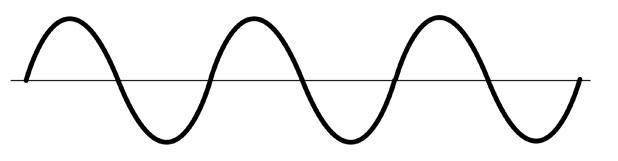


Sound waves are _______ waves.
Transverse
Seismic
Longitudinal
Slow
True or False: Sound waves can travel through space.
True
False
True or False: The speed of sound depends on the loudness of the sound.
True
False
As the temperature of a medium increases, the sound waves will travel ____________.
Faster
Slower
As the same speed
Part of the ear that gathers sound waves is the ______.
Ear drum
Cochlea
Outer Ear
The part of the ear that is spiral shaped and will send nerve impulses to the auditory nerve is the ________.
Ear drum
Cochlea
Outer Ear
The amount of energy a wave carries is the _________.
Amplitude
Height
Loudness
Volume
______ is the amount of energy transferred across an area in a certain time and influences how far sounds can be heard.
Loudness
Intensity
Volume
Perception
Human perception of sound volume
Amplitude
Loudness
Intensity
Decibel
Sound intensity is measured in _____.
Hertz
Nanometers
Decibels
Pitch is _____.
How often a sound wave occurs
How high or low a sound seems to be
The energy behind a wave
True or False: The higher the pitch, the lower the frequency.
True
False
True or False: According to the Doppler Effect, if an sound source is moving TOWARDS you, the pitch should be getting higher.
True
False

