wayground logo

Free Printable Worksheets

NEW

Font size

S
M
L
XL
Worksheets

G9 PE

Total questions: 60

Worksheet time: 45mins

Name
Class
Date
1.

Which of the following is NOT a function of the skeletal system?

a)

Helps your body move

b)

Send oxygen to the body

c)

Protect your organs

d)

Give your body shape and structure

2.

True or False:

Babies have more bones than adults.

a)

True

b)

False

3.

The skeletal system works with the ______________ to help your body move.

a)

digestive system

b)

circulatory system

c)

respiratory system

d)

muscular system

4.

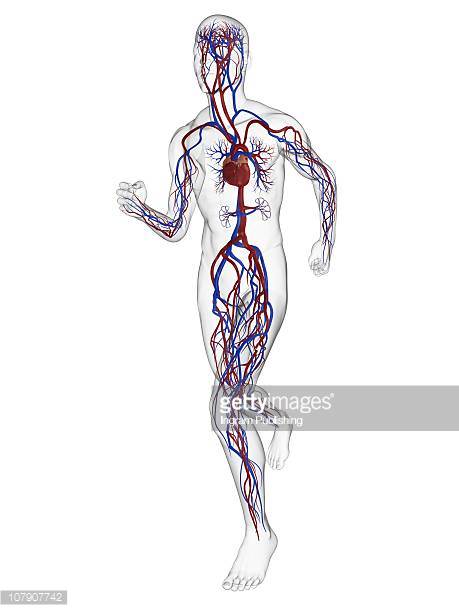
What does bone marrow make?

a)

blood cells

b)

cancer

c)

bone cells

d)

oxygen

5.

The place where two bones meet is called a ___________. They work with your muscles to help you move.

a)

tendon

b)

joint

c)

blood vessel

d)

ligament

6.

The skull protects which organ?

a)

heart

b)

lungs

c)

brain

d)

stomach

7.

What part of the skeleton protects the heart, lungs, and stomach?

a)

rib cage

b)

femur

c)

skull

d)

spine

8.

Where is the femur located in the body?

a)

arm

b)

shoulder

c)

leg

d)

foot

9.

How many bones are in an adult?

a)

200

b)

203

c)

206

d)

209

10.

Which system is responsible for creating red blood cells?

a)

skeletal

b)

muscular

c)

respiratory

d)

nervous

11.
These muscles work automatically without us doing any work.  
a)
Skeletal/ Voluntary
b)
Smooth/Involuntary
c)
Cardiac 
d)
Rough 
12.
Cardiac muscle is only found where? 
a)
Lungs
b)
Heart
c)
Kidney's 
d)
Liver
13.
What are the 3 types of muscles?
a)
Cardiac, smooth and skeletal
b)
Cardiac, skeletal, prime
c)
Flexion, extension, smooth
d)
Skeletal, smooth, stringy
14.
What is a voluntary muscle?
a)
You have control over the muscle 
b)
You have no control over the muscle
c)
Muscle works automatically
d)
Muscles fuse together
15.
Skeletal muscles are attached to the _________.
a)
Stomach
b)
Lungs
c)
Skeleton
d)
Involuntary Muscles
16.
Movements that you cannot control
a)
Strain
b)
Sprain
c)
Voluntary
d)
Involuntary
17.
Movements that you choose to control
a)
Cramp
b)
Voluntary
c)
Strain
d)
Involuntary
18.
These muscles are found in your organs
a)
Skeletal
b)
Smooth
c)
Rough
d)
Cardiac
19.

How many types of muscles are there?

a)

2

b)

4

c)

3

d)

1

20.
Which of the following is NOT a type of muscle?
a)
Rough
b)
Smooth
c)
Cardiac
d)
Skeletal
21.

Triple Jump is a Track Activity

a)

True

b)

False

22.

Triple Jump is a Field Activity

a)

True

b)

False

23.

Triple Jump is a ____________ type of field activity

a)

Running

b)

Jumping

c)

Throwing

d)

Kicking

24.

There are __________ phases to the triple jump

a)

1

b)

2

c)

3

d)

4

25.

The prefix (Tri-) in the word Triple lets us know there are ______ movements to the activity

a)

1

b)

2

c)

3

d)

4

26.

The ___________ phase is the first phase of triple jump

a)

Approach

b)

Hop

c)

Step

d)

Jump

27.

The approach phase is where the athlete builds __________

that will help them jump further

a)

balance

b)

flexibility

c)

speed and energy

d)

agility

28.

In the _________ phase the athlete will take off and land on the SAME foot

a)

Approach

b)

Hop

c)

Jump

d)

Step

29.

In the __________ the athlete will take off and land on the OPPOSITE foot

a)

Approach

b)

Step

c)

Jump

d)

Hop

30.

A volleyball game is played to?

a)

21 points

b)

25 points

c)

7 points

d)

30 points

31.

What direction does a team rotate

a)

Clockwise

b)

Counterclockwise

c)

Diagonally

d)

Up and back

32.

The winning team must have a point advantage for the win.

a)

1

b)

2

c)

3

d)

None of the above

33.

The ball may be volleyed a maximum of three times before it is sent over the net.

a)

True

b)

False

34.

An official volleyball team consists of 6 players on a court.

a)

True

b)

False

35.

How many players make up a volleyball team?

a)

4

b)

5

c)

6

d)

8

36.

The following is NOT one of the 3 Joint Classifications..

a)

Cartilaginous

b)

Cartilage

c)

Fibrous

d)

Synovial

37.

The joints that allow the most movement are called

a)

Fixed

b)

Fibrous

c)

Cartilaginous

d)

Synovial

38.

When kicking a football the knee

a)

Flexes

b)

Extends

c)

Abducts

d)

Adducts

39.
Identify the joint action being performed.
a)
Extension
b)
Flexion
c)
Abduction
d)
Adduction
40.
Identify the joint action being performed.
a)
Extension
b)
Flexion
c)
Abduction
d)
Adduction
41.
Identify the joint action being performed.
a)
Extension
b)
Flexion
c)
Abduction
d)
Adduction
42.
The knee joint is
a)
Hinge
b)
Gliding
c)
Ball and socket
d)
Pivot
43.

What is the main organ of the circulatory system?

a)

small intestine

b)

bone

c)

lungs

d)

heart

44.
How many types of blood vessels are in our body?
a)
1
b)
2
c)
3
d)
4
45.

Veins carry oxygen poor blood back to the heart.

a)

False

b)

True

46.

Arteries carry oxygen rich blood away from the heart.

a)

True

b)

False

47.

The job of the heart is to . . .

a)

pump blood around the body.

b)

send food to the small intestines.

c)

break down food.

d)

give energy to the body.

48.
______________ are the smallest blood vessels.
a)
Arteries
b)
Veins
c)
Capillaries
49.
______________ are the second largest blood vessel. 
a)
Arteries
b)
Veins
c)
Capillaries
50.
The circulatory system works with the ___________ system to provide our body with oxygen.
a)
respiratory
b)
digestive
c)
muscular
d)
skeletal
51.
The circulatory system works with the __________ system to obtain energy from nutrients that we eat. 
a)
respiratory 
b)
digestive
c)
skeletal
d)
nervous
52.
The heart has ___ chambers.
a)
1
b)
2
c)
3
d)
4
53.
The heart has ___ chambers.
a)
1
b)
2
c)
3
d)
4
54.
What does Deoxygenated mean?
a)
Oxygen-rich
b)
Blood flow
c)
Oxygen-poor
d)
Water Flow
55.
Which is the correct definition of the Circulatory system?
a)
The system fights disease so the body stays healthy.
b)
The system that circulates blood and oxygen through the body, consisting of the heart,blood vessels,and blood.
c)
Breaks down food into smaller pieces and absorbs those nutrients into the body.
d)
Provides shape and structure for the body.
56.
What function does the heart do?
a)
Protects organs and produces red blood cells.
b)
Generates heat.
c)
Breaks down food into nutrients.
d)
The heart is a pump, which moves the blood. The arteries and veins are the pipes where the blood flows.
57.
arteries, veins, and capillaries are three types of __________
a)
heart valves
b)
blood vessels
c)
cells
d)
veins
58.
arteries, veins, and capillaries are three types of __________
a)
heart valves
b)
blood vessels
c)
cells
d)
veins
59.
What is the heart ? 
a)
meaty organ 
b)
a small metal spike with a broadened flat head,
c)
organ of soft nervous tissue 
d)
muscular organ
60.
Carbon dioxide is considered a _________________
a)
food
b)
waste
c)
energy
d)
fun party favor