wayground logo

Free Printable Worksheets

Font size

S
M
L
XL
Worksheets

8th Grade Review

Total questions: 100

Worksheet time: 3hrs 58mins

Name
Class
Date
1.
3 What is the main idea of the section "Brown v. Board Of Education"? 
a)
(A) The case meant the end of separating students by race in public schools. 
b)
(B) The case required all children in the United States to attend public schools. 
c)
(C) The case required Kansas to give black schools the same amount of money as white schools.
d)
(D) The case meant that separate schools could offer equal education. 
2.
Who was the "mother" of the civil rights movement?
a)
Rosa Parks
b)
Coretta Scott King
c)
Michelle Obama
d)
Oprah Winfrey
3.
_______________ wrote "I Have a Dream" and delivered it to thousands in Washington, DC. 
a)
Harry Belafonte
b)
Barack Obama
c)
Martin Luther King, Jr. 
d)
Jesse Jackson
4.
To separate one group from another is ___________________.
a)
integration
b)
segregation
c)
Civil Rights Movement
Jim Crow
5.
Court case that ruled that segregated schools are inherently unequal, ending the separate but equal doctrine.
a)
Plessy v. Ferguson
b)
Brown v. Board of Education
c)
Sweatt v. Painter
d)
Delgado v. Bastrop ISD
6.
This banned the use of literacy tests.
a)
Civil Rights Act
b)
Civil Rights Movement
c)
Voting Rights Act
d)
Jim Crow Law
7.
After the Civil Rights Act of 1964 was passed, it was no longer legal to
a)
let African Americans ride the bus.
b)
deny someone of a job because of their race.
c)
fire someone for not doing their job.
d)
kick someone out of the military.
8.

What did the Voting Rights Act of 1965 outlaw?

a)

denying the right to vote based on race or color

b)

denying the right to vote based on gender

c)

allowing people to vote multiple times

d)

allowing people under the age of 21 to vote

9.
the process of moving from an agricultural society, in which most goods are handmade, to a society that thrives on machine-manufactured goods
a)
textile
b)
economy
c)
industrialization
d)
technology
10.

The way in which people use their limited resources to satisfy their unlimited wants and needs is known as a(n)

a)

textile

b)

economy

c)

technology

d)

industrialization

11.
Why were railroads so important during this time?
a)
they moved goods more quickly and less expensively over greater distances
b)
they were fun to ride on to go visit family in other states
c)
people could ride on railroads to get to their jobs in another city
12.
What is the movement of people from rural to urban areas called?
a)
ruralization
b)
colonization
c)
inflation
d)
urbanization
13.
Why did people move to the cities during the Industrial revolution?
a)
Jobs in factories
b)
Jobs on the farm
c)
Family
d)
Friends
14.
The man responsible for founding the biggest steel corporation in the US during the period 1865-1900 was
a)
JP Morgan
b)
Andrew Carnegie
c)
John D. Rockefeller
d)
Cornelius Vanderbilt
15.
The biggest oil company in the US during the period 1865-1900 was created by 
a)
JP Morgan
b)
Andrew Carnegie
c)
John D. Rockefeller
d)
Cornelius Vanderbilt
16.
The formation of national labor unions in the late 1800's was mainly a response to...
a)
passage of federal laws that favored workers
b)
laws restricting immigration and naturalization
c)
poor working conditions and low wages in many industries
d)
economic depressions that had led to high unemployment
17.
The total or complete control of a service, product or industry that prevents competition
a)
Union
b)
Robber Barron
c)
Monopoly
d)
Captain of Industry
18.
Name for entrepreneurs who use ruthless tactics to destroy competition or to keep wages low
a)
Captain of Industry
b)
Robber Baron
c)
Philanthropist
d)
Consolidator
19.
What is a main reason immigrants came to the US in the late 1800s and early 1900s?
a)
Did NOT want religious freedom
b)
Hoped for economic opportunity (to make money)
c)
Wanted LESS diversity
d)
Wanted to live more simply
20.
Why did immigrants often live in neighborhoods with others from their homelands?
a)
It was illegal to live anywhere else
b)
They didn't want to be in the US
c)
It made their adjustment to their new life easier
d)
No other housing was avaliable
21.

Give examples of immigrant "push" factors.

a)

Promise of a better life

b)

War or religious persecution

c)

Religious Freedom

d)

Better opportunities

22.
Where did European immigrants enter when they came to America?
a)
Ellis Island
b)
Rhode Island
c)
Alcatraz
d)
Angel Island
23.

Immigration push factors are…

a)

reasons people come to a new place

b)

reasons people leave their homelands

c)

reasons people begin working

d)

reasons people stop working

24.

Immigration pull factors are…

a)

reasons people come to a new place

b)

reasons people leave their homelands

c)

reasons people begin working

d)

reasons people stop working

25.
During the period from 1880 to 1910, why did the majority of immigrants to the United States settle in urban areas in the North?
a)
The Populists were successful in preventing immigrants from buying farmland.
b)
Rapid industrialization had created many job opportunities.
c)
Labor unions gave financial help to immigrants willing to work in the factories.
d)
Most immigrants had lived in cities in their native countries.
26.

Which of the following quotes below best represents a pull factor that accounted for much of the Chinese immigration to the United States in the mid-19th century?

a)

"There is an abundance of inexpensive land in the Midwest available for the cultivation of crops."

b)

"There are many economic opportunities in the West because of the discovery of rich mineral deposits."

c)

"There are many different religious buildings here and people are free to practice their religion freely."

d)

"There is the opportunity to earn a good wage working in the factories in the Northeast."

27.

A "muckraker" is

a)

A reporter who exposed living conditions in the tenements and factories

b)

Someone who took bribes

c)

someone who fought for women's rights

d)

a gardener

28.

What was Upton Sinclair trying to illustrate in his book The Jungle

a)

The exploitation of workers in slaughter houses

b)

The horrible living conditions in the inner city

c)

The exploitation of children in the Pennsylvania coal mines

d)

The effects of imperialism on Hawaii

29.

This act required a company to advertise the make-up of a product on its label. This was required by:

a)

16th Amendment

b)

Pure Food and Drug Act

c)

Government Regulation Act

d)

Meat Inspection Act

30.

A goal of the Progressive movement from 1890 to 1920 was to

a)

promote free enterprise and capitalism.

b)

address the problems caused by industrialization.

c)

promote settlement of land west of the Mississippi River.

d)

encourage immigration from southern and eastern Europe.

31.
The Pure Food and Drug Act protected consumers by
a)
banning all the sale and transportation of mislabeled or contaminated food & drugs
b)
banning all food from coming into the United States from China
c)
letting anyone sale & prepare food
d)
banning sales to certain states
32.

Which of the following Progressive Presidents enacted the Meat Inspection Act, protection for the environment, and the expansion of national forest lands from 43 million acres to 194 million acres?

a)

Theodore Roosevelt

b)

Warren Gamaliel Harding

c)

William Howard Taft

d)

Woodrow Wilson

33.
The Sherman anti-trust act was passed to
a)
break up monopolies
b)
give equal rights to women
c)
help people living in poverty
d)
end racism
34.
Upton Sinclair's The Jungle is credited with exposing the unsanitary conditions in the food industry and helping to pass the
a)
Sherman Anti-Trust Act
b)
18th Amendment
c)
Pure Food and Drug Act
d)
Equal Rights Amendment
35.
Which of the following countries was not an Allied Power in World War 1?
a)
Germany and Italy
b)
the United States and France
c)
Britain and France
d)
Germany and Austria-Hungary
36.
Which country had to accept blame for WWI?
a)
England
b)
France
c)
Austria
d)
Germany
37.
What treaty officially ended WWI?
a)
Brest-Litovsk
b)
Paris
c)
Versailles
d)
Trafalgar
38.
Which of these is a type of fighting used in World War One?
a)
Trench Warfare
b)
Atomic Bomb
c)
Guerilla Warfare
d)
No-Man's Land
39.
Which event sparked World War I?
a)
the German-French dispute over Alsace-Lorraine
b)
Russia’s quest for a warm water port
c)
assassination of the heir to the Austro-Hungarian throne
d)
sinking of the Lusitania
40.
Why did the US Congress refuse to join the League of Nations? 
a)
They feared Hitler.
b)
They feared being drawn into foreign wars.
c)
Their distrust of Pres. Wilson
d)
They disagreed with all of the 14 points.
41.
At the beginning of WWI, President Woodrow Wilson believed that the United States should...
a)
send troops to Europe
b)
support Germany
c)
support Great Britain
d)
remain neutral
42.
Which one of these was NOT one thing that Germany did to cause the United States to enter into World War One? 
a)
Germany sank the USS Maine 
b)
Germany sent a telegram to Mexico asking them to join the allied powers in return they will help Mexico take back land from the US 
c)
Germany sank 3 US ships 
d)
Germany sank the Lusitania. 
43.

Why did a stalemate develop along the Western Front early in the war?

a)

the United States immediately joined the war

b)

trench warfare made it difficult for either side to win

c)

the French army was able to push Germany out

d)

the Germany army fought with outdated weapons

44.

What was the goal of the Zimmerman Telegram?

a)

A German offer to Mexico to form an alliance against the US

b)

An offer to split up colonized land in Africa

c)

A letter declaring war between Germany and France

d)

The telegram that spread news that WWI has begun

45.
The Harlem Renaissance was
a)
Celebration of African American Culture
b)
Spark of increased industrial jobs
c)
Creation of controversial policies
d)
Creation of the Department of Interior
46.
President Harding’s idea for the US to return to life as it had been before WWI
a)
Prosperity
b)
Return to Normalcy
c)
Harlem Renaissance
47.
The 19th amendment is very important in history be cause it____________
a)
prohibited alchohol
b)
gave us freedom
c)
guaranteed women the right to vote
d)
abolished slavery
48.
Why are innovations in manufacturing of automobiles so important?
a)
They are not important.
b)
Allowed for faster cars.
c)
Allowed for more cars.
d)
Made the cars more affordable to all Americans.
49.

The Roaring Twenties were characterized by --

a)

internment camps, the rationing of goods, and the first use of the atomic bomb

b)

bank failures, the New Deal and bread lines

c)

installment plans, Prohibition, and flappers

d)

brinkmanship, McCarthyism, and a policy of containment

50.

Imperialism is __________.

a)

when a powerful nation uses its resources to help a weaker nation

b)

when a weaker nation invites a powerful nation to help it industrialize

c)

when a powerful nation takes control of the economy and government of a weaker nation

d)

when weak nations join together to fight a strong nation
51.
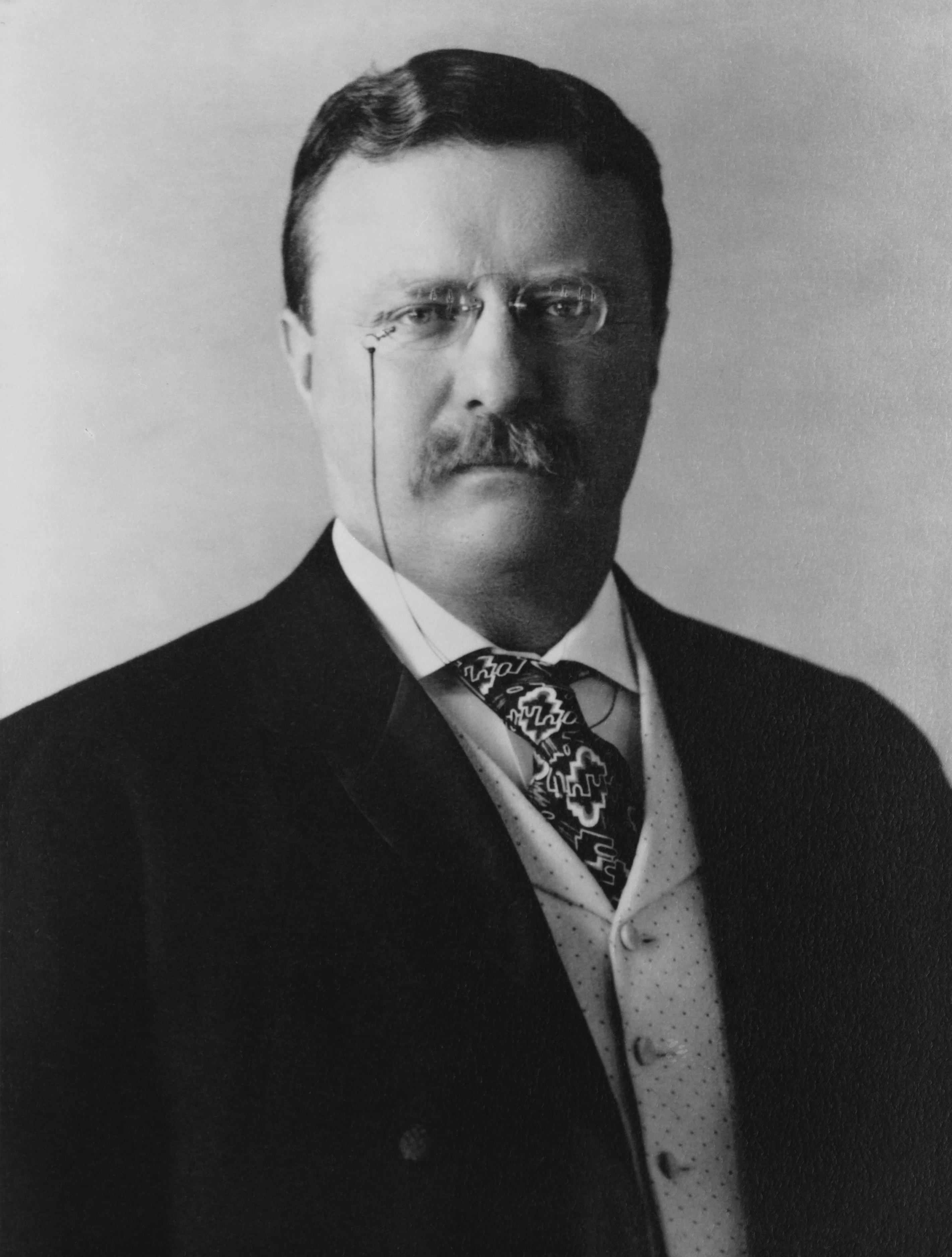
Teddy Roosevelt's policy was to "Speak softly and carry a big stick." What did he mean by this?
a)
Debate calmly, and always be willing to negotiate
b)
Speak quietly, but yell if necessary.
c)
Negotiate peacefully, but always have the threat of the military to back you up.
d)
Never back down when there is conflict.
52.
The Roosevelt Corollary to the Monroe Doctrine established the US’s right to ___.
a)
build the Panama Canal 
b)
annex Hawaii
c)
attack the Spanish 
d)
intervene in Latin America
53.
Which was NOT a LONG-TERM cause of the Great Depression?
a)
Buying stock on margin
b)
Stock market crash (Black Tuesday)
c)
too much production and consumer spending
d)
Laisezz-faire economic policies
54.
After the Stock Market Crash, many people lost their life savings because _______________.
a)
banks closed
b)
banks gave away their money
c)
they couldn't remember where they put it
d)
someone stole it
55.
Which economic factor contributed most directly to the start of the Great Depression?
a)
low worker productivity
b)
high income taxes
c)
decreasing tariff rates
d)
buying stocks on margin
56.

Which of the following people created government agencies and social programs that led to the end of the Great Depression?

a)

Henry Ford

b)

Herbert Hoover

c)

Franklin D Roosevelt

d)

Theodore Roosevelt

57.

What was the name of the program created by President FDR?

a)

The Answer

b)

The Solution

c)

The New Deal

d)

The Right Deal

58.

What was the "New Deal" of the 1930s?

a)

a government program that gave free land to homesteaders

b)

a government program that helped women get the vote

c)

a government program that spread civil rights throughout the country

d)

a government program designed to help people during the depression

59.

Which event eventually ended the Great Depression?

a)

The New Deal

b)

Creation of the TVA

c)

World War 2

d)

The publication of Gone With the Wind

60.
Buying on margin means:
a)
buying stocks at a fraction of their price, with the promise of paying the rest later
b)
planning out your budget to make sure you have enough to get by
c)
Buying a few stocks from many companies to ensure profit
d)
Pouring all of your money into one stock in order to ensure profit
61.
The purpose of the New Deal program was to...
a)
improve working conditions in factories
b)
stop the sale of alcohol in states
c)
end discrimination against African Americans
d)
help the nation recover from the Depression
62.
How are dictators able  to rise to power after countries suffer hardships? 
a)
People want strong leaders to solve their problems.
b)
Dictators promise freedom. 
c)
Dictators allow everyone to vote. 
d)
Dictators promise to end fascism.
63.
In which WWII event did Japan use the strategy of surprise attack to bomb the United States? 
a)
D-Day on the shores of France
b)
Pearl Harbor
c)
Invasion of Poland
d)
V-E Day
64.
Which countries belonged to the Axis Powers?
a)
U.S., Italy, and Great Britain
b)
U.S., Great Britain, and France
c)
Germany, Italy, and Japan
d)
Germany, France, and Japan
65.
What did allied forces do on D-Day, June 6, 1944?
a)
They sent thousands of troops to Berlin.
b)
They stormed the beaches of Normandy, France.
c)
The fought the Nazi troops in Russia.
d)
They took control of many Japanese islands.
66.

Which of the following is NOT true about the United States during World War II?

a)

The U.S. entered the war after the bombing of Pearl Harbor.

b)

Factories produced war goods and natural resources were rationed.

c)

Most women stayed home to raise children and tend to their husbands.

d)

Some American citizens were placed in internment camps based on their ethnicity.

67.
Which WWII leader became President after FDR passed, wanted  to save American lives in the Pacific, and decided to drop the  atomic bombs?
a)
Franklin D. Roosevelt
b)
Winston Churchill
c)
Harry S. Truman
d)
Joseph Stalin
68.
Why was Germany's economy struggling after WWI?
a)
The Treaty of Versailles punished Germany for WWI
b)
Other countries were using imperialism to take over the economies of other governments, including Germany's
c)
Hitler was keeping his own people in a state of poverty in order to control them
d)
America was punishing Germany for playing such a major role in WWI
69.
In what way did the Treaty of Versailles establish conditions that led to the outbreak of WWII?
a)
It called for the dissolving of the League of Nations, thus removing an organization for resolving future conflicts
b)
It gave Germany too much power by letting Germany keep the Alsace-Lorraine region of France
c)
It weakened the Allied countries by making France, England, and Russia reduce the size of their armies
d)
It imposed harsh reparation payments on Germany, which led to economic and political instability
70.

Describe the causes of WWII:

a)

Treaty of Versailles, economic depression & totalitarian dictators

b)

WWI Peace Treaty Problems, New Military Technology

c)

Rise of dictators, Poor U.S. President

d)

Russia attacked Germany & took over Italy

71.
The United States essentially ended World War II by:
a)
bombing Tokyo
b)
launching the D-Day invasion
c)
capturing Hitler
d)
dropping atomic bombs on Japanese cities
72.

Which of the following was a primary cause of the Cold War between the United States and the Soviet Union?

a)

direct, armed conflict between the two nations

b)

the founding of the United Nations

c)

a deep reduction in military expenditures

d)

a competition for political influence over other countries

73.

The United States followed a policy of containment during the Cold War in response to the spread of communism.

How did the Marshall Plan reflect containment policy?

a)

It blocked Soviet missiles from from arriving in communist Cuba.

b)

It provided economic aid to European countries in order to prevent the spread of communism.

c)

It authorized the use of military force against communist forces in Vietnam.

d)

It stopped communist efforts to control the Korean Peninsula.

74.

The United States Foreign Policy after World War II was the policy of Containment, which was?

a)

The U.S. would try to restrict the spread of Fascism in Europe.

b)

The U.S. would help to rebuild the nations of Japan and Germany.

c)

Due to the importance, the U.S. would increase spending into the Space Race.

d)

The U.S. would try to prevent the spread of Communism anywhere in the world.

75.

Which statement describes communism?

a)

a political system in which every person in society gets a vote

b)

a political and economic system in which the government owns and distributes wealth and resources

c)

a political system in which people are forced to live in communities

d)

an economic system in which the government takes everyone's money and invests it in the national stock market

76.

What wars were fought during the Cold War as a result of containment and the Domino Theory?

a)

Korean & Vietnam War

b)

WWI & WWII

c)

Civil War & Spanish American War

d)

Persian Gulf & War on Terror

77.

The failed US attempt to overthrow the communist Cuban government in 1961 was called the:

a)

Bay of Pigs Invasion

b)

Cuban Missile Crisis

c)

Project to Eliminate Cuban Communism (PECC)

d)

Inchon Invasion

e)

Anti-Totalitarian Takeover (ATT)

78.

How did the media (television) impact the Vietnam War?

a)

Negative press coverage contributed to the public disillusionment with the war.

b)

The positive press coverage encouraged enlistment in the military.

c)

The impact of the media in Vietnam was rather minimal.

d)

The media showed that the majority of Americans supported the war effort.

79.
Which statement most accurately depicts why president Nixon had to resign from office in 1974?
a)
He had an affair with an intern
b)
He pulled troops out of Vietnam in 1973
c)
He opened relations with China and the Soviet Union
d)
He led a criminal conspiracy from the White House, which mislead the nation
80.

Mikhail Gorbachev contributed to the fall of communism in the Soviet Union and Eastern Europe by

a)

signing the Camp David Accords

b)

introducing the policies of Perestroika and Glasnost

c)

invading Afghanistan

d)

violating nuclear arms agreements

81.

Why Did The Berlin Wall Fall?

a)

In 1989, political changes the Soviet Union and civil unrest in Germany put pressure on the East German government to loosen some of its regulations on travel to West Germany.

b)

In 1979, Military changes in Eastern Europe and civil unrest in Germany put pressure on the East German government to loosen some of its regulations on travel to West Germany.

c)

In 1989, political changes in Western Europe and civil unrest in Germany put pressure on the East German Military to loosen some of its regulations on travel to West Germany.

d)

In 1991, political and economic changes in Eastern Europe led to the collapse of the Soviet Union and the reunification of Germany.

82.

Arrangement placing limits on the number of immigrants from each country.

a)

Prohibition

b)

On Margin

c)

Temperance

d)

Quota System

83.

Style of journalism that exaggerates and sensationalizes news.

a)

Temperance

b)

Quota System

c)

Yellow Journalism

d)

Prohibition

84.
What is the Quota System?
a)
A system created to limit the number of immigrants who could be in America
b)
The end of the Civil War
c)
The Basic rules of Immigration
d)
The first rule of immigration
85.
What was the "War Guilt Clause" in the treaty?
a)
Germany had to accept responsibility for starting the war
b)
German leaders would go to jail for their actions during the war
c)
Germany had to pay the United States and Russia
d)
France gave Germany money to reduce its military strength
86.
How did the German people react to the Treaty of Versailles?
a)
They were ok with it because they realized that they lost the war
b)
They loved it because it was so favorable to them
c)
They hated it because it treated them severely
d)
Most Germans didn't really care
87.
What are reparations?
a)
Payments Germany was forced to pay
b)
Repairs and improvements made to Germany
c)
Money that France would donate to Germany to help rebuild
d)
Payments that Russia would give to the Ottoman Empire
88.
How did the German people react to the Treaty of Versailles?
a)
They were ok with it because they realized that they lost the war
b)
They loved it because it was so favorable to them
c)
They hated it because it treated them severely
d)
Most Germans didn't really care
89.
What was one reason the Nazi programs and policies of the early 1930s appealed to many people in Germany?
a)
The people were frustrated with their current political and economic situation.
b)
Germany had been denied membership to the UN.
c)
Communism had been forced on them. 
d)
Germans fear that the British and French would take control. 
90.
What led to the rise of totalitarianism governments in Germany, Italy and Spain in the 1920s and 1930s.
a)
The success of the Communist in a command economy. 
b)
Severe economic problems that arose in Europe after WWI.
c)
The active support of the United States. 
d)
Movements demanding the reture of the old monarchies. 
91.
In what way did the Treaty of Versailles established conditions that led to the outbreak of World War II?
a)
It called for eliminating the League of Nations.
b)
It gave Germany too much power by letting them keep land conquered in World War I.
c)
It required France, England, and Russia reduce the size of their armies.
d)
It imposed harsh reparations on Germany, which led to economic and political instability
92.

________ was an Austrian-born German politician who was the dictator of Germany from 1933 until his death in 1945. He rose to power as the leader of the Nazi Party, becoming the chancellor in 1933 and then assuming the title of Führer und Reichskanzler in 1934.

a)

Adolf Hitler

b)

Joseph Stalin

c)

Francisco Franco

d)

Vladimir Lenin

93.

What is McCarthyism most closely associated with?

a)
  • Government reforms

b)
  • Anti-Communist investigations

c)
  • Communists activity in Europe

d)
  • Civil rights movements

94.

What was one primary effect of McCarthyism on American society?

a)
  • Increased support for Communist parties

b)
  • Decreased international relations with Europe

c)
  • Widespread suspicion and fear of Communism

d)
  • Greater public trust in government

95.

How did the Army-McCarthy hearings contribute to the end of McCarthy’s influence?

a)
  • They revealed Communist infiltrators in the military.

b)
  • They showcased his use of unsubstantiated accusations.

c)
  • They ended in his formal election loss.

d)
  • They concluded in McCarthy’s acquittal.

96.
What caused McCarthyism?
a)
President Truman making atomic bombs.
b)
Japanese spies.
c)
Bombing China.
d)
Increased fear of communism.
97.
President Truman adopted a new foreign policy during the Cold War know as the Truman Doctrine. What was the main goal of the Truman Doctrine?
a)
To expand trade with Europe
b)
To limit the build up of nuclear weapons
c)
To stop the spread of communism
d)
to send financial aid to Europe
98.

Who was the Korean War between?

a)

U.S. and South Korea

b)

Russia and North Korea

c)

North Korea and South Korea

d)

North Korea and North Vietnam

99.

What was the outcome of the Korean War in terms of territorial changes?

a)

The borders remained largely unchanged

b)

Both Koreas were unified under one government

c)

North Korea gained significant territory

d)

South Korea gained significant territory

100.

The aim of the American intervention in Korea was to:

a)

contain the spread of communism and liberate Korea

b)

support the North Korean government

c)

establish a new government in Japan

d)

expand American territory