
 Worksheets
AQA GCSE Computer Systems
Total questions: 50
Worksheet time: 26mins
Which of the following are examples of Storage Devices
CD's
Random Access Memory (RAM)
Hard Disc Drives (HDD)
Printers
The CPU and its function within a Computer System is commonly referred to as which human organ?
Heart
Lungs
Eyes
Brain

The acronym ALU stands for a computer's ___
accepted language utility
advanced logarithmic unit
arithmetic and linguistic utility
arithmetic and logic unit

The circuit that sums A and B, and has two outputs, sum (S) and carry (C), is called ___
a half adder
a full adder
a simple summer
a digital combiner
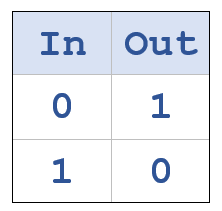
This is the truth table for which logic gate?
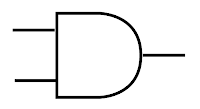
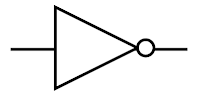
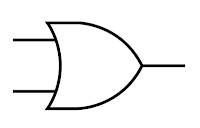
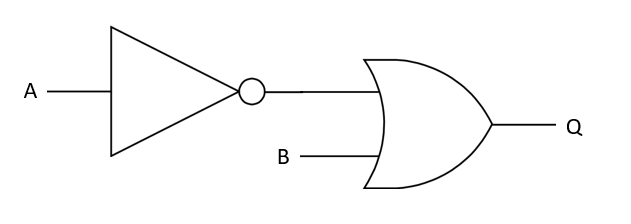
What is the boolean expression for this logic circuit?
Q = NOT (A OR B)
Q = NOT A AND B
NOT A OR B = Q
Q = (NOT A) OR B
Which of these are boolean operators, implemented in the computer as logic gates?
Check all that apply
NOT
MOD
OR
AND
DIV
A single logic gate is an electronic component made of transistors, which does what?
Performs calculations such as binary addition
Performs binary shifts left and right
Combines boolean inputs to produce a boolean output
Executes instructions stored in the main memory
What is the role of the Control Unit?
Conduct calculations
Sends signals to control the flow of data
Overall control of the CPU
Execute program instructions

What operations are not included in simple ALUs?
negate and pass-through
increment and decrement
subtract and borrow
multiplication and division
What does RAM stand for?
Random Access Memory
Real Access Memory
Rapid Access Memory
Random Activity Memory
What does ROM stand for?
Read Only Memory
Random On-board Memory
Random Only Memory
Read Online Memory
RAM is:
Volatile
Non-volatile
ROM is:
Volatile
Non-volatile
What does volatile memory mean?
Data is retained when the power is switched off
Data is lost when the power is switched off
Which of the following statements about ROM is FALSE?
The contents of ROM cannot be changed
ROM is non-volatile
There are two kinds of ROM - DROM and SROM
What does FDE stand for?
Find Detect Educate
Film Design Evidence
Fetch Decode Execute
Fast Delivery Executive
During the fetch stage of the FDE cycle, where are the instructions fetched from?
A memory Stick
Hard-Drive
Current Instruction Register
RAM
During the execute stage, which CPU component tells the other components what to do?
ALU
Clock
Control Unit
Registers
At which stage are results stored in the Accumulator?
Fetch
Decode
Execute
None of the above
The reason why manufacturers are finding it difficult to produce faster microprocessors is...
the speed at which data can be transferred to the CPU
the design of the control unit
the amount of heat generated
the need for more data registers
A computer advert describes a machine as having 'quad core processing'. This means that...
it has one microprocessor containing four CPUs
it has four microprocessors
it's four times faster than a single core computer
it has four memory chips
The ALU in your computer...
Contains the control unit, ALU and cache memory process data
Performs logical and arithmetic functions
Is a device inside your computer controls the timing of the fetch, decode, execute cycle
Makes your computer operate faster than the frequency recommended by a manufacturer
The CPU in your computer...
Contains the control unit, ALU and cache memory process data
Performs logical and arithmetic functions
Is a device inside your computer controls the timing of the fetch, decode, execute cycle
Makes your computer operate faster than the frequency recommended by a manufacturer
True or False, Embedded Systems use Microprocessors to control specific functions relating to the device they are installed on?
True
False
How many of the following are examples of Embedded Systems?
Mobile Phone
Washing Machine
Microwave
Fridge
Laptop
True or False, all embedded systems need an operating system to enable them to function correctly?
True
False
What is primary storage?
The hard drive
Memory
Network server
Cloud storage
Why is secondary storage needed?
It is non-volatile
It is volatile
It is quicker
It is online
Which of these is NOT secondary storage?
USB
Google Drive
RAM
DVD
A [what?] is the most common type of secondary storage.
(a)
What do the letters RAM stand for?
(a)

What type of logic is this table showing:
AND
OR
NOT
NOR

What type of logic is this table showing:
AND
OR
NOT
XOR

Use the logic condition to find the value of X:
A or (B and C)
True
False

