wayground logo

Free Printable Worksheets

Font size

S
M
L
XL
Worksheets

Year 10 chemistry mock

Total questions: 89

Worksheet time: 1hrs 7mins

Name
Class
Date
1.

name the group that has a single bond

a)

alkenes

b)

alcohols

c)

alkanes

d)

ethers

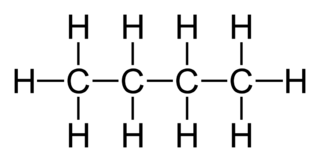
2.

the name of this compaund C4H10

a)

METHANE

b)

HEXENE

c)

BUTANOIC ACID

d)

BUTANE

3.

the name of this compaund C4H10

a)

METHANE

b)

HEXENE

c)

BUTANOIC ACID

d)

BUTANE

4.

which compound is made up of carbons and hydrogen

a)

hydrocarbons

b)

aldehytes

c)

condensed structure

d)

alcohols

5.
Which of the following elements is required in an organic compound?
a)
nitrogen
b)
oxygen
c)
carbon
d)
sodium
6.
What is the general formula of an alkane
a)
2n+2
b)
CnH2n+2
c)
CnH2n
d)
CnHn
7.
Hydrocarbons are compounds that contain
a)
Carbon, only
b)
Carbon and Hydrogen, only
c)
Carbon, Oxygen, and Hydrogen, only
d)
Carbon, Oxygen, Hydrogen, and Nitrogen, only
8.
Name this alkane
a)
Methane
b)
Ethane
c)
Propane
d)
Butane
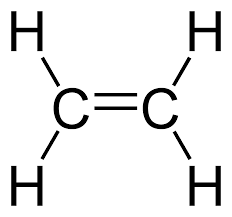
9.
Classify the compound based on the functional group present.
a)
alkane
b)
alkene
c)
alkyne
d)
aromatic
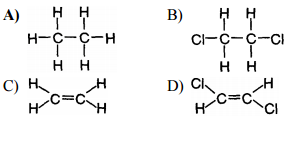
10.
Which formula represents a saturated hydrocarbon?
a)
A
b)
B
c)
C
d)
D
11.
What colour does bromine water turn in the presence of an alkene
a)
Orange
b)
Blue
c)
Colourless
d)
Green
12.

What is fractional distillation?

a)

a process used to separate crude oil

b)

a process used to burn up fuels

c)

a way to make different products

d)

how oil is extracted from the ground

13.

A fraction of crude oil is made up of:

a)

Hydrocarbons of similar chain lengths

b)

Numbers

c)

Large hydrocarbons

d)

Alkenes only

14.

Crude oil is made up of:

a)

Ethane

b)

Butane

c)

A mixture of different hydrocarbons

d)

Extremely large hydrocarbons which are broken up once extracted
15.

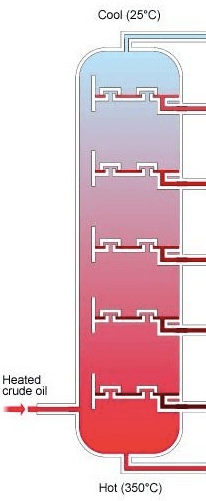
What process happens at each level in the fractionating column?

a)

Evaporation

b)

Condensation

c)

Combustion

16.

What process happens as the crude oil enters the fractionating column?

a)

Evaporation

b)

Condensation

c)

Combustion

17.

Where do short chain hydrocarbons collect?

a)

At the top

b)

In the middle

c)

At the bottom

18.

Where do long chain hydrocarbons collect?

a)

At the top

b)

In the middle

c)

At the bottom

19.

What is an atom?

a)

The smallest unit of matter

b)

The smallest unit of measurement

c)

Your next door neighbor

20.

Which part of the atom has a positive charge?

a)

Proton

b)

Neutron

c)

Electron

21.

Which part of the atom has a negative charge?

a)

Proton

b)

Neutron

c)

Electron

22.

Which part of the atom has a neutral charge?

a)

Proton

b)

Electron

c)

Neutron

23.

What is the center of the atom called?

a)

Orbital

b)

Ring

c)

Nucleus

24.

Electrons move around the orbital of the atom. T/F?

a)

False

b)

True

25.

What are atoms made up of?

a)

Protons, neutrons, electrons

b)

Protons, nucleus, electrons

c)

Proteins, neutrons, electrons

26.

Which particles are found in the nucleus?

a)

Electrons and protons

b)

Electrons and neutrons

c)

Protons and neutrons

27.

What does the atomic number tell you?

a)

The number of neutrons

b)

The number of protons

c)

The number of protons + neutrons

28.

What does the atomic mass tell you?

a)

The number of neutrons + protons

b)

The number of electrons

c)

The number of electrons + protons

29.

Why is the overall charge of an atom neutral (0)?

a)

They have the same number of protons and neutrons.

b)

They have the same number of protons and electrons.

c)

They have the same number of electrons and neutrons.

30.

Which TWO of the following subatomic particles are inside the nucleus?

a)

protons

b)

electrons

c)

neutrons

d)

There are no subatomic particles in the nucleus of an atom.

31.

How many electrons does silicon have?

a)

28

b)

14

c)

0

d)

10

32.
an atom with atomic number 6 would have how many protons 
a)
6
b)
12
c)
3
d)
cannot be determined 
33.

If an atom has 12 protons, which of the following must it also have to be considered a neutral atom?

a)

12 neutrons

b)

12 electrons

c)

12 protons

d)

24 protons and neutrons

34.

An atom with atomic number 6 would have how many protons?

a)

6

b)

12

c)

3

35.
True or False? Neutrons have a negative charge
a)
True
b)
False
36.
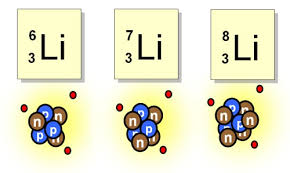
How many neutrons does the isotope of lithium have?
a)
8
b)
3
c)
4
d)
5
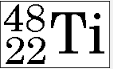
37.
How many protons does this isotope of titanium have?
a)
48
b)
22
c)
26
d)
70
38.
which atom has  4 neutrons?
a)
Li-6
b)
Li-7
c)
Li-8
d)
they have the same # of neutrons
39.
How are covalent bonds explained?
a)
When one atom takes the other atom's electron
b)
When the atom shares an electron with an another atom
c)
When the two nucleus merge
d)
When the neutrons leave the nucleus
40.
How are ionic bonds formed?
a)
When atoms share an electron
b)
When opposite charged atoms attract
c)
When one atom takes a proton
d)
When one atom takes a neutron
41.
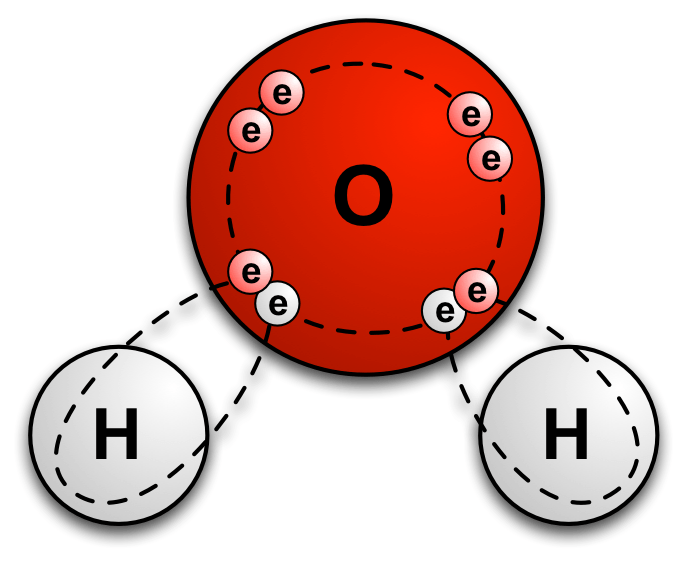
What would you name this molecule?
a)
SNa3
b)
H3O
c)
NaCl
d)
H2O
42.
What molecule is this?
a)
CO
b)
CO2
c)
C2O
d)
C2O2
43.
What molecule is this?
a)
CO
b)
CO2
c)
C2O
d)
C2O2
44.
In a covalent bond, one or more electrons are? 
a)
shared 
b)
lost 
c)
gained 
d)
transferred 
45.
Elements such as  Silicon, diamond and graphite.  Compounds include  SiO2
a)
simple covalent molecules
b)
metallic
c)
ionic
d)
giant covalent 
46.
Low melting and boiling points which increase with increasing molecule size due to increased intermolecular forces.
a)
simple covalent molecules
b)
metallic
c)
ionic
d)
giant covalent 
47.
What structure is shown in the diagram?
a)
Diamond
b)
Graphite
c)
Carbon fiber
d)
Carbon nanotubes
48.
Why is diamond strong?
a)
It's made of carbon
b)
It doesn't conduct electricity
c)
It forms 4 strong covalent bonds
d)
So it can cut glass
49.
Why is graphite so soft?
a)
A.  The atoms are arranged in hexagons in layers that are held together strongly
b)
B.  The atoms are arranged in hexagons in layers that are held together weakly
c)
C.  Carbon is strongly bonded to 3 other carbon atoms.
d)
D.  Carbon is weakly bonded to 3 other carbon atoms.
50.
What element are diamond and graphite made up of?
a)
A.     Sodium
b)
B.     Carbon
c)
C.     Carbon dioxide
d)
D.     Silicon
51.
Graphite is a good conductor because
a)
all electrons are free moving electrons
b)
free delocalization of electrons in its 3D lattice structure
c)
free delocalized electrons in a 2D layered structure
d)
covalently bonded layers allow electricity to flow
52.
Diamond has a very high melting point due to
a)
Strong covalent bonds between carbon atoms in a layered structure 
b)
All carbon atoms are covalently bonded to 3 other carbons
c)
Strong ionic bonds in a lattice structure
d)
Carbon atom covalently bonded to 4 other Carbons in a giant structure
53.
What structure is shown in the diagram?
a)
Diamond
b)
Graphite
c)
fullerene
54.

Why is graphite so soft and slippery?

a)

It is made of layers of atoms with weak forces between them

b)

It is made of small molecules

c)

It is an ionic compound

d)

The covalent bonds are weak

55.
How are covalent bonds explained?
a)
When one atom takes the other atom's electron
b)
When the atom shares an electron with an another atom
c)
When the two nucleus merge
d)
When the neutrons leave the nucleus
56.
A charged particle that has gained or lost electrons is called a _____.
a)
molecule
b)
ion
c)
isotope
d)
element
57.
A charged particle that has gained or lost electrons is called a _____.
a)
molecule
b)
ion
c)
isotope
d)
element
58.
A charged particle that has gained or lost electrons is called a _____.
a)
molecule
b)
ion
c)
isotope
d)
element
59.
How do the following two elements bond together?
Al3+  O2-         
a)
AlO
b)
Al2O3
c)
Al3O6
d)
Al3O2
60.
If my charge becomes 2+ what does that say about me?
a)
I am stealing 2 electrons
b)
I am losing 2 electrons
c)
I am in period 2
d)
I have an atomic # of 2
61.
If I gain electrons I become
a)
Positive because I've added to my atom
b)
negative because I've added electrons
c)
same because i'm balanced
d)
equal because now I have electrons
62.
Which of the following is NOT a step in forming an ionic bond?
a)
One atom shares its electrons with another one.
b)
Opposite charged ions form due to e- transfer
c)
One atom gives electrons to another one
d)
Opposite charged ions attract
63.
An ionic bond is the attraction between:
a)
oppositely charged ions
b)
similarly charged ions
c)
neutral ions
d)
neutral atoms
64.
What type of elements will form an ionic bond?
a)
Metals + Metals
b)
Nonmetals + Nonmetals
c)
Metals + Nonmetals
d)
None of the above
65.
To form a charge of +2 an atom must _ electrons.  To form -3 it must _ electrons.
a)
Gain 2; Lose 3
b)
Gain 3; Lose 2
c)
Lose 2; Gain 3
d)
Lose 3; Gain 2
66.
Boron is in column 13 & has a charge of _.  Potassium is in column 1 & has a charge of _.
a)
-3; +1
b)
+3; -1
c)
-3; -1
d)
+3; +1
67.

Which of the following is true for ionic bonding & ionic compounds?

a)

They must be made of ions with like charges.

b)

The negative ion must be written first.

c)

Compounds must have an overall charge of zero.

d)

They are made of metals and nonmetals.

e)

The positive ion must be written first.

68.
Metals tend to 
a)
gain electrons
b)
lose electrons
69.
A cation is a ____ ion.
a)
negative
b)
positive
c)
neutral
d)
ficticious
70.
A charged particle that has gained or lost electrons is called a _____.
a)
molecule
b)
ion
c)
isotope
d)
element
71.
A anion will be a ____ ion.
a)
negative
b)
positive
c)
neutral
d)
ficticious
72.
Alkali metals are found in which group of the periodic table?
a)
Group 1
b)
Group 2
c)
Group 7
d)
group 8 
73.
Which of the following is the most reactive in water?
a)
Lithium
b)
Sodium
c)
Potassium
74.
What is formed when sodium reacts with water?
a)
sodium oxide and hydrogen
b)
sodium hydroxide and hydrogen
c)
sodium hydroxide and oxygen
d)
sodium hydroxide and carbon dioxide
75.
What is the symbol equation for the reaction between sodium hydroxide and water?
a)
2Na + 2H2O → 2NaOH + H2
b)
Na + H2O → NaOH + H
c)
Na + H20 → NaCl + CO2
d)
2Na + 2H2O → 2NaH2 + O2
76.
Which of the following statements is true?
a)
In a chemical reaction atoms are created
b)
In a chemical reaction atoms are destroyed
c)
In a chemical reaction the arrangement of the atoms is changed
d)
In a chemical reaction the arrangement of the atoms remains the same, but the physical state (solid,liquid,gas) changes
77.
Which of the following is NOT an alkali metal
a)
Li
b)
Cl
c)
K
d)
Cs
78.

Table shows the relative atomic masses of two elements, H and J. Element H and J are located in Group 1 of the Periodic Table. Which statements is true about elements H and J?

a)

H is more electropositive than J

b)

The melting point of J is higher than that of H

c)

The number of valence electrons in atom J is more than that of atom H

d)

J reacts with cold water more vigorously than H

79.

Group 1 elements only form ….. Ion

a)

1+

b)

1-

c)

2+

d)

2-

80.

What gas is given off when group 1 elements reacts with water?

a)

Hydrogen

b)

Oxygen

c)

Carbon dioxide

d)

Helium

81.

How many electrons are in the outer shell of group 1 elements?

a)

0

b)

1

c)

2

d)

3

82.

Which of the "Halogens" is found in liquid state at room temperature?

a)

Flourine

b)

Astatine

c)

Iodine

d)

Bromine

83.
At room temperature, iodine is a....
a)
Gas
b)
Liquid
c)
Solid
84.

How do particles move if in a solid?

a)

Not at all.

b)

Quickly

c)

Slow

d)

They don't move they vibrate

85.

What is condensation?

a)

water vapor turns to gas

b)

Gas turning into liquid

c)

Liquid turning into a water vapor

d)

Solid turning into gas

86.

The colder the temperature, the _______ the particle's motion.

a)

Faster

b)

Slower

c)

Smaller

d)

Larger

87.
From 30 degrees to 55 degrees, what state of matter is the substance?
a)
Solid
b)
Liquid
c)
Gas
d)
Plasma
88.
Rows on the period table are called _____ while columns are called _____.
a)
groups, families
b)
groups, periods
c)
periods, groups
d)
families, groups
89.
Which of the following is a physical change?
a)
sawing a piece of wood in half
b)
burning a piece of wood
c)
rusting of an iron fence
d)
a copper roof changing from red to green