
 Worksheets
lesson 2.1
Total questions: 66
Worksheet time: 34mins
Which NUTRIENT provides the body with energy?
vitamins
minerals
fats
grains
Which NUTRIENT provides the body with energy?
vitamins
minerals
fats
grains
What are parallels of latitudes ?
Running vertically from north to south .
Running horizontally from east to west .
which is the longest lattitude
equator
prime meridian
which is the second name for longitudes
meridians
daignols
prime meridian starts at southpole and ends at northpole
true
false
from where do latitudes run
east to west
north to south
The Prime Meridian separates the Earth into what two hemispheres?
Northern and Southern
Western and Eastern
Northern and Eastern
Southern and Western
Latitude lines run from the _____ to the _______
West, East
North, South
North, East
South, West
The invisible line at 0 degrees latitude is called the ________.
International Date Line
Prime Meridian
Equator
Arctic Circle
Lines of Longitude run from the _____ to the ______.
East, West
North, South
South, East
North, West
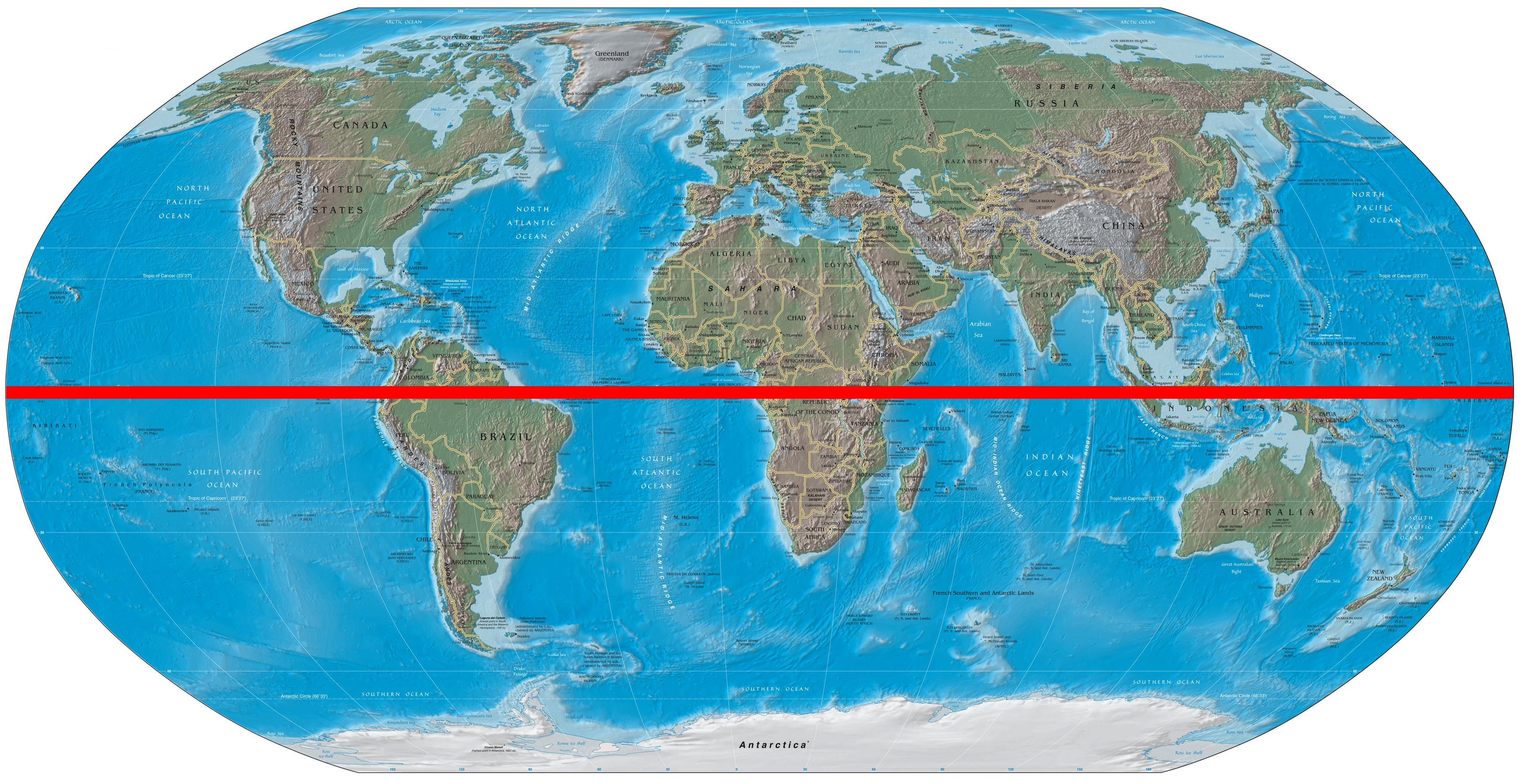
What are latitude and longitude lines?
Imaginary lines that divide the Earth
Visible lines that divide the Earth
Long and short lines that divide the Earth
Which of the following are hemispheres?
Northern
Southern
Eastern
Western
All of the above
Where can you see latitude and longitude?
From the air
On a map or globe
Around fault lines
On the bottom of the ocean

What is the climate like at 90 degrees SOUTH latitude?
Freezing
Hot and tropical
Hot in the summer, cold in the winter
Cold in the summer, hot in the winter
There are ______ latitudes .
90
360
180
240
The Earth is inclined at the angle of ________ .
90 degree
23 1/2 degree
66 1/2 degree
240 degree
The Earth moves from _____ to _____ .
east to west
north to south
west to east
south to north
The change of seasons is caused due to ___
Movement of the sun
Spherical shape of the earth
Revolution
Rotation
At what angle is the axis of the earth tilted to the vertical plane ?
66 1/2 Degrees
32 1/2 Degrees
23 1/2 Degrees
13 1/2 Degrees
The fixed elliptical path along which the earth revolves is called
Axis
Tilt
Orbit
Radius
The earth completes one rotation in about
22 hours
23 hours
24 hours
25 hours
A leap year has
365 days
365 1/4 days
364 days
366 days
The earth is going around the sun in an
Circular orbit
Elliptical orbit
Triangular orbit
Rectangular orbit
A year is usually divided into
Two seasons
Three seasons
One season
Four seasons
The reason we have seasons is because we get closer and farther to the sun.
TRUE
FALSE
What is the movement of the earth in its orbit called?
orbital velocity
revolution
rotation
apogee
The earth rotates on its axis from
north to south
east to west
south to north
west to east
The earth completes one rotation in about
22 hours
23 hours
24 hours
25 hours
A proof of rotation is
Day and Night
Seasons
Constellations

Imaginary line through the center of a planet.
Spring tide
axis
rotation
phases
Daily motion of earth is
Days
Cycle
Rotation
Revolution
The Earth revolve around the ______?
Moon
Earth
Sun
Mars
The _____ is tilted.
Axis
Moon
Rotation
Gravity
The _____ rotate on its own ____.
The earth rotate on its own motion.
The earth rotate on its axis.
The sun rotate on its own axis.
The axis rotate on its own earth.
The time of the day just before sunrise is known as_________
dusk
twilight
dawn
noon
The earth rotates on its axis from _________ to ___________
west to east
east to west
north to south
south to north
The earth's orbit around the sun is ____________ in shape.
circular
elliptical
The axis of the earth is always inclined in the same direction.
True
False
depends on gravity
I dont know
The diffuse light after sunset is known as dusk
True
False
Alfred Wegener named Pangaea.
True
False
When plates collide we get ________.
crumbles
volcanos
trenches
mountain ranges
The "Ring of Fire" is where there are many earthquakes and volcanoes.
True
False
What continent is below Europe?
North America
Asia
South America
Africa
The seven continents include: Asia, North America, South America, Antarctica, ...
Africa, Australia, and Europe
Australia, Central America, and the Arctic
Russia, Australia, and Iceland
Europe, Africa, and Alaska
Earth's crust is the
middle of the planet
inner most solid shell
outside shell
outer most solid shell
There are how many continents?
5
8
9
7
What continent is the coldest of all 7 continents?
Arctic
Asia
Iceland
Antarctica


Name the continent.
Asia
Australia

What is this called?
globe
map

What is this called?
globe
map

