
 Worksheets
population dynamic
Total questions: 70
Worksheet time: 3hrs 35mins
Which of the following is NOT an environment that humans are sparsely populated in?
Too Dry
Too Cold
Too Mountainous
Too Mild
Births per 1,000 people in a population is
Death Rate
Birth Rate
Doubling Time
Life Expectancy
Where are some of the higher Birth Rates found in the world?
Europe
Middle East
Sub-Saharan Africa
Japan
Number of deaths per 1,000 people in a population is
Death Rate
Birth Rate
Fertility Rate
Doubling Time
What common correlation is found with Infant Mortality Rate and Fertility Rate
High Fertility Rates have no correlation with Infant Mortality Rates
High Infant Mortality Rates equal lower Fertility Rates
Fertility Rates and Infant Mortality Rates stay constant
High Fertility Rates are found in countries with High Infant Mortality Rates
Ecumene is the
Surface of the Earth occupied by permanent human settlements
A delicious Japanese snack
The area of the Earth that is suitable for farms
The area that is the driest on the Earth
Which of the following is not one of the three ways Geographers measure density?
Arithmetic
Dynamic
Physiological
Agricultural
How do we calculate Natural Increase
(BR-DR)/10
I-E
70/r
BR-DR
If a country has a positive Natural Increase it means that the population is
Shrinking
Moving
Growing
Dying
What is doubling time?
A command to run real fast
The number of years for a country to increase its population by 1/4
The change in immigration and emigration
The number of years for a country to double its population
Developed countries will have a _________ agricultural density
Lower
Higher
Tremendous
Superb
Approximately how many humans are alive on the planet right now?
15 billion
7.5 billion
2 billion
200,000
Until the 1800s, human population grew at a _________ rate
Fast
Non-existent
Steady
Challenging
Which of the following is not a major concentration of human population?
Europe
South America
South Asia
East Asia
The total number of people living an area...
emigrate
net migration
population density
population
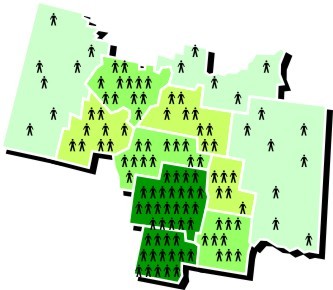
The average number of people per square kilometer...
population distribution
population density
urbanization
population rate
Population distribution is...
...the number of people in a region.
...the number of people per square kilometre.
...the pattern of where we find people on planet Earth.
...the number of births per thousand per year.
Human population growth accelerated in recent centuries mostly because of?
better hygiene and food.
the bubonic plague.
improved efficiency of fuel use.
the discovery of electricity.
What is the term for the average number of years people in a population are likely to live?
age structure
demographic transition
life expectancy
migration pattern
Birth rate is...
...the number of people dying per thousand per year.
...the number of people born per year.
...the number of people per thousand per year.
...the number of people born per thousand per year.
(Birth Rate - Death Rate) X 10 = ...
Active Population
Dependency Ratio
Natural Increase in Population as a percentage
Which of the following is physical factor affecting population distribution?
Climate
Economy
Healthcare
Technology
Which of the following is not a physical factor affecting population distribution?
Climate
Infrastructure
Relief
Soil Fertility

What aspect of population does the width of a population pyramid give you information on?
Birth Rate
Death Rate
Life Expectancy
Migration

What does the steepness of the sides of a population pyramid tell you about the country?
Birth Rate
Death rate
Life Expectancy
Migration

What does the height of a population pyramid tell you about the population?
Life Expectancy
Death Rate
Birth Rate
Migration

What is the name given to people aged 15 to 65 who work and pay taxes?
Young Dependent Population
Economically Active Population
Old Dependent Population
Migrant Population

According the population pyramid Canada's population is _______________
growing
getting smaller

What is the name of this...
Spearman's Rank Coeficient
Demographic Change Model (DCM)
Population Transition Model (PTM)
Demographic Transition Model (DTM)

Stage 1 of the demographic transition model (DTM) is characterized by...
High fluctuating birth and death rates, a low fluctuating total population.
Falling death rates, high birth rates and a rapidly increasing total population.
Low fluctuating birth and death rates, a high but steady total population.
Death rates greater than birth rates and a falling total population.
Stage 2 of the demographic transition model (DTM) is characterized by...
High fluctuating birth and death rates, a low fluctuating total population.
Falling death rates, high birth rates and a rapidly increasing total population.
Low fluctuating birth and death rates, a high but steady total population.
Death rates greater than birth rates and a falling total population.
Stage 4 of the demographic transition model (DTM) is characterized by...
High fluctuating birth and death rates, a low fluctuating total population.
Falling death rates, high birth rates and a rapidly increasing total population.
Low fluctuating birth and death rates, a high but steady total population.
Death rates greater than birth rates and a falling total population.

Which of the following explains stage 1 of the demographic transition model?
Birth rate is high because there is no contraception and people have lots of children because many infants die (infant mortality). The death rate is also high due to poor healthcare.
Birth rate is rapidly falling due to the emancipation of women (were they have an equal place in society) and better education. The use of contraception also increases and more women work instead of having children. Death rate continues to fall because of more medical advances.
Birth rate is high because there is no contraception. Also the economy is based on agriculture so people have lots of children to work on the farm. The death rate is low because of improved healthcare.
Birth rate is low. People have more money to spend on possessions and so cannot afford to have large families. The death rate is low because of the high quality and easily accessible healthcare.
Which of the following explains stage 3 of the demographic transition model?
Birth rate is high because there is no contraception and people have lots of children because many infants die (infant mortality). The death rate is also high due to poor healthcare.
Birth rate is rapidly falling due to the emancipation of women (were they have an equal place in society) and better education. The use of contraception also increases and more women work instead of having children. Death rate continues to fall because of more medical advances.
Birth rate is high because there is no contraception. Also the economy is based on agriculture so people have lots of children to work on the farm. The death rate is low because of improved healthcare.
Birth rate is low. People have more money to spend on possessions and so cannot afford to have large families. The death rate is low because of the high quality and easily accessible healthcare.
Which of the following explains stage 4 of the demographic transition model?
Birth rate is high because there is no contraception and people have lots of children because many infants die (infant mortality). The death rate is also high due to poor healthcare.
Birth rate is rapidly falling due to the emancipation of women (were they have an equal place in society) and better education. The use of contraception also increases and more women work instead of having children. Death rate continues to fall because of more medical advances.
Birth rate is high because there is no contraception. Also the economy is based on agriculture so people have lots of children to work on the farm. The death rate is low because of improved healthcare.
Birth rate is low. People have more money to spend on possessions and so cannot afford to have large families. The death rate is low because of the high quality and easily accessible healthcare.
Which of the following explains stage 2 of the demographic transition model?
Birth rate is high because there is no contraception and people have lots of children because many infants die (infant mortality). The death rate is also high due to poor healthcare.
Birth rate is rapidly falling due to the emancipation of women (were they have an equal place in society) and better education. The use of contraception also increases and more women work instead of having children. Death rate continues to fall because of more medical advances.
Birth rate is high because there is no contraception. Also the economy is based on agriculture so people have lots of children to work on the farm. The death rate is falling because of improved healthcare.
Birth rate is low. People have more money to spend on possessions and so cannot afford to have large families. The death rate is low because of the high quality and easily accessible healthcare.
Overpopulation is...
...if the number of people living in an area is greater than the resources available to support that population e.g. Nigeria
...if the number of people living in an area is less than is needed to make full use of the resources available.
Which of the following is a problem caused by overpopulation? (choose 3)
Small market for trade
Low value of exports
High unemployment
Shortage of food and water
Education and Healthcare under pressure
Which of the following is a problem caused by underpopulation? (choose 3)
Shortage of workers
Resources underused
Lack of government income (tax income)
Shortage of food and water
Education and Healthcare under pressure
The approximate population of the world today is..
7.6 Million
6.7 Billion
6.7 Million
7.6 Billion
What is the world's most populous country?
India
China
U.S.
Mexico
Which of the following is the world's fastest growing country?
India
China
U.S.
Mexico
One reason the world is growing so quickly is because...
The world has infinite resources for everyone
Birth rate is higher than death rate
There are more and more places for people to live
Death rate is higher than birth rate
Most of the world's population lives in...
North America
Europe
Africa
Asia


Number of deaths each year per 1,000 people
population growth
population density
birth rate
death rate
All of the people in a particular area
migration
demographics
population
census
Study of population patterns and change
census
demographics
migration
death rate
Number of births each year per 1,000 people
birth rate
population growth
population density
migration
A population is __________________.
a group of organisms of the same species, in the same place, at the same time.
a group of organisms of the different species, in the same place, at the same time.
an individual organism of the one species, in the same place, at the same time.
a group of organisms of the same species, in the different place, at the same time.

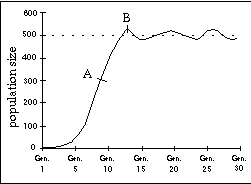

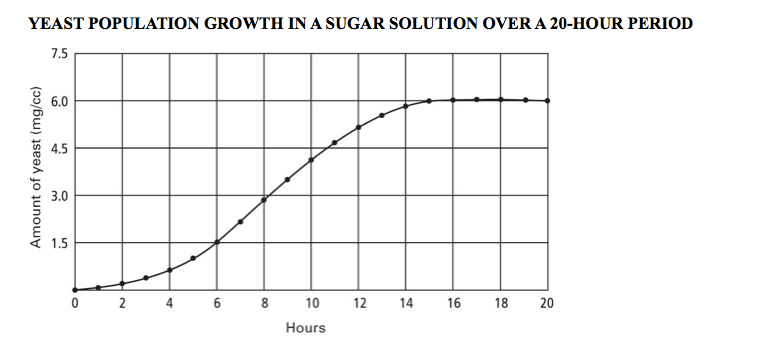
Which of the following factors affect a population's size
Availability of resources
Predator / prey relationships
All of the choices affect population
Reproductive success
We know that population sizes change over time. All statement(s) are true about this change EXCEPT:
When there are more births than deaths the population size will increase.
When there are more deaths than births the population size will decrease.
When there are more deaths than births the population size will increase.
When there are more births than deaths the population size will increase
Birth rates in a population, such as the moose on Isle Royale, can be affected by all of the following EXCEPT:
Availability of food
Availability of mates
Health of the mother
Changes in the environment
No exceptions - All of these factors affect birth rates.
Present day extinctions are happening at the greatest rate on islands. All of the following statements are reasons for this EXCEPT:
islands are isolated from humans
invasive species have been brought to islands by humans
Islands have smaller population sizes so they are more impacted by changes.
There is less space on islands so species have to compete more with each other.
No exceptions - all statements are true.

Review the graph provided. What statements can be made about the significant decline in wolves around 1979?
The wolf decline was a direct result of moose decline.
The is no way to know why the wolf population dropped.
The drop is most likely due to the declining moose population, but more information would be needed to determine that.
The drop is most likely due to the increasing moose population, but more information would be needed to determine that.
The wolf decline was a direct result of the moose increase.

Use the graph provided to decide if the following statement is true or false: The wolf population on Isle Royale is rather unstable throughout this time period.
True
False
Review the graph provided. What statements can be made about the significant decline in moose in the mid 1990's?
The moose decline was a direct result of wolf decline.
The is no way to know why the moose population dropped.
The drop is most likely due to the declining wolf population, but more information would be needed to determine that.
The drop is most likely due to the increasing wolf population, but more information would be needed to determine that.
Humans are causing extiction in which ways?
By poaching animals for food or products.
By destroying the natural habitat of species.
By polluting the environments of the world.
All of the above.

