
Font size
 Worksheets
Transportation in plants
Total questions: 15
Worksheet time: 11mins
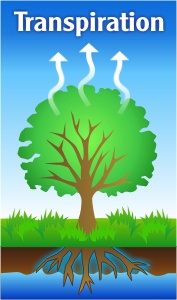
The function of transpiration is to transport _______ and ____________ from the roots to the leaves
water, mineral salts
food, nutrients
water, food
Which of the following indicates the pathway of water through a plant?
root hair cell --> xylem --> stomata
stomata --> root hair cell --> xylem
xylem --> stomata --> root hair cell
Root hairs help in absorption of water by
increasing the surface area
decreasing the surface area
holding the plant in the soil
none of the above
Diffusion is a major method of transport of materials in
tall plants
unicellular plants
Multicellular plants
Both (b) and (c)
Ascent of sap in plants takes place through
Cortex
Epidermis
Xylem
Phloem
Diffusion occurs when molecules move
from lower concentration to higher concentration.
from higher concentration to lower concentration through a membrane.
from higher concentration to lower concentration.
when energy is used.
Movement of molecules against a concentration gradient is called
diffusion
osmosis
active transport
all of the above
Mineral ions are transported by
diffusion
osmosis
active transport
none of the above

What do you call this type of membrane?
Perforated
Selectively permeable
Permeable
Impermeable
Swelling of raisins when kept in water is an example of
diffusion
transpiration
evaporation
osmosis
In apoplastic movement the water travels through the cell membrane and enter the cell
True
False
__________ occurs when water moves out of the cell and resulting in the shrinkage of cell membrane away from the cell wall.
Imbibition
uptake of minerals
Translocation
Plasmolysis
Dews are water droplets on the leaves of grass seen in the early mornings, when the climate is humid and excess of water in the soil. This is due to root pressure and this phenomenon is called _______
diffusion
guttation
imbibition
osmosis

