
 Worksheets
Unit 4, AOS 2 - Human Change over time 2022
Total questions: 41
Worksheet time: 1hrs 22mins
Modern humans are members of the phylum (a)
The first primate to consistently use tools was
Neanderthals
Australopithecus
Homo Habilis
Apes
Homo Sapiens
Which evolved first in hominids, bipedalism or very large brains?
Large brains
Bipedalism
They both evolved at the same time
There is no evidence to say one way or the other

What are distinguishing characteristics of primates?
Five digits
Opposable thumbs
Stereoscopic vision
Homologous structures

Bipedalism is...
The ability to stand up
The ability to ride a bike and move its pedals
The ability to walk on both feet
The ability to contro
Three physical changes in the process of human evolution are
Opposable thumb, free hands and Bipedalism
Bipedalism, decrease of the brain/skull and increase of jaw/teeth
Bipedalism, increase of the brain/skull and decrease of jaw/teeth
True/False: Mostly the change to bipedalism only involved a straightening of the back/spine.
True
False
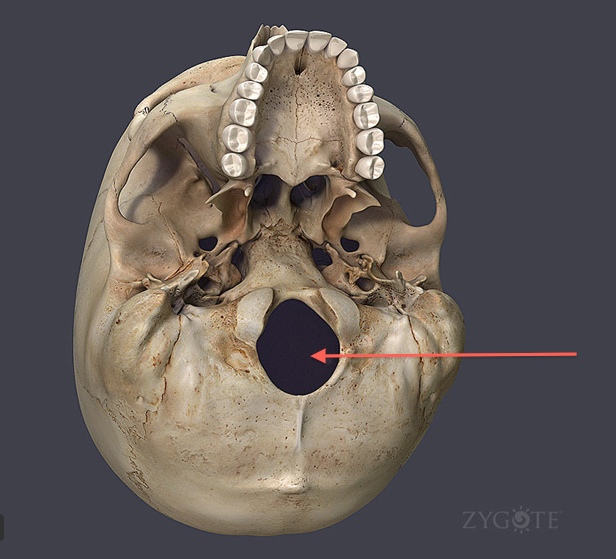
A large hole in the base of the skull where the spinal cord connects to the brain:
foramen magnum
sagittal crest
cranial capacity
S-shaped spine
Best definition for "carrying angle".
the angle between the ground and the femur
The angle of the femur
the angle formed between the vertical and the femur
the difference between a primate and a human's femur
Best reason why having a carrying angle helps bipedal locomotion
ensures the knee is positioned under the pelvis when striding forward
helps carry the upper body weight
helps you carry stuff
helps humans shift their weight from side to side while walking

Which statement about bones in the foot is correct?
The transverse arch is shown in blue and green. It is absent in hominins.
The longitudinal arch is shown in green. It is absent in apes.
The transverse arch is shown in red. It is absent in apes.
The longitudinal arch is shown in blue. It is absent in apes.

Place these four skulls in the correct order, dating from the most primitive to the most advanced.
D, A, B, C (correct order) OR Gorilla gorilla; Australopithecus africanus
D B A C (correct order) OR Gorilla gorilla; Australopithecus africanus
A, C, B,D (correct order) OR Gorilla gorilla; Australopithecus africanus


How tall was the average adult australopithecus?
Between 1.5 and 2.5 feet
Between 2 and 3 feet
Between 3 and 4 feet
Between 4.5 and 5.5 feet

Where is Au. africanus located?
Eastern Africa
Northern Africa
Middle East
Southern Africa

This hominin was named as the earliest human species.
Australopithecus afarensis
Homo habilis
Homo erectus
Australopithecus africanus

All of the following is true about homo erectus except
They made more complex tools, like axes.
They traveled and lived in groups.
The build shelters instead of using only caves.
They were only plant eaters.
Homo heidelbergensis existed in
Africa
Europe
Germany
Africa and Europe
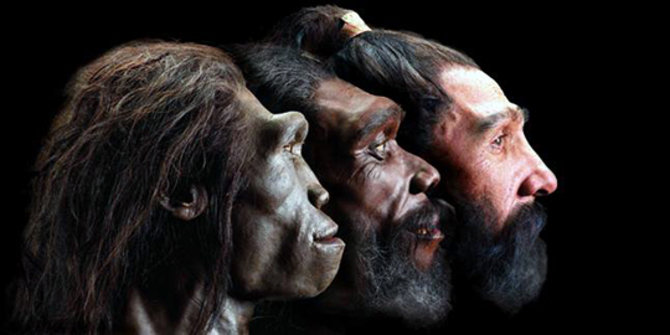
Which hominid species is most closely related to Homo sapiens?
Homo habilis
Australopithecus afarensis
Homo neanderthalensis
Homo heidelbergensis

Along with the Australopithecus there is another bipedal hominid called
Armorpithecus
Archipithecus
Ardipithecus
Which hominin is unconfirmed in the human evolutionary tree?
Homo denisovans
Homo habilis
Homo floresiensis
Homo heidelbergensis
Homo floresiensis was found
140,000-60,000 years ago
3.6 billion - 2 billion years ago
300,000-200,000 years ago
940,000-860,000 years ago
What do humans have that no other animal is thought to have ever had?
Cultural evolution
Environmental evolution
Physical evolution
Emotional evolution

Which hominin lived in groups, created complex tools and developed the largest brain?
Homo Erectus
Homo Habilis
Homo Sapiens


Which human dispersal theory does this map support?
Out of Africa theory
Multiregional theory
Give one feature that H. naledi shares with Australopithecines?
Chest and spine
Foot
Chest and shoulders
Knees and hips
Give a feature that is identical to the Homo spp.
Legs
Skull
Feet
Hips
Why are the fossils difficult to age?
No associated rock available to date
No other samples that they can date
They are in a cave
Too old

Why do many people have DNA from neanderthals and denisovans?
Homo sapiens killed the other species of humans
Homo sapiens domesticated other animals
Homo sapiens evolved large brains
Homo sapiens mated with the other species of humans
Mitochondrial DNA comes from the (a) lineage
What is meant by the term comparative genomics?
The use of statistics and computer technology to analyse gene sequencing data.
The study of a persons genome to produce personalised medicine
Comparing the similarities and differences in genomes between two species e.g. disease and non disease causing organisms
The study of evolutionary relatedness between organisms
Mitochondrial DNA contains a non-coding region called the
hypervariable region
hypo variable region
haplogroup

