
 Worksheets
Business Studies
Total questions: 25
Worksheet time: 25mins
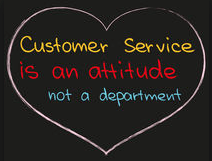
A good _______________ is essential to a business when providing customer service.
speaking voice
attitude
first impression
hair style

How do you handle a difficult customer who comes into the store for help?
Pass off the customer onto other TSI student
Hear customer out, calm customer and resolve situation
Be disrespectful back to the customer
Avoid interacting with the customer
8. What is the main purpose of customer service?
a. To meet needs and expectations.
To deliver standards.
To work as part of a team.
To increase sales
How does solving difficult-customer situations benefit your company?
It will generate repeat business.
The difficult customers won’t bother you again.
You will get a promotion.
All the employees will get promotions.
What is Body Language?
Postures, gestures, and facial expressions.
The exchange of information through the use of words.
Your words say one thing but your body language say another.
Speak from your point of view.
Our facial expressions, tone of voice, movement, appearance, eye contact, gestures, and posture are called _____________________.
verbal communication
nonverbal communication
What is/are the way(s) to avoid a misunderstanding?
send the same verbal and nonverbal message
be specific
ask questions
all of the above

What is this type of communication called?
fingers
hands
sign language
picture
We can say that nonverbal communication is
Communicating using gestures
Using body language to convey information
Getting messages across through facial expressions
All of the above

One element of communication includes:
receiver
smiling face
deaf person
Which of the following is/are the example(s) of a rule for effective communication:
The message must be clear
Sender must deliver the message clearly and concisely
Receiver must be able to hear and receive the message
all the above
Marketing that utilizes Internet and online based technologies is known as ...
Relationship Marketing
Traditional Marketing
Digital Marketing
Cause Marketing
..................... are people who have a big social media following.
Borrowers
Investors
Influencers
Bankers
Product
The cost to the buyer of goods or services
Informing customers about products and persuading them to buy them
Where goods or services are available
Goods or services that are sold
Price
Informing customers about products and persuading them to buy them
The cost to the buyer of goods or services
Where goods or services are available
Goods or services that are sold
Promotion
The cost to the buyer of goods or services
Where goods or services are available
Informing customers about products and persuading them to buy them
Goods or services that are sold
Place
Informing customers about products and persuading them to buy them
The cost to the buyer of goods or services
Goods or services that are sold
Where goods or services are available
Asking survey questions aimed capturing needs, values, attitudes, behaviors and demographics.
ADVERTISING TESTING
BRAND AWARENESS AND REACH
MARKET SEGMENTATION
PRODUCT TESTING

