wayground logo

Free Printable Worksheets

Font size

S
M
L
XL
Worksheets

1.1 Water

Total questions: 20

Worksheet time: 12mins

Name
Class
Date
1.

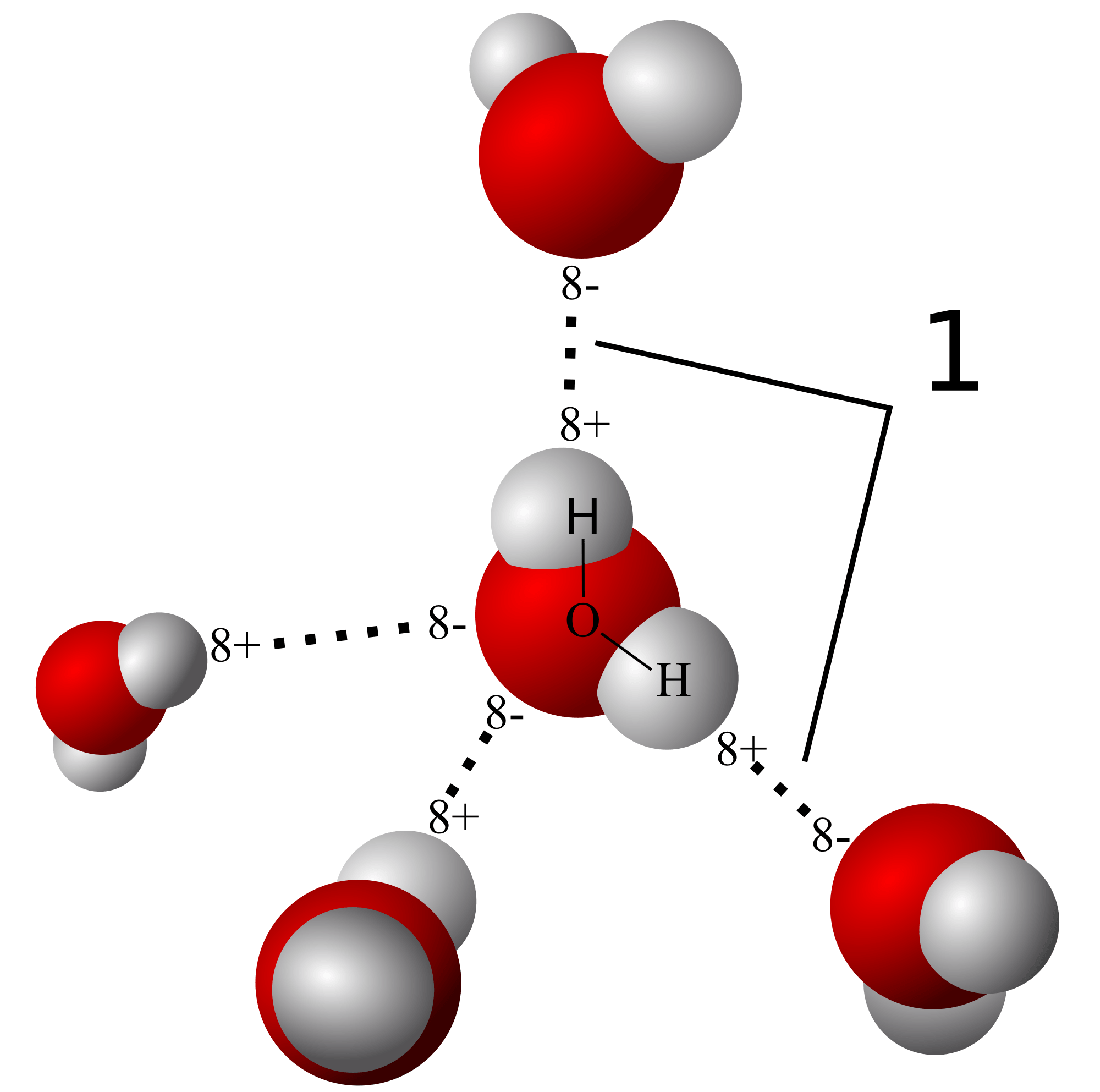
Name the intermolecular bond between water molecules.

a)

Ionic bond

b)

Hydrogen bond

c)

Covalent bond

d)

Peptide bond

2.

Which term describes the way in which water molecules are attracted to other water molecules?

a)

Cohesion

b)

Adhesion

c)

Surface tension

d)

Capillary action

3.

Which term describes the way in which water molecules are attracted to other other molecules?

a)

Cohesion

b)

Adhesion

c)

Surface tension

d)

Capillary action

4.

Which elements make up water?

a)

Two oxygen, two hydrogen

b)

Two oxygen, one hydrogen

c)

One oxygen, one hydrogen

d)

One oxygen, two hydrogen

5.

Water molecules stick together forming a 'film' around a droplet or at the surface of a body of water. Name this phenomenon.

a)

Cohesion

b)

Adhesion

c)

Surface tension

d)

Capillary action

6.

What name is given to a molecule which has a positive and a negative charge in different areas?

a)

Polar

b)

Non-polar

c)

Hydrophobic

d)

Hydrophilic

7.

Which property of water makes aquatic environments thermally stable?

(a)  

8.

Ice floats on water because

a)

adhesion

b)

cohesion

c)

water expands when it freezes

d)

water shrinks when it freezes

9.

Capillary action is....

a)

adhesion

b)

cohesion

c)

change in matter (heat of fusion)

d)

both adhesion and cohesion

10.

What property of water is in this picture?

a)

high specific heat

b)

surface tension

c)

greatest density at 4oC

d)

capillary action

11.

During the winter when lakes freeze over the fish and other animals living in it survive. Which property of water?

a)

high specific heat

b)

capillary action

c)

greatest density at 4 oC

d)

surface tension

12.
Large bodies of water do not quickly fluctuate in temperature. Why?
a)
Water is a solvent.
b)
Water has a high heat capacity.
c)
Water acts as a buffer.
d)
Water is non-polar.
13.
Attractions between water molecules are called
a)
Covalent bonds
b)
Ionic bonds
c)
Polar bonds
d)
Hydrogen bonds
14.
What property of water helps to moderate earth's temperature?
a)
adhesion
b)
chohesion
c)
Specific heat capacity
d)
Latent heat of vaporization
15.
Why does ice float?
a)
As water freezes, it expands and its density decreases.
b)
As water freezes, it takes up more hydrogen from the atmosphere, causing it to have a greater buoyancy.
c)
As water freezes, air becomes trapped between the hydrogen bonds of water molecules.
d)
As water freezes, it takes up more oxygen from the atmosphere, causing it to have a greater buoyancy.
16.
Water is polar because...
a)
The unequal sharing of electrons gives the water molecule a slight negative charge near its oxygen atom and a slight positive charge near its hydrogen atoms.
b)
The molecule has two poles, at which the it is colder than other regions of the molecule.
c)
The unequal sharing of electrons gives the water molecule a slight negative charge near its hydrogen atoms and a slight positive charge near its oxygen atom.
d)
The water molecule is neutral.
17.
Which types of compounds dissolve easily in water?
a)
Polar and Nonpolar
b)
Polar and Ionic
c)
Nonpolar and Ionic
d)
Covalent and Nonpolar
18.

How many hydrogen atoms are in a water molecule?

a)

5

b)

1

c)

2

d)

0

19.

The bond that holds the Oxygen and Hydrogen atoms together in a water molecule is a ________ bond.

a)

ionic

b)

Hydrogen

c)

Covalent

d)

Weak

20.
 Many fish and aquatic plants can survive a cold winter because the layer of ice that forms at the top of the lake insulates the water below and prevents the lake from freezing solid. What unique property of water contributes to this effect? 
a)
Water absorbs heat when it evaporates and forms a gas 
b)
 Water expands and becomes less dense when it freezes.
c)
Water molecules completely separate into ions in solutions.
d)
 Water forms hydrogen bonds with ions and other polar substances.