
 Worksheets
Revision F2 Chapter 1-2
Total questions: 25
Worksheet time: 12mins
What is biodiversity?
Maintaining something at a stable level
All of the living and non-living things in an environment
All of the members of the same species in an area
All of the different types of living things
What is an endemic species?
Species that can be found anywhere
Animals that became endangered
Organisms that can only be found in restricted habitat
Plants that can undergo photosynthesis

The diagram shows the classification of animals. What is represented by X?
Leech
Planaria
Milipede
Starfish
Choose the ways to preserve and conserve the diversity and stability of biodiversity in our country.
Do an illegal logging
Recycle used materials so that natural resources can be used sparingly
Increase the enforcement of laws
Do an open burning
Which of the following is NOT a characteristic of plant that has monocotyledon seed?
Has parallel vein leaves
Has tap root
Has woody stem
Non-flowering plant
Tick the correct statements about non-flowering plants
Conifers reproduce by producing spores
Mosses reproduce by producing spores
Ferns have vascular system
Mosses have vascular system
Tick the correct statements about non-flowering plants
Conifers reproduce by producing spores
Mosses reproduce by producing spores
Ferns have vascular system
Mosses have vascular system
Tick the characteristic of dicotyledon plant
Have network-like veins
Non-woody stem
Woody stem
Fibrous root
The characteristics of Fish are:
Body covered with slimy hard scales
Breathe through gills
Internal fertilisation
Lay eggs

The diagram shows the relationship between organisms J, K and L in a habitat. What can J, K and L represent?
J - producer. K - consumer. L - consumer
J - consumer. K - producer. L - decomposer
J - decomposer. K - consumer. L - producer
J - decomposer. K - producer. L - consumer

What is the type of interaction above
Prey-predator
Mutualism
Comensalism
Parasitism
A ______________ is a group of organisms of the same species that live in the same habitat.
ecosystem
community
niche
population
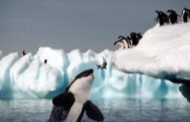
An organism that eats other organisms.
host
parasite
consumer
decomposer
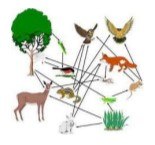
An arrangement of interrelated food chains illustrating the flow of energy between interdependent organisms.
predator
food web
ecosystem
food chain

The diagram shows two gases P and Q in a gas cycle. Which of the following are gases P and Q?
P: Oxygen ; Q: Carbon dioxide
P: Carbon dioxide; Q: Oxygen
P: Nitrogen; Q: Carbon dioxide
P: Nitrogen; Q: Oxygen

A relationship between two organisms of different species that live together.
symbiosis
competition
biological control
prey-predator
The main source of energy for producers.
The sun
Water
Glucose
Carbon dioxide
Interacting group of living and nonliving things in an area
community
ecosystem
population
spesies
___________ breaks down dead animals and plants into simpler materials or nutrients.
Consumer
Producer
Scavenger
Decomposer


Lion and Zebra - The lion hunts and kills the zebra for its food. This is an example of?
prey-predator
mutualism
commensalism
parasitism
A food _______ consists of many food ________.
web, chains
chain, webs
pyramid, webs
web, pyramids
Select the reasons of energy loss in the food chain. (more than one answer)
Respiration carried out
Movement of the organism
Other organism took it
The consumer do not eat the whole organism (its food)

Name the type of this symbiosis?
Mutualism
Commensalism
Parasitism
Interspecies

