
 Worksheets
Ecology: Population, Community & Ecosystem
Total questions: 32
Worksheet time: 16mins
Name
Class
Date
1.

The diagram below shows the cycling of nutrients in an ecosystem.
The removal of which of the following groups would cause an immediate decrease in the amount of energy flowing through the system?
The removal of which of the following groups would cause an immediate decrease in the amount of energy flowing through the system?
a)
Producers
b)
Consumers
c)
Decomposers
d)
Inorganic nutrients
2.
What is the original source of almost all energy in most ecosystems?
a)
carbohydrates
b)
sunlight
c)
water
d)
carbon
3.

symbiotic relationship in which both organisms benefit
a)
competition
b)
Mutualism
c)
nitrogen fixation
d)
energy pyramid
4.
The energy at each trophic level in the pryamid of energy decreases by a factor of ____.
a)
10
b)
1
c)
100
d)
2
5.

What does a food web represent?
a)
All connections of energy flow throughout all organisms in a habitat.
b)
The specific ways that mutualism is carried out.
c)
A single pathway or energy flow between organisms.
d)
How carnivores get their food.
6.

a relationship between two in which one species, the predator, feeds on the other species, the prey
a)
chemosynthesis
b)
predation
c)
cellular respiration
d)
commensalism
7.

symbiotic relationship in which one organisms benefits and the other organism is not affected
a)
invasive (non-native) species
b)
mutualism
c)
nitrogen fixation
d)
commensalism
8.
Members of a species in a defined area
a)
Ecosystem
b)
community
c)
biodiversity
d)
population
9.
Where an organism lives
a)
habitat
b)
niche
c)
heterotrogh
d)
biosphere
10.
Non-living factor that affects an ecosystem
a)
biotic factor
b)
abiotic factor
c)
food chain
d)
biome
11.
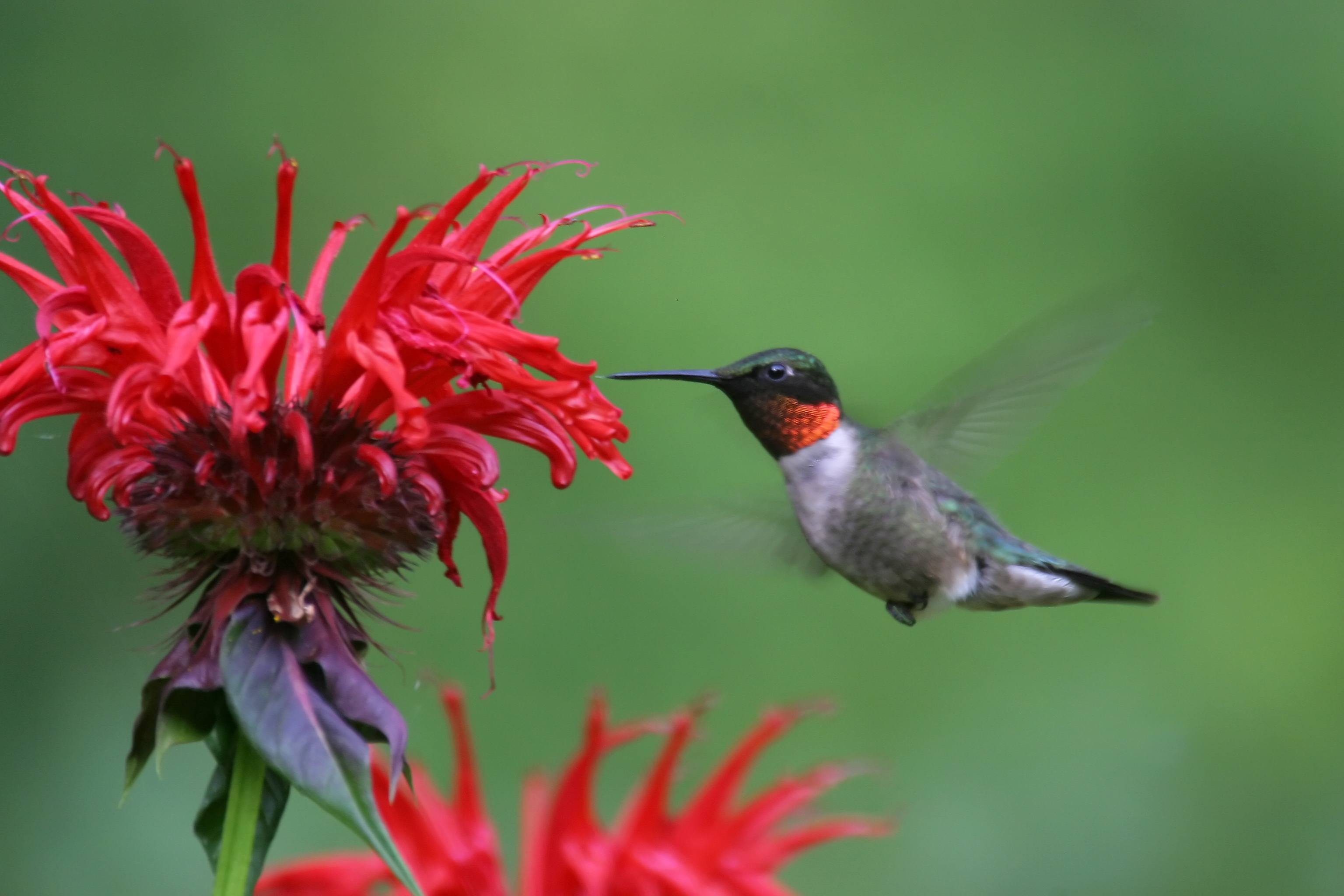
What type of symbiosis? Hummingbirds feed on nectar from flowers. The flowers are pollinated by hummingbirds as they move from flower to flower.
a)
commensalism
b)
mutualism
c)
parasitism
d)
predation
12.
Groups of different populations that live in a given area and interact are called a(n)...
a)
Community
b)
Colony
c)
Population
d)
Ecosystem
13.
Largest number of individuals of a population that the environment can support...
a)
carrying capacity
b)
population crash
c)
lag phase
d)
mutualism
14.
When organisms move out of the population, this is known as
a)
emigration
b)
abandonment
c)
immigration
d)
succession
15.
A population is...
a)
A group of one species in one area
b)
Multiple species that live in one area
c)
All of the living and nonliving things in an area
d)
None of these
16.

What type of growth is represented by this curve?
a)
exponential
b)
logistics
c)
a good kind
d)
representative
17.

What point on the graph represents the carrying capacity?
a)
A
b)
B
c)
C
d)
D
18.
Which of the following are density dependent factors?
a)
competition for resources
b)
predation
c)
disease
d)
natural disasters
19.
Which of the following are examples of a density independent factors?
a)
forest fire
b)
seasonal cycles
c)
storms
d)
disease
20.
Abiotic factors in the environment are all __________.
a)
living
b)
nonliving
21.
Energy in an ecosystem is used for growth or lost as __________
a)
light
b)
heat
c)
death
d)
biomass
22.
A trophic level represents a _________.
a)
consumer
b)
feeding level
c)
speeding level
d)
cooking level
23.
The arrows in a food chain or web represents what?
a)
They point to the organism that is being eaten.
b)
It shows how sunlight flows within an ecosystem.
c)
They show what direction the energy is flowing between organisms.
d)
They represent how water is transferred within a habitat.
24.
Biomass refers to
a)
Chemical Energy
b)
Light Energy
c)
Rank in the feeding heirarchy
d)
Amount of living tissue at the tropic level
25.
Which of the following is the smallest level of organization of organisms?
a)
Community
b)
Ecosystem
c)
Population
d)
Biome
26.
Which of the following describes a population of fish, crabs, and sharks that live in the same area?
a)
Ecosystem
b)
Biome
c)
Biosphere
d)
Community
27.
Which term means the number of different species that live in a particular area?
a)
Ecosystem
b)
Biodiversity
c)
Invasive Species
d)
Food Web
28.
Which of the following is not a threat to biodiversity?
a)
deforestation
b)
introduction of invasive species
c)
farming and agriculture
d)
decomposition
29.
What defines an organism that is not native to the area it lives in and has negative effects in some way?
a)
Invasive Species
b)
Biodiversity
c)
Food Chains
d)
Food Webs
30.
If 20,000 kcal is available to producers, how much is passed on to primary consumers?
a)
20 kcal
b)
200 kcal
c)
2,000 kcal
d)
20,222 kcal
31.
Which of the following is the sum of all living organisms on Earth?
a)
community
b)
biosphere
c)
food web
d)
population
32.
To calculate the local growth rate of orcas in the North Pacific you would need which of the following pieces of data?
a)
immigration rate
b)
birth rate
c)
average number of babies born to every female
d)
death rate
e)
emigration rate
100 %

