
 Worksheets
4.3 Specific Latent Heat
Total questions: 15
Worksheet time: 8mins
Latent heat is
the heat absorbed or released at a boiling process during a change of phase
the heat absorbed or released at a constant temperature during a change of phase
the heat absorbed or released at a constant temperature during a change of phase of 1 kg object
the heat absorbed or released by an object to increase or decrease its temperature by 1 degree Celcius
The heat absorbed by melting a solid is known as
latent heat of fusion
latent heat of solid
latent heat of liquid
latent heat of vaporisation
the symbol for specific latent heat is
c
l
Q
m
What is the formula to calculate specific latent heat of vaporisation?
l=mQ
c = Q/(mΔƟ)
Q = mcΔƟ
Q=ml

The graph shows the cooling curve of a substance. At which stages the specific latent heat released?
AB and CD
BC and DE
AB and EF
BC and CD

How much energy is required to freeze 150 g of water?
[lv=2260000 J kg−1; lf=334000 J kg−1]
50 100 cal
339 000 J
339 000 cal
50 100 J
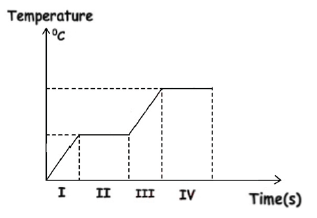
Consider the following temperature-time graph when a solid is heated. which part of the graph involves latent heat of vaporization?
Part I
Part II
Part III
Part IV
Latent heat is released without temperature change during
melting and boiling
condensation and freezing
melting and condensation
boiling and freezing
Specific latent heat of a substance is
the quantity of heat that is absorbed or released during a change of phase of 1 kg of the substance without any change in temperature
the quantity of heat that is absorbed or released during a change of phase of 1 kg of the substance with any change in temperature
S.I unit for specific latent heat is
J kg-1
J kg-1 oC-1
Latent heat absorbed during melting and boiling does not increase the average kinetic energy of the molecules
True
False

During state DE, latent heat is absorbed
to break the bond between molecules
to increase kinetic energy
to increase the temperature
During the changing phase from liquid to solid,
latent heat is absorbed to weaken the bond between molecules
latent heat is released so that bond between molecules is strengthened
latent heat is absorbed to break the bond between molecules
Which shows the example of latent heat of fusion?
Ice melts
Water boils
Water vapour condenses
Which statement is not happened when gas cools to boiling point (cooling curve)?
Heat is released
Temperature decreases
Kinetic energy increases

