Wayground logo

Free Printable Worksheets

Font size

S
M
L
XL
Worksheets

Biodiversity

Total questions: 83

Worksheet time: 47mins

Name
Class
Date
1.
How do Amphibians breath?
a)
Gills
b)
Blow Hole
c)
Gills and Lungs
d)
Lungs
2.
Do fish lay eggs or give birth?
a)
Give Birth
b)
Lay Eggs
3.
What is a vertabrate?
a)
An animal that has a spinal cord or backbone
b)
An animal that has lungs
c)
A human that can play Soccer
d)
An animal that has bones
4.
What is a invertabrate?
a)
An animal lacking a backbone
b)
An animal that has a spinal cord
c)
A person that has a jaw
d)
An animal or person that has lungs
5.
Body covering of a mammal?
a)
Fur
b)
Scales
c)
Fur and skin
d)
Skin and Scales
6.
Where does the energy from an ecosystem come from?
a)
Trees
b)
Sun
c)
Plants
d)
Water
7.
Body covering of a mammal?
a)
Fur
b)
Scales
c)
Fur and skin
d)
Skin and Scales
8.
What is a invertabrate?
a)
An animal lacking a backbone
b)
An animal that has a spinal cord
c)
A person that has a jaw
d)
An animal or person that has lungs
9.
What is a vertabrate?
a)
An animal that has a spinal cord or backbone
b)
An animal that has lungs
c)
A human that can play Soccer
d)
An animal that has bones
10.
What does cold blooded mean?
a)
They are always cold blooded
b)
They switch there blood temperature in different seasons
c)
Is warm blooded
d)
Has no blood
11.
How many types of vertabrates are there?
a)
1738 
b)
6
c)
21
d)
5
12.
Which of these animals have a back bone or spinal cord?
a)
Scorpions
b)
Snakes
c)
Jelly Fish
d)
Krill
13.
Which of these animals don't have a back bone or spinal cord?
a)
Platypus 
b)
Fish
c)
Sea Cucumbers
d)
snake
14.
Which of the following describes the importance of biodiversity to an ecosystem?
a)
a. People like to be able to see all the different plants and animals
b)
b. If there aren�t all the different species, there will be resources that aren�t being used
c)
c. Biodiversity is not as important as many people think
d)
d. Biodiversity can help minimize the effects of losing a species.
15.
A plant nursery only grew one type of tomato. All of their tomatoes died from the same disease. What was most likely true of the tomato plant population?
a)
a. It had too little biodiversity
b)
b. It had a lot of resistance to disease
c)
c. It had a few plants that were resistant to disease
d)
d. It had too much genetic variation
16.
What is the main suspected environmental problem associated with the burning of fossil fuels?
a)
a. Depletion of fresh water
b)
b. Depletion of ozone
c)
c. Global cooling
d)
d. Global warming
17.

Biodiversity, aka biological diversity, usually refers to

a)

the same species in a general location

b)

the number of different species in a given area

c)

the number of animal species in a given area

d)

the number of plant species in a given area

18.

Biodiversity is best described as...

a)

the amount of different species of organisms (plants and animals) living in the same area.

b)

when only a few species inhabit an area.

c)

when only one organism (plants and animals) is found living in one area.

19.

Why is "A" less biodiverse than "B"?

a)

Image "A" is more biodiverse.

b)

Image "A" has many corn plants and this makes it have high "rich" biodiversity.

c)

Image "A" has a lot more plants than image "B"

d)

Even though "A" has a lot of corn plants they are all the same species and makes this a low "poor" biodiverse area.

20.
High biodiversity is 
a)
having a lot of the same organism.
b)
having a few of the same organism.
c)
having a lot of variety of different organisms.
d)
only having one of each organism. 
21.

A species that is likely to become extinct if protective measures are not taken immediately is known as

a)

threatened species

b)

endemic species

c)

keystone species

d)

endangered species

22.
All living and nonliving things that surround an animal are part of its
a)
food chain
b)
life cycle
c)
atmosphere
d)
habitat
23.

Biodiversity is valuable to humans in that

a)

people buy and sell living things in the pet trade and for esthetic reasons.

b)

living things depend on people for food, clothing, energy, medicine, and shelter.

c)

people depend on other living things for food, clothing, energy, medicine, and shelter.

d)

we have been taught at the earliest age that diversity is a good word so we use it in all endeavours.
24.
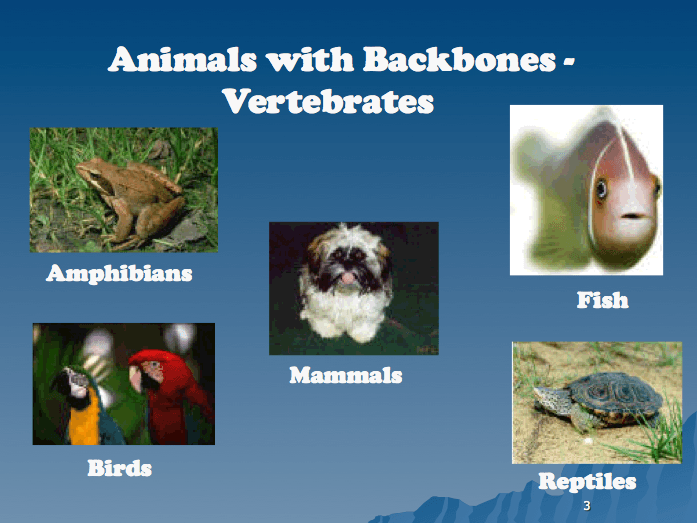
The main groups of vertebrates are
a)
mammals, birds, reptiles, amphibians and fish.
b)
Mammals, marsupials, monotremes and birds
c)
mammals, birds, reptiles and amphibians
d)
mammals, reptiles and amphibians
25.
Which vertebrate groups are warm blooded (have a constant body temperature)
a)
only mammals and birds
b)
mammals, birds and reptiles
c)
only mammals
d)
all vertebrates are warm blooded
26.
Which group of vertebrates is found only in water?
a)
Fish
b)
Crustaceans
c)
Amphibians
d)
Fish and amphibians
27.
Which vertebrate groups lay eggs
a)
Birds and fish only
b)
Birds and amphibians only
c)
Birds only
d)
Birds, reptiles, amphibians and fish.
28.
Which group of vertebrates feeds its young milk (with mammary glands)
a)
mammals
b)
both mammals and birds
c)
reptiles
d)
amphibians
29.
Which vertebrate groups have skin with scales?
a)
Only fish
b)
Only reptiles
c)
Both fish and reptiles
d)
Fish, reptiles and amphibians
30.
Another name for a backbone
a)
invertebrae
b)
humerus
c)
femur
d)
vertebrae
31.
Another name for a backbone
a)
invertebrae
b)
humerus
c)
femur
d)
vertebrae
32.
A tortoise belongs to the following group of vertebrates
a)
Reptiles
b)
Amphibians
c)
Fish
d)
None of these groups because it has a hard exoskeleton
33.
Sharks belong to which group of vertebrates?
a)
Mammals
b)
Fish
c)
Amphibians
d)
Invertebrates
34.
Dolphins belong to which group of vertebrates?
a)
Mammals
b)
Fish
c)
Amphibians
d)
Reptiles
35.
Dolphins belong to which group of vertebrates?
a)
Mammals
b)
Fish
c)
Amphibians
d)
Reptiles
36.
An emu belongs to which vertebrate group
a)
Reptiles
b)
Birds
c)
Mammals
d)
Amphibians
37.
Which of the following groups of vertebrates is warm-blooded?
a)
Birds
b)
Fish
c)
Amphibians
d)
Reptiles
38.
Which of the following groups of vertebrates usually breathe through gills at birth and later develop lungs?
a)
Mammals
b)
Fish
c)
Birds
d)
Amphibians
39.
Which of the following groups of vertebrates is covered with fur or hair?
a)
Mammals
b)
Fish
c)
Birds
d)
Amphibians
40.
True or False: Mammals are cold-blooded.
a)
True
b)
False
41.
True or False: Reptiles have wet skin. 
a)
True
b)
False
42.
There are five categories of vertebrates.  Which one is not a vertebrate?
a)
Mammals
b)
Birds
c)
Arthropods
d)
Reptiles
43.
My body is moist and smooth, I lay eggs, and live in or near the water.  What am I?
a)
Amphibian
b)
Reptile
c)
Bird
d)
Fish
44.
My body is warm, I have fur, feed my young on milk, and have live births.  What am I?
a)
Reptile
b)
Bird
c)
Mammal
d)
Fish
45.
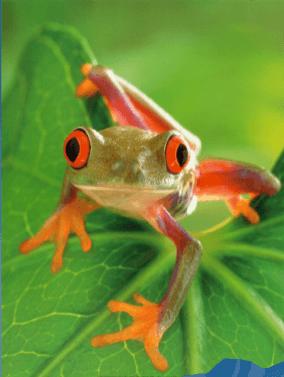
What am I?
a)
Fish
b)
Reptile
c)
Amphibian
d)
Mammal
46.

All of these animals are grouped together. What characteristics do the animals MOST likely have in common?

a)

eye color

b)

what they eat

c)

hair

d)

feathers

47.
My body is warm and covered in feathers.  I lay eggs which hatch into chickens.  What am I?
a)
Reptile
b)
Amphibian
c)
Mammal
d)
Bird
48.
I am covered in dry scales and I lay eggs.  What am I?
a)
Mammal
b)
Fish
c)
Amphibian
d)
Reptile
49.

What is a flowering plant?

a)

A plant that produces spores

b)

A plant that produces cones

c)

A plant the produces flowers and fruits.

50.

A cone is part of:

a)

A flowering plant

b)

A non-flowering plant

51.

An apple has:

a)

Seeds

b)

Spores

52.

The ferns reproduce by:

a)

Spores

b)

Seeds

53.

This is an example of:

a)

Ferns

b)

Mosses

54.

Put a checkmark to the correct option. A useful plants is

a)

A plant that can cause a damage to our body.

b)

A plant that can be used to create medicines.

c)

A plant that can we use to eat.

d)

A plant that can make us sick.

55.

How many groups can plants be divided into?

a)

4

b)

2

c)

3

d)

7

56.

Plants can be Flowering and ___________

a)

conifers

b)

pitcher plants

c)

non-flowering

d)

water lilies

57.

Almost all of our __________ comes from flowering plants, or animals that eat flowering plants.

a)

energy

b)

food

c)

liquids

58.

Examples of plants that make cones are____________. (click all that apply)

a)

pine trees

b)

conifers

c)

pear trees

d)

apple trees

59.

Leaf Venation of dicotyledone

a)
b)
60.

Roots of Monocotyledons

a)
b)
61.

Number of seed leaf of dicotyledon

a)
b)
62.

Tomato and pea are the example of

a)

Dicots

b)

Monocots

63.

Parellel-vein leaves is the characteristic of ........

a)

Monocots

b)

Dicots

64.

Identify this type of root

a)

Tap root

b)

Fibrous root

65.

Identify this type of root

a)

tap root

b)

fibrous root

66.

Based on the diagram, indicate the importance of biodiversity to human

a)

Source of food

b)

Balance in nature

c)

Raw materials for industries

d)

Education

e)

Recreational places

67.

Based on the diagram, indicate the importance of biodiversity to human

a)

Source of food

b)

Balance in nature

c)

Raw materials for industries

d)

Education

e)

Recreational places

68.

Based on the diagram, indicate the importance of biodiversity to human

a)

Medical

b)

Balance in nature

c)

Raw materials for industries

d)

Recreational places

69.

Based on the diagram, indicate the importance of biodiversity to human

a)

Source of food

b)

Balance in nature

c)

Raw materials for industries

d)

Education

e)

Recreational places

70.

Activities that can destroy the biodiversity of the rainforest

a)

Deforestation

b)

Breeding program

c)

Forest reserve

d)

Illegal logging

71.

Characteristics of Monocotyledons plants

a)

Single cotyledons seed

b)

Tap root

c)

Have non-woody stem

d)

Parallel veins leaves

72.

Invertebrate that has hard-outer shells and three pairs of legs

a)

Grasshopper

b)

Spider

c)

Fly

d)

Cockroach

73.

Characters for fish that are not shared with other vertebrate classes

a)

Have fins and a tail

b)

Breathe through gills

c)

Poikilothermic

d)

Undergo external fertilisation

74.

Characters for amphibians that are not shared with other vertebrate classes

a)

Covered with moist skin

b)

live on land and in water

c)

Poikilothermic

d)

Undergo external fertilisation

75.

Tick for examples of monocotyledon plants

a)

Paddy plants

b)

Grass

c)

Palm tree

d)

Banana tree

e)

Hibiscus

76.

Tick for Dicotyledon plants

a)

Durian tree

b)

Hibiscus

c)

Mango tree

d)

Grass

e)

Pandan plants

77.
a)

Mosses

b)

Conifer

c)

Fern

78.
a)

Mosses

b)

Conifer

c)

Fern

79.
a)

Mosses

b)

Conifer

c)

Fern

80.

What is the name of this animal?

a)

Elephant

b)

Giraffe

c)

Cheetah

d)

Impala

81.

Changing color is an ______________________ that helps an octopus hide from sharks.

a)

challenging

b)

survive

c)

adaptation

d)

group

82.

Why is a long tongue an adaptation?

a)

It helps the animal hide.

b)

It helps the animal stay cool.

c)

It helps the animal reach leaves.

d)

It helps the animal run and jump.

83.

Why is having big ears an adaptation?

a)

It helps the animal hide.

b)

It helps the animal stay cool.

c)

It helps the animal reach leaves.

d)

It helps the animal run and jump.