wayground logo

Free Printable Worksheets

NEW

Font size

S
M
L
XL
Worksheets

Energy and Weathering Review

Total questions: 78

Worksheet time: 4hrs 30mins

Name
Class
Date
1.
Wind energy 
a)
is less expensive than fossil fuels
b)
is difficult to utilize in areas with low wind availability
c)
is a renewable source of energy
d)
utilizes small or large areas of land not previously used
2.
Stored energy in water behind a dam falls and changes into mechanical energy that turns a turbine that turns coils in a generator that produces electrical energy.  What is this?
a)
Fossil Fuel Power Plant
b)
Nonrenewable Power Plant
c)
Nuclear Power Plant 
d)
Hydroelectric Power Plant
3.
Hydropower 
a)
produces no air pollution
b)
can be built in any location
c)
has no construction costs
d)
uses a nonrenewable resource
4.
Which is an advantage of installing solar panels?
a)
Reduced amount of air polllution
b)
High cost to install
c)
Number of cloudy days
d)
Use of nonrenewable resources
5.
Oil, Natural Gas, Nuclear, Coal - What do these items have in common?
a)
They are examples of inexhaustible energy resources.
b)
They are examples of renewable energy resources.
c)
They are examples of energy resources that do not cause pollution.
d)
They are examples of nonrenewable energy resources.
6.
Which of the following energy resources is nonrenewable?
a)
Biomass
b)
Geothermal
c)
Fossil Fuel
d)
Hydropower
7.
Why is the Sun considered the ultimate energy source?
a)
The Sun is the center of our solar system.
b)
The Sun provides energy for the water cycle and plants.
c)
The Sun is limited in the amount of energy released daily.
d)
The Sun rises and sets each day as seen from Earth.
8.
Which energy resource, once depleted, is essentially nonrenewable?
a)
Coal
b)
Solar
c)
Biomass
d)
Wind
9.
Coal, oil, and natural gas are _____ resources created from the remains of early plants and animals.
a)
natural
b)
small
c)
large
d)
waste
10.
What type of fossil fuel is mined from the ground?
a)
wind
b)
coal
c)
biomass
d)
air
11.
Fossil fuels are classified as nonrenewable because they.......
a)
require expensive equipment
b)
take millions of years to replace
c)
can be found all over 
d)
provide all the energy we use
12.
 Energy from the sun is known as......... 
a)
hydroelectric energy
b)
geothermal energy
c)
solar energy
d)
wind energy
13.
The careful use of a resource is....
a)
recycling
b)
pollution
c)
depositing
d)
conservation
14.
Hydroelectric power produces electricity using.....
a)
Wind
b)
Sunlight
c)
Moving water
d)
Dung
15.
Coal is a fossil fuel that is formed from...
a)
Water eroding the land
b)
Meteors hitting Earth.
c)
Repeated volcanic eruptions.
d)
The decay of dead plants and animals
16.
Fossil Fuels are formed...
a)
From the remains of organisms
b)
By high winds and temperatures
c)
In shallow areas over short period of time.
d)
In shallow areas over short periods of time.
17.
What characteristic do all renewable resources share?
a)
Produced by waste products
b)
Form underground from dead organisms.
c)
Replaced in a short period of time
d)
Allow energy to pass through them easily
18.
Petroleum and natural gas form from...
a)
strong winds
b)
cooled magma
c)
radioactive materials
d)
remains of plants and animals 
19.
Water is renewable because it.......
a)
can be frozen
b)
important to all life
c)
can be replaced constantly
d)
can evaporate
20.
Fossil fuels are classified as nonrenewable because they.......
a)
require expensive equipment
b)
take millions of years to replace
c)
can be found all over 
d)
provide all the energy we use
21.
What are two advantages of geothermal energy?
a)
cheap and a lot pollution
b)
expensive and a lot of pollution
c)
cheap and little pollution
d)
expensive and little pollution
22.
What is a disadvantage to Hydroelectricity?
a)
lots and lots of pollution
b)
Kills wild bird population
c)
Radioactive waste
d)
Increases potential for flooding 
23.
__________ is an energy resource that WILL run out in the next several hundred years.
a)
Renewable Energy Resource
b)
Nonrenewable Energy Resource
c)
Fossil Fuels
d)
Forever Fuels
24.
__________ is an energy resource that WILL NOT run out in the next several hundred years.
a)
Renewable Energy Resource
b)
Nonrenewable Energy Resource
c)
Fossil Fuel
d)
Forever Fuel
25.
Coal is a __________ energy resource.
a)
Renewable
b)
Nonrenewable
26.
Solar Power is a __________ energy resource.
a)
Renewable
b)
Nonrenewable
27.
Natural Gas is a __________ energy resource.
a)
Renewable
b)
Nonrenewable
28.
Oil is a __________ energy resource.
a)
Renewable
b)
Nonrenewable
29.
Geothermal Power is a __________ energy resource.
a)
Renewable
b)
Nonrenewable
30.
Wind is a __________ energy resource.
a)
Renewable
b)
Nonrenewable
31.
Some power plants pump water down deep holes into hot rock. The hot rock heats the water, which turns the water into steam. The steam rushes back to Earth’s surface and is used to make electricity. This plant is generating which alternative energy resource?
a)
biomass
b)
wind
c)
solar energy
d)
geothermal energy
32.
Biomass
a)
Renewable
b)
Nonrenewable
33.
Nuclear
a)
Renewable
b)
Nonrenewable
34.
What characteristic do all renewable resources share?
a)
Produced by waste products
b)
Form underground from dead organisms.
c)
Replaced in a short period of time
d)
Allow energy to pass through them easily
35.
What are the 3 main fossil fuels?
a)
Coal, Oil, and Gasoline
b)
Coal, Oil, and Natural Gas
c)
Electricity, Gasoline, Petroleum
d)
Coal, Oil, Non-renewable Resources
36.
Why is burning fossil fuels harmful? 
a)
then we won't have any fossil fuels if we burn them all
b)
They can get extremely hot
c)
Increases the amount of greenhouse gases in the air
d)
this would destroy fossils
37.

What happens to fossil fuels to create electricity?

a)

They are stored

b)

They are burned

c)

They are melted

d)

They are frozen

38.

What does "clean" mean for energy sources?

a)

not dirty

b)

does not create pollution

c)

creates pollution

d)

smells good

39.

Why is solar energy considered renewable energy?

a)

It's cheaper than fossil fuels

b)

The sun's energy would not run out for billions of years

c)

Solar energy recharges batteries

d)

All of them

40.

Which renewable resource uses the natural resource in the picture below to produce energy?

a)

wind

b)

tidal

c)

biomass

d)

geothermal

41.

What are the advantages of Geothermal energy?

a)

Is a nonrenewable resource

b)

Can only be used in specific places in the world

c)

It comes from the Earth

d)

Takes months to build the machines to extract energy

42.

Which of the following is a disadvantage of fossil fuels?

a)

Not easily available

b)

causes pollution when burned

c)

only available at certain times

d)

creates long lasting waste

43.
Geothermal energy is energy from 
a)
the sun
b)
heat from deep in the earth
c)
wind
d)
inexhaustable
44.
Alternative energy is
a)
Generated by natural resources and is renewable
b)
man made
c)
nonrenewable
d)
gross
45.
Energy made from moving water or falling water is
a)
geothermal energy
b)
solar energy
c)
electrical energy
d)
hydroelectrical energy
46.
A hydroelectric power plant generates electricity by using the energy of which of the following?
a)
Blowing wind
b)
Organic material
c)
Moving water
d)
Earth’s core
47.
Which of the following sources of energy is classified as an alternative energy source?
a)
Mined coal
b)
Geothermal heat
c)
Crude oil
d)
Natural gas
48.
Which of the methods of generating electricity does NOT use alternative energy resources? 
a)
Burning coal in a power plant
b)
Turbines spinning in dam
c)
Solar panels taking in light energy 
d)
Drilling wells to reach hot rocks deep inside the earth 
49.
All of the following are considered alternative energy sources EXCEPT –
a)
Wind
b)
Petroleum
c)
Biofuel
d)
Solar
50.
Corn, wheat, and soybeans can be made into a substance called ethanol. In some places, ethanol is part of a mixture used to power cars and trucks. What type of alternative energy resource is ethanol?
a)
Hydroelectric
b)
Geothermal
c)
Biofuel
d)
Solar
51.
Bobby observed that a metal trash can was covered with rust.  What type of weathering caused the rust on the trash can?
a)
Mechanical weathering 
b)
Wind weathering
c)
Chemical weathering
d)
Erosion weathering
52.
What is likely to cause cracks on the sidewalk?
a)
Repeated freezing and thawing of water
b)
Tree roots or plant roots growing bigger
c)
Both and A and B
d)
Neither A or B 
53.
Which type of climate would cause the greatest rate of weathering?
a)
Cold and dry
b)
Cold and humid (wet)
c)
Warm and humid (wet)
d)
Warm and dry
54.
What is the weathering process in which rocks are broken down into smaller pieces (sediments) and do not change the rock composition?
a)
Acid weathering 
b)
Gravity weathering
c)
Chemical weathering
d)
Mechanical weathering
55.
Which of the following is the most important agent of chemical weathering to form this cave?
a)
Water - It can carry acid and dissolve rock
b)
Erosion - Moves the rocks from one place to another
c)
Wind - It displaces rocks
d)
Exfoliation - New cracks give chemical reactions the chance to operate
56.

Which of the following is an example of mechanical weathering?

a)

Rust forming on a rock cliff

b)

Acid rain causing blurred inscriptions on a ancient tomb

c)

Rounded pebbles in a stream bed

d)

A sudden rainstorm on a hot day

57.

Which of the following is an example of chemical weathering?

a)

Rust forming on a rock cliff

b)

Frost action breaking a rocky ledge apart

c)

A flat, rounded piece of rock breaking off a rock's surface

d)

Rocks falling from high places

58.

How do chemical and mechanical weathering processes differ?

a)

Chemical weathering breaks rocks into smaller pieces but mechanical weathering doesn't

b)

Chemical weathering affects only igneous rocks but mechanical weathering affects all types of rocks

c)

Chemical weathering involves water but mechanical weathering does not

d)

Chemical weathering changes the composition of the rock but mechanical weathering does not

59.

Mechanical weathering can occur from ALL the following EXCEPT

a)

Burrowing by animals

b)

Ice expands when frozen and cracks rocks

c)

Trees roots expand as they grow and crack rocks

d)

Carbonic acid eats away layers of limestone rock

60.

Chemical weathering can occur from ALL of the following EXCEPT

a)

Acids given off by lichens and mosses eat away at rocks

b)

Sulfuric acid causes blurred words on gravestones and monuments

c)

Wind blows sand which wears away cliffs

d)

Rust caused by oxygen combining with iron-bearing minerals in rocks causes red bands on limestone cliffs

61.

Which of the following does NOT affect the rate at which a rock weathers?

a)

What the rock is made of

b)

The climate where the rock is found

c)

The amount of exposed surface area on the rock

d)

The length of time since the rock was formed

62.
Acid rain causes
a)
physical weathering.
b)
chemical weathering.
c)
both chemical and physical weathering.
d)
neither chemical or physical weathering.
63.
Any time a reaction occurs
a)
physical weathering results.
b)
chemical weathering results.
c)
neither chemical or physical weathering results.
d)
both chemical or physical weathering occurs.
64.
What is most likely to make a rock break into pieces?
a)
Animals digging in the rock.
b)
Leaves decaying on the rock.
c)
Snow melting in a crack in the rock.
d)
Water freezing in a crack in the rock.
65.
Carbon dioxide (CO2) combines with water as raindrops fall through the atmosphere. This makes a weak acid, called carbonic acid. Carbonic acid is a very common in nature, where it works to dissolve rock. Pollutants, such as sulfur and nitrogen from fossil fuel burning, create sulfuric and nitric acid. Sulfuric and nitric acids are the two main components of acid rain, which speeds up chemical weathering.
This statue was probably destroyed by _____.
a)
Wind
b)
Humans
c)
Acid Rain
d)
Animals
66.
Oxidation is a chemical reaction that takes place when oxygen reacts with another element. Oxygen is very strongly chemically reactive. The most familiar type of oxidation is when iron reacts with oxygen to create rust.
Which chemical creates rust?
a)
Oxygen
b)
Carbon Dioxide
c)
Nitrogen
d)
Neon
67.
The statue of liberty is made of copper. It was originally brown but has since turned green. This is probably due to _______.
a)
Oxygen
b)
Acid Rain
c)
Carbon Dioxide
d)
Humans
68.
How does freezing water cause the weathering of rocks?  The freezing water—
a)
keeps the rocks in place
b)
makes the rocks last longer
c)
expands cracks and breaks rocks
d)
causes rocks to fall in landslides
69.
The process that breaks down rocks and other materials on Earth's surface is called
a)
weathering
b)
erosion
c)
soil conservation
d)
decomposition
70.
How does wind abrasion work?
a)
Sediment is blown off a surface from wind.
b)
Wind-blown sediment strikes a surface.
c)
Wind blows large chunks of rock off a surface.
d)
Sediment falls off of a surface on its own.
71.
What is mechanical weathering?
a)
Process through which rocks are physically broken into smaller pieces.
b)
Rocks are broken down through chemical changes.
c)
Rocks are worn away from acid in plant roots.
d)
Rocks broken down by machinery.
72.
Which of the following is an example of mechanical weathering?
a)
Acidic groundwater dissolving limestone
b)
frost wedging
c)
Paper being burned
73.
What are the two factors that affect the rate at which weathering occurs?
a)
climate and mass of rock
b)
climate and size of rock
c)
type of rock and size of rock
d)
type of rock and climate
74.
Acid rain is most likely to cause...
a)
deposition
b)
glaciers to move
c)
chemical weathering
d)
mechanical weathering
75.
How do plants weather rocks?
a)
during photosynthesis
b)
when roots grow into cracks of rocks and expand the rock
c)
when the plant moves water from the roots to the leaves
76.
Mechanical weathering breaks down existing rocks by
a)
Changing them chemically, but not physically.
b)
Changing them physically, but not chemically.
c)
Changing them chemically and physically.
d)
Incorporating them into new rocks.
77.
The process by which water, ice, wind or gravity moves weathered rock and soil from one place to another.
a)
weathering
b)
erosion
c)
deposition
d)
dumptruck
78.
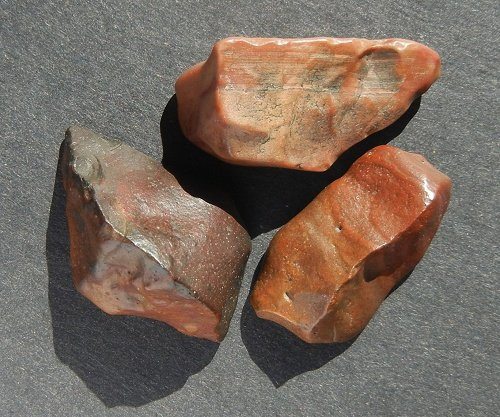
These rocks were made smooth by wind blowing smaller rock particles across their surface.  This is an example of:
a)
ice wedging
b)
chemical weathering
c)
acid rain
d)
abrasion