wayground logo

Free Printable Worksheets

Font size

S
M
L
XL
Worksheets

Review for Unit 1 Test

Total questions: 125

Worksheet time: 2hrs 43mins

Name
Class
Date
1.

Who was elected President in 1860 that led to the secession of 11 southern states?

a)

Abraham Lincoln

b)

Ulysses S. Grant

c)

Jefferson Davis

d)

Robert E. Lee

2.

Which statement BEST explains President Abraham Lincoln's original reason for fighting the Civil War?

a)

President Lincoln wanted to end all slavery everywhere in the US

b)

President Lincoln wanted to preserve the Union

c)

President Lincoln wanted to punish the South for their rebellion

3.
What was the MOST SIGNIFICANT outcome of the 1860 Presidential election?
a)
Abraham Lincoln was elected
b)
Abraham Lincoln lost the election
c)
Slavery was immediately abolished (ended)
d)
The Southern states started to secede( withdraw/leave)
4.
To withdraw from something, such as a nation
a)
states' rights
b)
secede
c)
abolitionist
d)
amendment
5.

When was the Civil War?

a)

1861-176

b)

1861-1865

c)

1870-1876

d)

2015-2019

6.

What's important about Fort Sumter?

a)

This is where Lee surrender and it ended the Civil War.

b)

The Confederates open fired on the fort, which began the Civil War.

c)

Lincoln gave the Gettysburg Address here.

7.

The Emancipation Proclamation truly freed slaves in ALL parts of the United States.

a)

True

b)

False

c)

I don't know

8.

Why is important to know about the Appomattox Courthouse's location for the Civil War?

a)

This is where Lee surrender and it ended the Civil War.

b)

The Confederates open fired on the fort, which began the Civil War.

c)

Lincoln gave the Gettysburg Address here.

9.

Based on the pictograph, predict which side would win the war because it had more resources.

a)

Union (North)

b)

Confederates (South)

c)

Western Territories

10.
Who was this important general?
a)
Ulysses S. Grant
b)
George Washington
c)
Robert E. Lee
d)
Thomas Jefferson
11.
A person fighting against slavery was known as _________.
a)
a plantation owner
b)
a protester
c)
an abolitionist
12.
Who was Harriet Tubman?
a)
A former slave owner who continued to fight for slavery.
b)
An escaped slave who helped other slaves to freedom.
13.
Who won the war?
a)
Confederacy
b)
Union
c)
England
d)
France
14.
The name given to the northern army. 
a)
Confederates
b)
Americans
c)
Military
d)
Union
15.
The name given to the southern army.
a)
Confederates
b)
Union
c)
Americans
d)
Military
16.
The event held at this location encouraged the start of the civil war and rallied both sides to build up their armies.
a)
Bull Run
b)
Yorktown
c)
Fort Sumter
d)
Appomattox 
17.
This was the president of the Confederate States.
a)
Abraham Lincoln
b)
Ulysses S. Grant
c)
Robert E. Lee
d)
Jefferson Davis
18.
This was the main economy of the Confederacy
a)
Agriculture
b)
Industy
c)
Shipping
d)
Trade
19.
This was the main economy of the union
a)
Agriculture
b)
Industry
c)
Shipping
d)
Trade
20.
The Missouri Compromise Line determined the status of slavery in future states.  North of the line slavery was ___________ or banned, South of the line slavery was _________.
a)
permitted, prohibited
b)
prohibited, permitted or allowed
c)
sometimes prohibited, never allowed
d)
cheap, expensive
21.
Which amendment officially ended slavery in the United States?
a)
12th
b)
13th
c)
14th 
d)
15th
22.
Where did most Southerners live by the mid-1850s?
a)
large cities
b)
farms and small towns
c)
plantations
d)
large towns
23.
The 14th Amendment of the United States Constitution...
a)
Gave African Americans citizenship
b)
Gave African Americans the right to vote
c)
Freed the slaves
d)
Gave landowners the right to sharecrop
24.
The 15th Amendment of the United States Constitution...
a)
Gave African Americans the right to own businesses
b)
Freed the Slaves
c)
Gave African American men the right to vote
d)
Forced African Americans back into slavery
25.
What did Congress think about President Andrew Johnson's Reconstruction Plan?
a)
They agreed with his plan.
b)
They helped President Johnson form his plan.
c)
They thought his plan was too easy on the South.
d)
They thought his plan was too hard on the South.
26.
How did the Confederates believe they would end up winning the Civil War?
a)
The Confederates thought the North would run out of money
b)
The Confederates thought the North would get tired and give up. 
c)
The Confederates didn't think they would win.
d)
The Confederates thought Britain would help them.
27.
The Compromise of 1850 allowed certain territories to use___________________________ to determine whether the territory would be free or slave.  This decision applied to much of the land gained from the the U.S. Mexican War.
a)
Three Fifths Compromise
b)
Raiding
c)
Popular sovereignty 
d)
Secession
28.

Popular Sovereignty was the idea that

a)

slavery would be banned in all future states.

b)

the government would decide if slavery would be legal or illegal.

c)

the people would vote to decide if their state would have slavery.

d)

slavery would be allowed in every future state.

29.

What is the purpose for Frederick Douglass's writing his slave narrative?

a)

To share his experience as a slave in hopes to bring changes for the lives of the slaves.

b)

To show off that he is a man.

c)

He just wants to write for pleasure.

d)

None of the above

30.

How was Frederick Douglass different from many other slaves of his time?

a)

Douglass did not support the antislavery movement in the United States.

b)

Douglass was well educated and had published narratives about his life.

c)

Douglass won his freedom after he petitioned the Supreme Court.

d)

Douglass was able to gain the respect of southerners for his abolitionist work.

31.

What was the Underground Railroad?

a)

A train that took people to freedom.

b)

A tunnel where people could buy slaves.

c)

A group of people who helped slaves escape to freedom.

d)

A home where Harriet Tubman grew up.

32.

South Carolina seceded from the Union after -

a)

a major tax increase from the federal government

b)

Lincoln freeing all enslaved African Americans in the South

c)

the election of Abraham Lincoln as President of the USA

d)

Charleston's port being blockaded by the Lincoln

33.
The main reason for the war of 1812 was
a)
westward expansion
b)
French fur trade
c)
British search and seizure of American ships
34.
Who is this?
a)
Thomas Jefferson
b)
John O'Dea
c)
Henry Clay
d)
Andrew Jackson
35.

Select two true statements about Andrew Jackson at the Battle of New Orleans. (select 2)

a)

He became a national hero for his role in the Battle of New Orleans.

b)

He knew the war was over, but fought the Battle of New Orleans anyway.

c)

The Battle of New Orleans helped build his reputation.

d)

He wrote the Star Spangled Banner after the Battle of New Orleans.

36.

British soldiers who attacked Washington D.C. in 1814 burned the ______________________ and _____________________ as well as many other buildings. (select 2)

a)

The Empire State Building

b)

The White House

c)

The Capitol Building

d)

The Washington Monument

37.

Francis Scott Key was inspired to write the "Star Spangled Banner" after seeing the flag after the attack on __________________.

a)

Fort McKey

b)

Fort Jackson

c)

Fort Donelson

d)

Fort McHenry

38.
Manifest Destiny is
a)
The belief that the United States had a God-given right to expand west.
b)
The belief that the United States had the right to hold slaves.
c)
The belief that people had the right to choose their representatives.
d)
The belief that each branch can check each other.
39.
Fill in the blanks:
The U.S.-Mexican War was caused by manifest destiny, ___________, border dispute, and American blood being shed on American soil. The effects of the U.S.-Mexican War were the ____________, spread of slavery, and the Compromise of 1850.
a)
Texas annexation; Treaty of Guadalupe-Hidalgo
b)
geographic factors; presidency of Santa Anna
c)
Nueces River; Alamo
d)
Gadsden Purchase; Mexican Cession
40.

Which country sold the Louisiana Territory in 1803?

a)

Britain

b)

France

c)

Spain

d)

United States

41.

The Louisiana Territory was purchased under the presidential administration of Thomas Jefferson.

a)

True

b)

False

42.

What was one of the goals of Lewis and Clark’s expedition?

a)

to build schools and hospitals

b)

to deliver documents to French officials

c)

to establish trade with Canada

d)

to find and map the northwest passage

43.

The size of the United States was doubled with

a)

the adoption of New Orleans

b)

the expedition of Lewis and Clark

c)

the Louisiana Purchase

d)

Zebolon Pike's Expedition

44.

How was the Lewis and Clark expedition successful?

a)

learned about Western lands

b)

found a river route to the Pacific Ocean

c)

discovered gold

d)

defeated the Spanish

45.
How many acres made up the Louisiana Purchase?
a)
50 Million  (50,000,000)
b)
30 Million (30,000,000)
c)
530 million (530,000,000)
d)
20 Million (20,000,000)
46.
How much money did the US spend on the Louisiana Purchase?
a)
$1,500,000
b)
$150,000
c)
15,000,000,000
d)
$15,000,000
47.
Why was the port of New Orleans so important?
a)
It was the best place to go fishing
b)
It was a party town
c)
It was the Catholic headquaters
d)
It was the main center for trade along the Mississippi river
48.
Which of the following was not a goal of Reconstruction?
a)
Reunite the North and the South
b)
Rebuild the South
c)
Develop the system of sharecropping
d)
Determine what to do with African Americans
49.
Who assassinated President Abraham Lincoln?
a)
Nathan Bedford Forrest
b)
John Wilkes Booth
c)
Henry Clay
d)
John Breckinridge
50.
Northerners who went south after the Civil War to make large profits from the destruction in the south were called
a)
Scalawags
b)
Ku Klux Klan
c)
Carpetbaggers
d)
Sharecroppers
51.
Laws passed by southern states soon after the Compromise of 1877.  These laws legalized segregation whites and blacks to use separate facilities. 
a)
Jim Crow Laws
b)
Black Codes
c)
Freedman's Bureau
d)
Reconstruction
52.
The process of rebuilding the South after the Civil War. 
a)
Reconstruction
b)
Freedman's Bureau
c)
Black Codes
d)
Jim Crow Laws
53.
The organization put in place after the Civil War to provide food, clothing, health care and education in the South was known as:
a)
The Civil Rights Committee
b)
The Freedmen's Bureau
c)
The Welfare Committee
d)
The Salvation Army
54.
All of the following resulted from the end of Reconstruction EXCEPT:
a)
Ku Klux Klan is founded
b)
Jim Crow laws were passed to segregate blacks from whites and place other limits on their rights. 
c)
Sharecropping becomes the dominant economy in the South
d)
Blacks continued to enjoy increased freedoms and equality
55.
Which three Amendments where designed to ensure equality for the slaves?
a)
17th,18th,19th
b)
13th,14th,15th
c)
13th,14th,16th
d)
8th,9th,10th
56.
In 1866, a group formed in the South to fight against the rising influence of African Americans in the South. Members of this group often turned to violence and intimidation, What was the name of this controversial group?
a)
Sons of the Confederacy
b)
Neo-Nazis
c)
Ku Klux Klan
d)
Black Separatists
57.
During Reconstruction, most former Confederate states
a)
were placed under military rule for a time
b)
were readmitted into the Union, but only after promising to end slavery within 10 years
c)
given full representation in Congress without issue
d)
supported the immediate end of slavery throughout the U.S.
58.

Which is the BEST description of the southern economy during Reconstruction?

a)

The southern economy was stabilized because of trade relationships with Great Britain and France.

b)

The southern economy was still based on agriculture and cotton, but now depended on sharecropping rather than slave labor

c)

The southern economy was transformed from being based on agriculture to being completely dependent on industry and manufacturing.

d)

The southern economy was completely restored by 1866 and was actually more productive and profitable than the pre- Civil War economy.

59.
What did Abraham Lincoln believe about the United States?
a)
"to educate a man is to unfit him to be a slave"
b)
"We all thought Richmond, protected as it was by our splendid fortifications and defended by our army of veterans, could not be taken."
c)
"To the best of my judgment I have labored for, and not against the Union."
d)
"A stand must be made for African slavery or it is forever lost."
60.
Which is the best description of Reconstruction?
a)
rebuilding the US after a big earthquake
b)
a period of rebuilding in the US after the Revolutionary War
c)
a period of rebuilding in the US after the Civil War
d)
unfair treatment of African Americans after the Civil War
61.
Southern states created the Black Codes to do what?
a)
limit African Americans rights
b)
expand Confederate rights
c)
give women voting rights
d)
jail Carpetbaggers
62.
Who could hold public office in the south after the Civil War? 
a)
southern women
b)
Confederate Leaders
c)
American Indians
d)
African Americans
63.
Organizations like these worked for which of these goals? 
a)
To encourage southerners to fight against the Union 
b)
to legalize discrimination against African 
Americans
c)
To encourage African American education
d)
to promote Confederate rights
64.
The Presidential Election of 1876 resulted in...
a)
military supervision of the south
b)
the restoration of voting rights for white southerners
c)
the end of Reconstruction in the south
d)
equal rights for African Americans
65.
Jim Crow Laws passed after Reconstruction took away African American Voting Rights using...
a)
Voter Registration Laws
b)
Political Gerrymandering
c)
Voter Identification Laws
d)
Poll Taxes and Literacy Tests
66.
What was segregation?
a)
equal treatment for all people
b)
the forced separation of races
c)
a farmer shares part of his crop to pay for land
d)
the period of time after the Civil War
67.
What were Jim Crow Laws?
a)
equal treatment for all people
b)
laws that made segregation legal
c)
a farmer shares part of his crop to pay for land
d)
the period of time after the Civil War
68.
Laws that required the African-Americans be separated from white in public places are...
a)
Jim Crow Laws
b)
Black Codes
c)
Grandfather Codes
d)
Integration Laws
69.
System of farming where farmers gave part of their crop to pay for the land they rented
a)
Family-Farming
b)
Sharecropping
c)
Groupcropping
d)
Split-Farming
70.
Why did sharecroppers remain poor?
a)
The South flooded during Reconstrucion
b)
They owed money to the landowners, never getting out of debt
c)
The sun never shone on crops
d)
Animals ate all the crops
71.
When settlers began moving out West, what happened to many Native Americans?  
a)
They migrated into Canada and Mexico
b)
They were forced to move back East
c)
They were forced onto reservations
d)
They remained where they were living
72.
President Jackson sent soldiers to remove the ____ to the Indian Territory.
a)
Cherokee
b)
Iroquois
c)
Souix
d)
Red Hawks
73.
Which of the following was the Cherokee’s 800 mile march to the indian territory where ¼ of the Cherokee tribe died on the march to the land?
a)
Second Seminole War
b)
Trail of Tears
c)
Blackhawk
d)
Cherokee resistance
74.
The Indian Removal Act of 1830 forced Indians to move
a)
to Oklahoma
b)
to Florida
c)
to the Louisiana Purchase
d)
to Canada
75.
The shortage of goods during the Gold Rush caused ________ where prices increased a lot.
a)
discrimination
b)
inflation
c)
compromise
d)
deflation
76.
1. What was "gold fever?" 
a)
A. A disease caused by exposure to radioactive gold 
b)
B. A sudden rise in gold prices caused by the discovery of gold in California 
c)
C. A mental illness that caused people to mistake worthless metals for gold 
d)
D. The desire to get rich quick by acquiring California gold
77.
The Californian population increased from 400 to 44,000 from 1848 to 1850, what were these new immigrants called?
a)
Crazy
b)
Texians
c)
49ers
d)
Desperate
78.
What is Popular Sovereignty?
a)
Being popular in the world
b)
People voting and having a say in the governments decisions
c)
People voting
d)
The act of the 20th admendment and it’s rules.
79.
California entered the Union as a free state while southwest territories would decide the slavery issue themselves.
a)
Missouri Compromise
b)
Kansas-Nebraska Act
c)
Compromise of 1850
80.
The term means that people in the state would VOTE to make decisions about being a free state or a slave state.
a)
independent choice
b)
popular sovereignty
c)
popular election
81.

What does secede mean?

a)

withdraw (leave) formally from membership of a federal union, an alliance, or a political organization

b)

to maintain an item, nation, or tradition

c)

two or more groups settle a dispute by agreeing to a portion

of what each group wants.

d)

an agreement that allowed California into the union as a free state, divided the rest of the Mexican cession into two territories, settled land claims between Texas and New Mexico, abolished slave trade in Washington, strengthened the Fugitive Slave Act

82.

What was the Battle of Gettysburg?

a)

The turning point of the Civil War, where the Union army defeated the Confederate Army and stopped their northern invasion

b)

the location of the surrender of Robert E. Lee and the Northern Virginia Confederate Army to Ulysses S. Grant and the Union Army

c)

The bombardment of the Union military base by Confederate soldiers in Charleston, SC that started the Civil War

d)

an escaped slave who became a huge activist, author and public speaker fighting to end slavery

83.

Who was Robert E. Lee?

a)

commander of the Confederate States Army during the American Civil War

b)

commanding general of the Union Army. Later becomes the 18th president of the United States

c)

an escaped slave who became a huge activist, author and public speaker fighting to end slavery

d)

an American politician who served as the president of the Confederate States from 1861 to 1865

84.
Which of the following contributed to the westward expansion of the United States?
a)
European warships attacked the eastern seaboard, forcing citizens to move westward for safety.
b)
Most of the land east of the Mississippi River was not suitable for farming.
c)
Many Americans felt it was their right and duty to move westward.
d)
The standard of living on the Pacific Coast was very high, so many people wanted to move there.
85.
The philosophy of "Manifest Destiny" stated that American should expand from the Atlantic Ocean to the __________
a)
Mississippi River
b)
Pacific Ocean
c)
Rocky Mountains
d)
Great Lakes
86.
The U.S. annexed the this place in 1845, eventually causing the Mexican-American War. Letter C on the map.
a)
Missouri
b)
Republic of Texas
c)
Oregon
d)
California
87.
1848 land acquisition given up by Mexico following the Treaty of Guadalupe Hidalgo.
Letter D on the map.
a)
Spanish Cession
b)
Oregon Territory
c)
California
d)
Mexican Cession
88.
What act allowed the national government to require Native Americans to give up their land?
a)
Indian Removal Act
b)
Civilization Act 
c)
Manifest Destiny Act
d)
Indian Territory Act
89.
Which geographic feature was the boundary line between the United States in 1783 and the Louisiana Territory in 1803?
a)
Appalachian Mountains
b)
Great Lakes
c)
Mississippi River
d)
Rocky Mountains
90.
Historically, US government policy toward American Indians has been most consistently characterized by
a)
efforts to give the responsibility for managing their own affairs
b)
a desire to help them through protective legislation
c)
refusal to grant US citizenship to them
d)
misunderstanding of their cultures and values
91.
What year was territory #3 acquired?
a)
1607
b)
1783
c)
1803
d)
1819
92.
Which area on the map was annexed by the United States?
a)
5
b)
1
c)
6
d)
4
93.
What territory was acquired in 1783 after the American Revolution?
a)
Area 1
b)
Area 4
c)
Area 3
d)
Area 2
94.

What was the name of the war fought between England and France over land in North America?

a)

Civil War

b)

French and Indian War

c)

Revolutionary War

d)

American War

95.

The slogan colonists began to use to protest paying taxes to Great Britain and not having representatives in Parliament.

a)

No more taxes!

b)

We don't like taxes!

c)

These taxes are unfair!

d)

No taxation without representation!

96.

Q. Thomas Jefferson was the main author of what important document in 1776?

a)

U. S. Constitution

b)

Declaration of Independence

c)

Gettysburg Address

d)

Treaty of Paris

97.

What year was the Declaration of Independence created on July 4th?

a)

1774

b)

1876

c)

1776

d)

1874

98.

Which branch is in charge of enforcing the laws?

a)

Legislative

b)

Executive

c)

Judicial

99.

Which branch is in charge of interpreting the laws?

a)

Legislative

b)

Executive

c)

Judicial

100.

Which branch is in charge of making the laws?

a)

Legislative

b)

Executive

c)

Judicial

101.

Which branch is the Congress apart of...

a)

Legislative

b)

Executive

c)

Judicial

102.
Which of the following describes federalism?
a)
the three branches check on each other
b)
the small states have equal power in the Senate
c)
the power is divided between the executive, judicial, and legislative
d)
the power is divided between the states and country
103.
The Legislative branch includes
a)
the House of Representatives and the Senate
b)
The Senate and the Supreme Court
c)
The House of Representatives and the President
d)
The Congress and the Senate
104.
What does veto mean?
a)
The president is removed from office
b)
A law is unconstitutional
c)
The law is approved
d)
The president does not approve the law
105.
In the Preamble, what does it mean when it says, "We the people..."?
a)
The constitution was written for all the people of the United States.
b)
The constitution was only written for the delegates at the Constitutional Convention.
c)
Referring to "the people" who authored the constitution.
d)
The people of Massachusetts.
106.
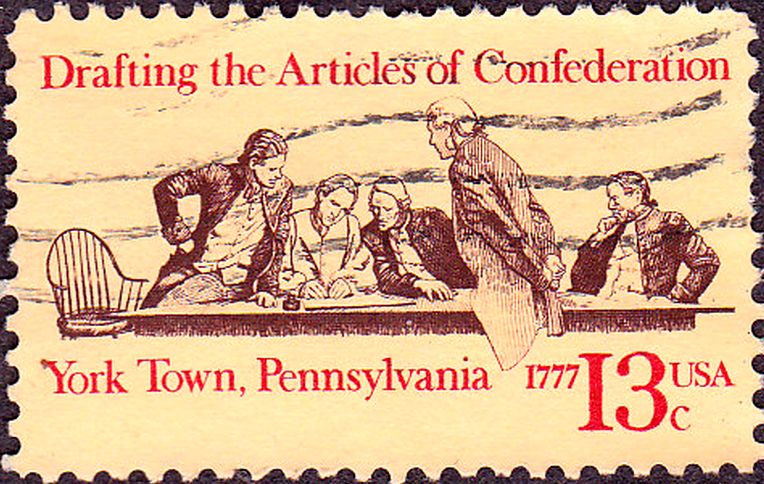
The Articles of Conderation created a ______central government. 
a)
Weak
b)
Strong
c)
Stable
d)
Big
107.
Which principle split the power of the government into three branches?
a)
Self-government
b)
Republicanism
c)
Separation of Powers
d)
Limited government
108.
What is the name for a change or addition to the Constitution?
a)
Amendment
b)
Preamble
c)
Ratification
d)
Compromise
109.
Which amendment in the Bill of Rights deals with States Rights?
a)
1
b)
5
c)
6
d)
10
110.
Right that protects freedom of personal expression
a)
2nd amendment
b)
3rd amendment
c)
1st amendment 
d)
10th amendment
111.

The Great Compromise created the structure of a bicameral legislative branch.

a)

True

b)

False

112.

Congress may override a presidential veto with a

a)

2/3 vote

b)

3/4 vote

c)

unanimous vote

d)

majority vote

113.
What is the number needed to be elected President?
a)
260
b)
270
c)
269
d)
538
114.
What is the purpose of the Electoral College?
a)
Elect school board members.
b)
Provide opportunities for kids to attend school.
c)
Elect the President of the United States.
d)
Select a baseball team to play in the College World Series.
115.

The power the government has to acquire your property is called:

a)

Economic Freedom

b)

Political Freedom

c)

Eminent Domain

d)

Tyranny

116.

) Under eminent domain, the government can take your property ____________________.

a)

without paying you for it

b)

but must pay whatever amount you demand

c)

but must give you just compensation for it

d)

the other homeowners sued them

117.
Who meets here? 
a)
The Legislative Branch
b)
The Executive Branch
c)
The Judicial Branch
118.

What is this building called and in what branch does it belong?

a)

White House/The Legislative Branch

b)

White House/The Executive Branch

c)

Capitol/The Executive Branch

d)

Capital/The Legislative Branch

119.

What is the name of this building and what in branch does it belong?

a)

Capitol/The Legislative Branch

b)

Capitol/The Executive Branch

c)

White House/Legislative Branch

d)

White House/Executive Branch

120.

Act =


vs =

a)

court case; law

b)

law; court case

c)

amendment; law

d)

law; amendment

121.

How many amendments are in the Constitution?

a)

10

b)

22

c)

25

d)

27

122.

What best completes the graphic above?

a)

War of 1812

b)

American Revolution

c)

French and Indian War

d)

Seven Years War

123.

There were many causes of the War of 1812. Which image below illustrates the British policy of impressment?

a)
b)
c)
d)
124.

There were numerous causes for the War of 1812. The British action of sponsoring native attacks on American settlers matches with which image?

a)
b)
c)
d)
125.

What are causes of the War of 1812?

a)

British supporting Native American resistance against the U.S , Impressment of Sailors and British interference of U.S. Maritime Trade.

b)

Interference with US shipping and French embargo

c)

Impressment of sailors and Treaty of Ghent

d)

Increase manufacturing and British supporting US citizens.