
NEW
Font size
 Worksheets
microscope
Total questions: 30
Worksheet time: 17mins
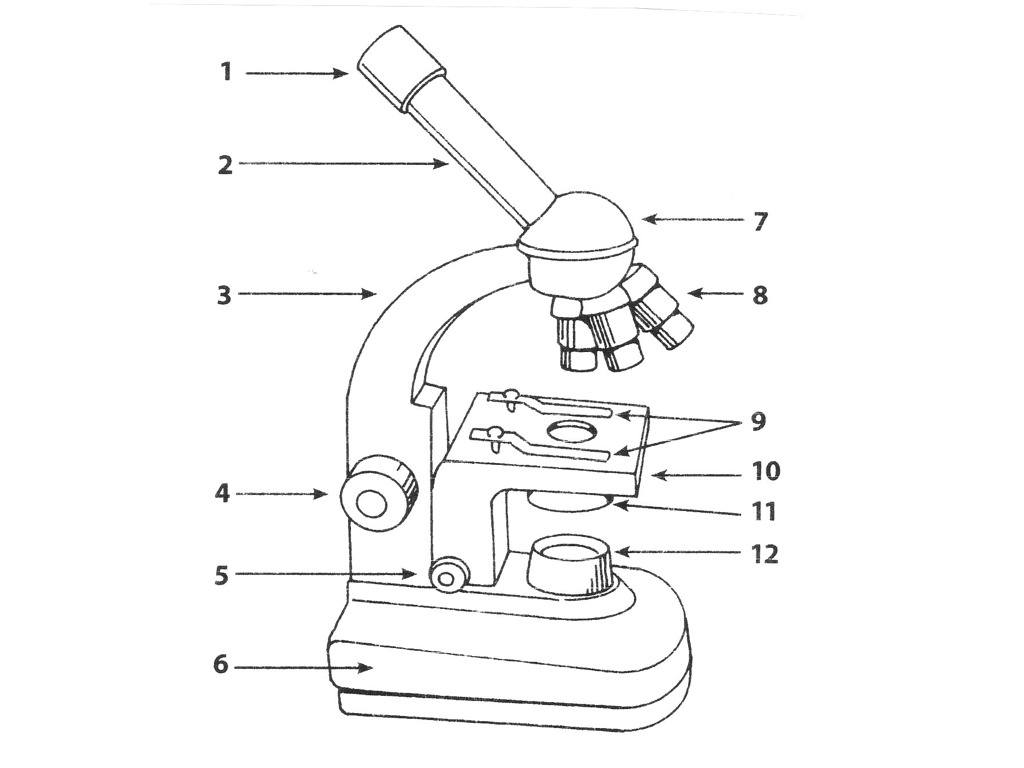


The greater the ___________________, the smaller the field you are actually viewing.
detail
objective
magnification
body
True of False: You should always store microscopes covered.
True
False

Label the part of the microscope. What is part E?
stage
stage clips
focus knob
eyepiece tube

Label the part of the microscope. What is part F?
stage
stage clips
body
focus knob

Label the part of the microscope. What is part J?
focus knob
turret
eyepiece lens
miror
The __________________ reflects light into the microscope.
mirror
stage clips
field
focus knob
The ___________________________ are used to hold the slide on the stage.
field
mirror
stage
stage clips
Connects eyepiece to other lenses
Body tube
Arm
Base
Diaphragm
Changes the amount of light shinning through a specimen
Light source
Diaphragm
Arm
Fine adjustment
Top lens you look through to see the specimen
Body tube
Stage
Light source
Eyepiece
Moves stage up and down to focus specimen
Stage
Stage clips
Diaphragm
Coarse adjustment
Used to focus specimen, smaller adjustment than coarse adjustment
Fine adjustment
Stage
Arm
Base
Supports the microscope and connects pieces
Base
Body Tube
Arm
Light source
Bottom of microscope, used for support
Arm
Stage
Light source
Base
Shines light through the specimen, making it visible
Diaphragm
Light Source
Eyepiece
Objective lens
How many hands do you use to carry a microscope?
1
2
3
4
Used to focus specimen, smaller adjustment than coarse adjustment
Fine adjustment
Stage
Arm
Base
Holds the slide in place
Stage Clips
Stage
Eyepiece
Coarse adjustment

The primary optical lenses on a microscope are called ___
condensors
objective lenses
stage clips
ocular lenses

Identify the microscope part:
revolving nosepiece
coarse focus knob
diaphragm
fine focus knob

Identify the microscope part:
revolving nosepiece
coarse focus knob
diaphragm
fine focus knob

Typical objective lenses come in magnifications of ___
6x, 15x, 60x
60x, 150x, 600x
4x, 10x, 40x
40x, 100x, 400x

