wayground logo

Free Printable Worksheets

NEW

Font size

S
M
L
XL
Worksheets

HEAT TRANSFER, WATER CYCLE, CHANGES

Total questions: 25

Worksheet time: 34mins
Name
Class
Date
1.
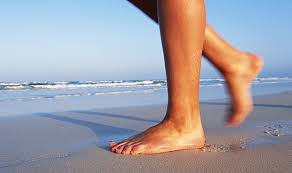
Walking on the warm sand sand with your bare feet demonstrates this type of heat transfer. 
a)
conduction
b)
convection
c)
radiation
2.
The baby chickens are kept warm from the heat lamps demonstrates this type of heat transfer. 
a)
conduction
b)
convection
c)
radiation
3.
A group of friends gather around a fire to stay warm.
a)
conduction
b)
convection
c)
radiation
4.

A huge rock at the state park gets so hot during the day because of

a)

conduction

b)

convection

c)

radiation

5.
Warm air rises and the cool air sinks demonstrates this type of heat transfer. 
a)
conduction
b)
convection
c)
radiation
d)
Insolation 
6.
What kind of heat transfer happens when the sun is heating your body?
a)
Conduction
b)
Radiation
c)
Convection
d)
Density
7.
What heat transfer happens when you burn your hand by touching a fire?
a)
Radiation
b)
Conduction
c)
Convectio
d)
I don't know!!!!!!!!!!!
8.

An example of a liquid changing to a gas is

a)

Wood burning

b)

Paper tearing

c)

A pot of boiling water

d)

A lake freezing in the winter

9.

Heating a solid until it changes color and produces an odor, and noting the solid cannot be changed back is an example of

a)

Physical Change

b)

Chemical Change

10.

When heat is taken away from a container of water, what will happen?

a)

It will become a gas.

b)

It will become a solid

c)

There will be less mass.

11.

Label the picture as a physical change or a chemical change.

a)

physical change

b)

chemical change

12.

Label the picture as a physical change or a chemical change.

a)

physical change

b)

chemical change

13.

A change that does not result in a new substance.

a)

smoke

b)

physical

c)

chemical

d)

react

14.
When the temperature of matter decreases the particles ...
a)
speed up and move farther apart
b)
speed up and move closer together
c)
slow down and move farther apart
d)
slow down and move closer together
15.
Phase change from a solid to a gas.
a)
sublimation
b)
deposition
c)
condensation
d)
evaporation
16.
What part of the water cycle does this picture show?
a)
condensation
b)
precipitation
c)
evaporation
17.
Which best explains why runoff is important?
a)
It returns water to other locations on Earth
b)
It increases the chance of flooding
c)
It makes evaporation occur faster
d)
It increases condensation
18.
What follows evaporation during the water cycle? 
a)
Water evaporates into water vapor
b)
Water vapor condenses and forms a  cloud
c)
Water precipitates to the ground
d)
Water runs down into the hydrosphere
19.
What is it called when plants give off water vapor as a waste product?
a)
condensation
b)
evaporation
c)
sublimation
d)
transpiration
20.
Water moves directly from a lake to the air by which of the following processes?
a)
Condensation
b)
Evaporation
c)
Precipitation
d)
Sedimentation
21.
Which of the following describes water changing from liquid to solid?
a)

ice forming on a lake
b)

dew forming on grass
c)
snow melting into a puddle
d)
water evaporating from a pond
22.
The map shows the location of South Carolina. South Carolina is humid during the summer months. Which of the following is the most likely cause of the humid conditions?
a)
runoff from inland mountains
b)

flooding from rivers and streams
c)
groundwater bubbling to the surface
d)
evaporation from the surface of the ocean
23.
The diagram above shows four stages of the water cycle.Which change is occurring at stage 1 in the diagram?
a)

Water is changing from a gas to a solid.
b)
Water is changing from a liquid to a gas.
c)
Water is changing from a liquid to a solid.
d)
Water is changing from a solid to a liquid.
24.
During most of the year, the air over
Boston, Massachusetts, contains a high
amount of moisture. Which of the
following best explains why there is a
high amount of moisture in the air?
a)
Boston is close to an ocean.
b)
Boston is at a low elevation. (Not high in the mountains)
c)
Boston is near many mountains.
d)

Boston is far north of the equator.
25.
Transpiration requires _________.
a)
Cold
b)
Mild Climate
c)
Heat